


🔘 The Man Who Sold The World – Album: Apr. 1971
- David Bowie
- Apr 8, 1971
- 4 min read
Originally released in the United States in November 1970 and arriving in the United Kingdom on April 8 1971, The Man Who Sold the World marked a dramatic stylistic shift for David Bowie. Moving away from the folk‑leaning textures of his 1969 self‑titled album, Bowie embraced a heavier, darker hard‑rock sound shaped by the newly formed core of what would become the Spiders from Mars. The album explored themes of madness, war, technology, and existential dread, establishing the foundations of Bowie’s “classic period.” Its UK release became instantly iconic due to the controversial “dress cover,” which challenged gender norms and cemented Bowie’s emerging androgynous persona.

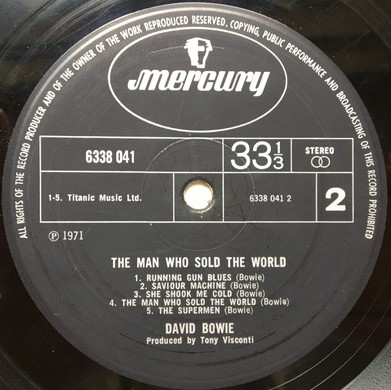
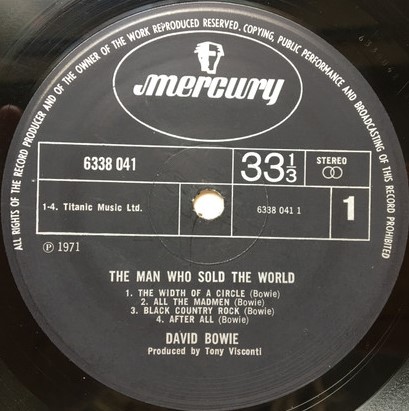
Released on April 8 1971 by Mercury Records (6338 041), the UK edition is notable for its misprinted production credit (“Tonny Visconti”). Produced by Tony Visconti, the album’s dense, unsettling sound and lyrical depth would later be recognised as a major turning point in Bowie’s artistic evolution. Although it failed commercially upon release, the 1972 Ziggy‑era reissue brought the album long‑overdue chart attention.
🔘 Contemporary Review — Melody Maker, 15 May 1971
A surprisingly excellent album, with music far tougher and more dynamic than Bowie’s then‑delicate public image suggested. Producer Tony Visconti contributes bass work alongside Mick Ronson’s standout lead guitar, Mick Woodmansey’s driving drums, and Ralph Mace’s Moog textures. The production is described as superb, with inventive and unusual songwriting throughout. “The Width Of A Circle” is highlighted for its shifting moods and tempos, while Bowie’s intense, humour‑laced vocal style and the epic quality of the arrangements invite deep lyrical interpretation. The review praises the album’s flashes of brilliance and encourages listeners to explore its depth.
No singles were released from the album.
Label: Mercury
Catalogue Number: 6338 041
Format: LP (12")
Released: April 8 1971 (UK)
🔘 Track List
UK LP — Mercury – 6338 041 — 1971
Side A
• The Width Of A Circle — 8:07
• All The Madmen — 5:38
• Black Country Rock — 3:33
• After All — 3:52
Side B
• Running Gun Blues — 3:12
• Saviour Machine — 4:27
• She Shook Me Cold — 4:13
• The Man Who Sold The World — 3:58
• The Supermen — 3:39
Writing Credits
• David Bowie — all tracks
Production Credits
• Produced by: Tony Visconti
• Arranged by: David Bowie, Tony Visconti
• Recorded: April–May 1970 — London (various studios)
🔘 Key Highlights
• Released 8 April 1971 (UK)
• No singles issued at the time
• Chart success came only with the 1972 Ziggy‑era reissue
• Recorded in London, April–May 1970
• First Bowie album featuring Mick Ronson and Mick Woodmansey
• Marked Bowie’s shift into hard rock and darker lyrical themes
🔘 The Story
Following the acoustic textures of David Bowie (1969), Bowie sought a heavier, more electric sound. Working with producer Tony Visconti, guitarist Mick Ronson, and drummer Mick Woodmansey, he created an album steeped in paranoia, mythology, and psychological unease. Originally titled Metrobolist—a play on Fritz Lang’s Metropolis—the name was changed by Mercury without Bowie’s approval.
The album was released with different artwork in the US and UK. The American edition featured a cartoon‑style illustration by Michael J. Weller depicting a cowboy outside Cane Hill asylum. Bowie disliked the design and commissioned photographer Keith MacMillan to shoot an alternative cover for the UK release. The resulting image—Bowie reclining in a Michael Fish‑designed “man’s dress”—became one of the most iconic and controversial sleeves of his career.
Although critically appreciated in the US, the album initially failed to chart. Its reputation grew steadily, and by the time of the 1972 RCA reissue, Bowie’s Ziggy Stardust persona brought renewed attention, pushing the album into the charts for the first time. Retrospectively, The Man Who Sold the World is widely regarded as the beginning of Bowie’s classic era, laying the groundwork for the glam‑rock explosion that followed.
🔘 Personnel
David Bowie — lead vocals, backing vocals, 12‑string acoustic guitar, Stylophone
Mick Ronson — lead & rhythm guitar, acoustic guitar, backing vocals, recorder, piano
Tony Visconti — bass, backing vocals, recorder
Mick Woodmansey — drums, timpani, percussion
Ralph Mace — Moog synthesiser
Technical
• Tony Visconti — producer
• Ken Scott — engineer
• Gerald Chevin — engineer
• Robin McBride — executive producer
🔘 Variants (UK)
• LP — Mercury – 6338 041 — UK — 1971 — misprint “Tonny Visconti”
• LP — Mercury – 6338041 / 6338 041 — UK — 1971 — corrected “Tony Visconti”
• LP — Mercury – 6338041 — UK — 1971 — white label
• Cassette — Mercury – 7142026 — UK — 1971
• Issued in the iconic “dress cover” sleeve (UK only)]
🔘 Sleeves
• Original UK sleeve features Bowie in a Michael Fish‑designed dress, photographed by Keef
• Back cover includes credits and track details
• Labels include the misprinted “Tonny Visconti” credit on early pressings
• Alternate US release used the Michael J. Weller cartoon artwork
• 1972 RCA reissue replaced both with a Ziggy‑era black‑and‑white portrait





🔘 Chart Performance
UK — Official Albums Chart
Peak Position: Charted only after 1972 reissue
Total Weeks: [Insert if known]
First Chart Date: 1972 (Ziggy reissue)
US — Billboard 200
Charted only after 1972 reissue
🔘 Context & Notes
• Considered the beginning of Bowie’s “classic period”
• Themes include insanity, war, technology, and existential dread
• No singles released at the time; several tracks later used as B‑sides
• Reissued multiple times; remixed in 2020 as Metrobolist for its 50th anniversary
• UK “dress cover” is one of the most collectible Bowie sleeves
🔘 Related Material
• David Bowie (1969)
• Hunky Dory (1971)
• Singles and B‑sides from the era
• Ziggy Stardust tour (contextual relevance)
🔘 Mini‑Timeline
✦ Apr–May 1970 — Recording sessions in London
✦ Nov 1970 — US release
✦ Apr 1971 — UK release
✦ 1972 — Ziggy reissue charts in UK & US
✦ 2020 — Metrobolist remix released
🔘 Glam Flashback
A velvet‑draped fever dream of madness, myth, and electric menace — the first spark of Bowie’s coming revolution.
🔘 Sources
Primary reference sources: Mercury Records, Discogs, Official Charts Company, contemporary music‑press documentation, archival references for David Bowie – The Man Who Sold The World.
🔘 Copyright Notice
All magazine scans, photographs, and original text excerpts referenced in this entry remain the property of their respective copyright holders. This Chronicle entry is a transformative, non‑commercial archival summary created for historical documentation and educational reference. No ownership of the original material is claimed or implied.


Comments