


🎼 Back Off Boogaloo – Single: Mar 1972
- T.Rex
- Apr 17, 1972
- 3 min read
“Back Off Boogaloo” arrived in March 1972 as Ringo Starr’s high‑energy glam‑leaning single, its title and rhythmic spark directly inspired by Marc Bolan. The track captured the vibrant creative atmosphere surrounding Starr at the time, particularly his work on the Born to Boogie film project. By April 11, the single had become a major UK chart mover, rising eleven places to Number 4.
🎼 Release Context
Released on Apple Records on March 17 1972, “Back Off Boogaloo” quickly gained momentum on the BBC Singles Chart. On April 11, 1972, it was officially listed as a mover, climbing eleven places to Number 4. The single would eventually peak at Number 2 and remain on the chart for ten weeks.
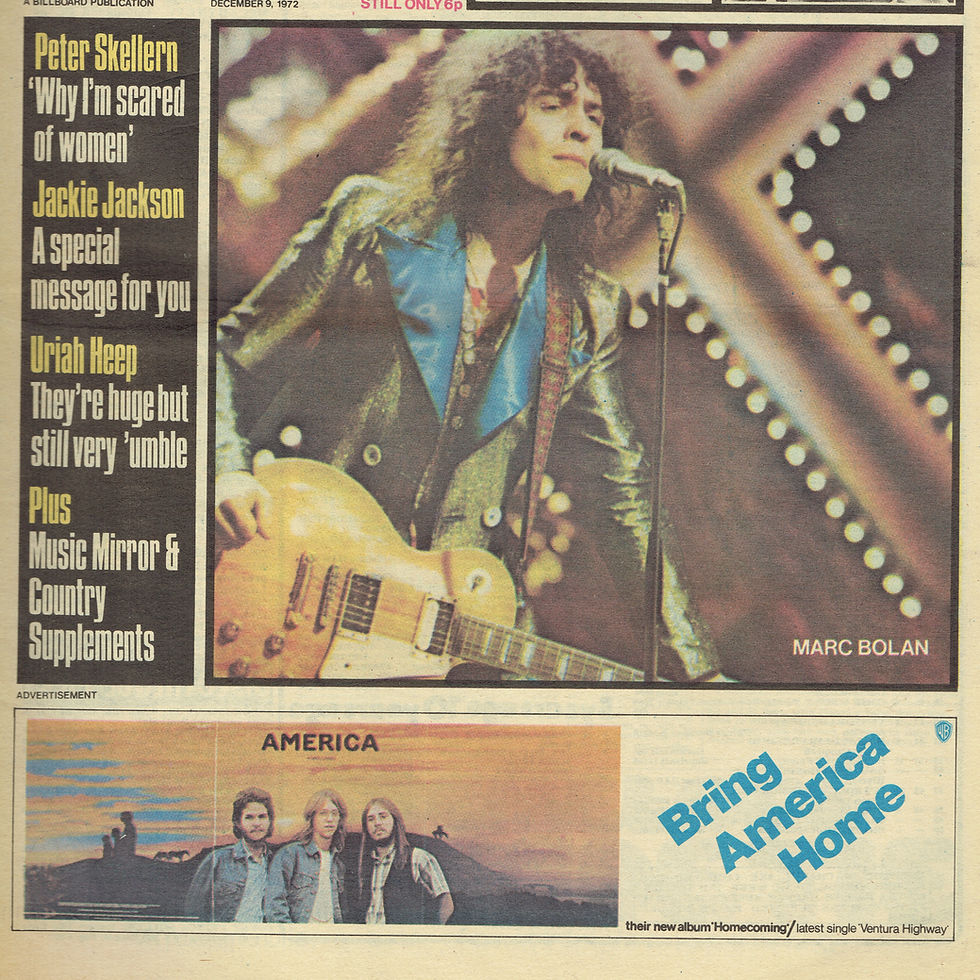
The song’s title and attitude were famously inspired by Marc Bolan, whose energetic speech patterns and frequent use of the word “boogaloo” left a strong impression on Starr. Produced by George Harrison, the track reflects the glam‑rock influence surrounding Starr during the early 1970s.
🎼 Personnel
• Ringo Starr – vocals, songwriter
• George Harrison – producer, uncredited co‑writer
• Klaus Voormann – musician (B‑side production credit)
• Gary Wright – musician (mentioned in context)
🎼 Key Highlights
• Title inspired directly by Marc Bolan
• Produced by George Harrison, who also contributed to the songwriting
• Became a BBC chart mover on April 11, rising to Number 4
• Promotional film shot at John Lennon’s Tittenhurst Park
🎼 The Story
“Back Off Boogaloo” emerged from Ringo Starr’s close friendship with Marc Bolan. During a dinner in 1971, Bolan repeatedly used the word “boogaloo” in his typically animated style, embedding the phrase in Starr’s mind. Overnight, Starr developed the beat and melody, recording his ideas using batteries taken from his children’s toys to power a tape recorder.
The song’s middle‑eight lyrics were inspired by football commentator Jimmy Hill, whose use of the word “tasty” Starr incorporated into the track. Although George Harrison contributed chords and melodic development, he remained uncredited until 2017.
Released on 17 March 1972, the single showcased Starr’s growing confidence as a solo artist. Its glam‑rock edge aligned with the era’s musical landscape and with Starr’s involvement in the Born to Boogie film project. The B‑side, “Blindman,” originated from a Spaghetti Western in which Starr starred.
By April 11, the single had become a major chart mover, rising eleven places to Number 4 on the BBC Singles Chart — a testament to its popularity and the strength of Starr’s post‑Beatles momentum.
Label: Apple Records – R 5944
Format: Vinyl, 7", Single, 45 RPM (Blue Apple label)
Released: Mar 1972

🎼 Track List
A. Back Off Boogaloo
Written by: Ringo Starr (with uncredited contribution from George Harrison)
Producer: George Harrison
B. Blindman
Written by: Ringo Starr
Producer: Klaus Voormann, Ringo Starr
🎼 Variants
• UK 7" single with picture sleeve
• UK 7" single in black Apple company sleeve
• 7" 45 RPM, 4‑prong Blue Apple push‑out centre
• 7" promo, 4‑prong push‑out centre, “Demo Record Not For Sale”
• 7" misprint, solid centre
• 7" single, solid centre
🎼 Related Releases
Additional material connected to this entry is listed in the tag index at the foot of the page.
🎼 Chart Performance
• Peaked at Number 2 — 10 weeks on the UK chart
Total weeks on the chart:
10
Peak Position on the chart:
Number 2
🎼 Context & Notes
• Song title inspired by Marc Bolan’s speech patterns
• Promotional film shot at John Lennon’s Tittenhurst Park
• B‑side “Blindman” originally intended for the 1971 film of the same name
• George Harrison’s co‑writing credit was officially recognised in 2017
🎼 Discography
It Don’t Come Easy — 1971
Back Off Boogaloo — 1972
Photograph — 1973
🎼 Glam Flashback
A glam‑charged spark from Bolan’s playful energy, igniting one of Starr’s most electrifying solo hits.
🎼 Sources
Discogs, 45cat, Wikipedia, BBC Charts.
🎼 Copyright Notice
All magazine scans, photographs, and original text excerpts referenced in this entry remain the property of their respective copyright holders. This Chronicle entry is a transformative, non‑commercial archival summary created for historical documentation and educational reference. No ownership of the original material is claimed or implied.


Comments