


🔘 Beck, Bogert & Appice – Album: Mar. 1973
- Jeff Beck
- Mar 26, 1973
- 6 min read
Released: March 26, 1973 (US) / April 6, 1973 (UK)
Catalogue Number: Epic KE 32140 (US, stereo LP)
A molten power‑trio summit where Jeff Beck’s guitar fury collides with Bogert & Appice’s heavyweight groove and Stevie Wonder’s “Superstition” in full hard‑rock roar.
w
Formed from the wreckage of the Jeff Beck Group and the heavy soul of Vanilla Fudge and Cactus, Beck, Bogert & Appice arrived as a short‑lived but explosive supergroup. Their self‑titled 1973 debut—ultimately their only studio album—captures Jeff Beck, Tim Bogert, and Carmine Appice at full tilt, fusing blues rock, hard rock, and funk‑leaning grooves into a lean 36‑minute statement.
Recorded between December 1972 and January 1973 and issued by Epic in both conventional stereo and quadraphonic mixes, the album feels like a live band trapped on tape: ragged, loud, and restless. At its center is Beck’s version of Stevie Wonder’s “Superstition,” born from a jam where Beck contributed the iconic drum figure; delays in the album’s release meant Wonder’s own version hit the charts first, but this cut remains one of Beck’s fiercest studio performances. Wikipedia
Though the band dissolved abruptly in 1974, this record stands as a snapshot of three players pushing each other to the edge—part virtuoso showcase, part heavy rock time capsule, and a key bridge between late‑’60s psych‑blues and mid‑’70s arena rock.
🔘 Track List




(Standard US stereo LP – Epic KE 32140)
Side One
Black Cat Moan — Don Nix
Lady — Jeff Beck, Tim Bogert, Carmine Appice, Pete French, Duane Hitchings
Oh to Love You — Jeff Beck, Tim Bogert, Carmine Appice
Superstition — Stevie Wonder
Sweet Sweet Surrender — Don Nix
Side Two
Why Should I Care — Raymond Louis Kennedy
Lose Myself with You — Jeff Beck, Tim Bogert, Carmine Appice, Pete French
Livin’ Alone — Jeff Beck, Tim Bogert, Carmine Appice
I’m So Proud — Curtis Mayfield
Produced by:
Don Nix (A1, B1, B4)
Beck, Bogert & Appice (A2–A4, B2, B3, B5)
Engineers:
Baker Bigsby
Gary Starr
Mike Colchamiro
John Fry (remix)
🔘 Variants

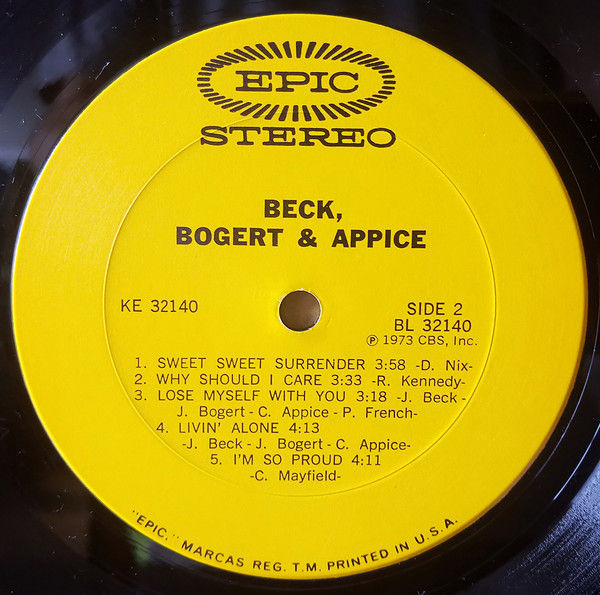
Variant 1 – Core LP
[US – Epic – KE 32140 (1973)]
Format:
Vinyl LP, Album, Stereo (Pitman pressing; also issued in other US plant variants)
Country:
United States
Year:
1973
Notes:
Label: Epic (yellow label), ℗ & © 1973 CBS Inc.
Early pressings issued in a textured “tweed‑like” sleeve with cover design by Ed Lee and photography by Fred Lombardi.
Also released in quadraphonic form as Epic EQ 32140.
Example LP Track Listing (as on Epic KE 32140):
Side One:
Black Cat Moan / Lady / Oh to Love You / Superstition / Sweet Sweet Surrender
Side Two:
Why Should I Care / Lose Myself with You / Livin’ Alone / I’m So Proud
Variant 2 – Cassette

[Germany – Epic – 40‑65455 (1973)]
Format:
Cassette, Album
Country:
Germany
Year:
1973
Notes:
Label: Epic 40‑65455, manufactured by Epic Records / CBS Inc.
Program split follows LP running order, with Side A and Side B mirroring the album sides.
Example Cassette Track Listing (Epic 40‑65455):
Side A:
Black Cat Moan
Oh to Love You
Sweet Sweet Surrender
Why Should I Care
Lose Myself with You
Side B:
Lady
Superstition
Livin’ Alone
I’m So Proud
(Order as per Discogs cassette entry; note the slight reshuffle compared to the US LP.)
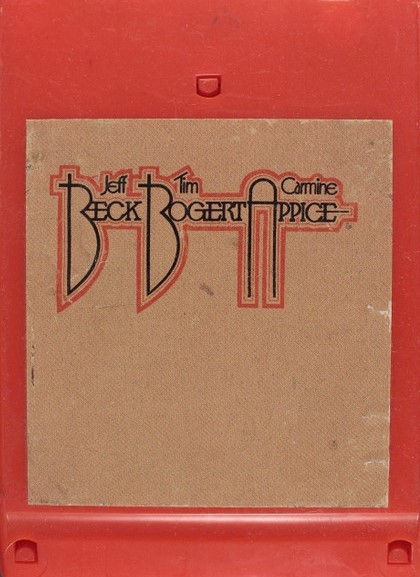
Variant 3 – 8‑Track Cartridge
[US – Epic – EA 32140 (1973)]
Format:
8‑Track Cartridge, Album
Country:
United States
Year:
1973
Notes:
Label: Epic EA 32140, ℗ & © CBS Inc.
Track order re‑sequenced and split to accommodate 8‑track program lengths, with “Superstition” divided into Part I and Conclusion.
Example 8‑Track Program Listing (Epic EA 32140):
Program A: Black Cat Moan / Lady
Program B: Why Should I Care / Lose Myself with You / Superstition (Part I)
Program C: Superstition (Conclusion) / Sweet Sweet Surrender / Oh to Love You (Part I)
Program D: Oh to Love You (Conclusion) / Livin’ Alone / I’m So Proud
🔘 Chart Performance
United States — Billboard 200
Peak Position: 12
First Chart Date: 1973 (exact first‑week date not specified in source)
Weeks on Chart: Not specified
Top 40: Yes
Top 75: Yes
Top 100: Yes
Label: Epic
Catalogue Number: KE 32140 (US LP)
Chart Run: Peaked at 12; detailed week‑by‑week run not specified in cited source.
Canada — RPM Top Albums
Peak Position: 10
UK — Official Albums Chart
Peak Position: 28
Australia — Kent Music Report
Peak Position: 45
Japan — Oricon Albums
Peak Position: 22
🔘 Context & Notes
Personnel
Jeff Beck: guitars; lead vocal on “Black Cat Moan”
Tim Bogert: bass guitar; lead vocals on “Superstition,” “Why Should I Care,” “Lose Myself with You”; backing vocals
Carmine Appice: drums; lead vocals on “Lady,” “Oh to Love You,” “Sweet Sweet Surrender,” “Livin’ Alone,” “I’m So Proud”; backing vocals
Duane Hitchings: piano, Mellotron on “Oh to Love You”
Jimmy Greenspoon: piano on “Sweet Sweet Surrender”
Danny Hutton: backing vocals on “Sweet Sweet Surrender”
Recording Notes
Recording Period: December 1972 – January 1973.
Issued in both 2‑channel stereo and 4‑channel quadraphonic mixes, emphasizing the trio’s separation in the soundstage—Beck’s guitar often hard‑panned against Bogert’s bass and Appice’s tom‑heavy drum sound.
Don Nix’s production leans into a raw, live‑room feel: overdriven guitar tones, prominent cymbals, and thick, slightly compressed low end that underlines the band’s power‑trio identity.
Press Reception
Contemporary and retrospective reviews have been mixed: praised for its musicianship and heaviness, but sometimes criticized for uneven material and over‑indulgence.
Later guides (e.g., AllMusic, Rolling Stone Album Guide) tend to frame it as a flawed but fascinating document of Beck’s early‑’70s transition, with “Superstition” and “Black Cat Moan” singled out as standouts.
Legacy
This remains the band’s only studio album; Beck’s departure in 1974 ended the project, leaving the record as a one‑off artifact of a supergroup that never fully stabilized.
The Wonder‑Beck “Superstition” story has become part of rock folklore: a jam‑born riff, gifted to Beck as a thank‑you for his work on Talking Book, only to be commercially eclipsed by Wonder’s own version when release schedules slipped.
Carmine Appice’s later tenure with Rod Stewart—co‑writing “Da Ya Think I’m Sexy?” and “Young Turks”—and his appearance on Paul Stanley’s 1978 solo album add extra connective tissue between this record and late‑’70s mainstream rock.
🔘 Related Material
Previous Album / Group Identity:
Jeff Beck Group (1972) — final Jeff Beck Group studio album before the formation of Beck, Bogert & Appice.
Next Album:
Live in Japan (1973) — live album by Beck, Bogert & Appice, capturing the trio on stage.
Related Artists:
The Yardbirds, Vanilla Fudge, Cactus, Rod Stewart, Stevie Wonder, Paul Stanley / Kiss.
🔘 Discography
(Selected, context‑relevant)
Jeff Beck Group – Jeff Beck Group (1972, Epic)
Beck, Bogert & Appice – Beck, Bogert & Appice (1973, Epic)
Beck, Bogert & Appice – Live in Japan (1973, Epic)
Stevie Wonder – Talking Book (1972, Motown) — includes Wonder’s “Superstition”
Rod Stewart – Blondes Have More Fun (1978) — features “Da Ya Think I’m Sexy?” co‑written by Carmine Appice
Paul Stanley – Paul Stanley (1978) — Appice appears on drums on one track
🔘 Mini‑Timeline
1967–1969: Jeff Beck first crosses paths with Tim Bogert and Carmine Appice, planting the seeds for a future collaboration.
July 1972: The second Jeff Beck Group dissolves; Beck, Bogert & Appice begin rehearsals and touring.
Dec 1972 – Jan 1973: Studio sessions for Beck, Bogert & Appice.
March 26, 1973: US release of Beck, Bogert & Appice.
1974: Beck’s departure leads to the sudden end of the band.
🔘 Glam Flashback
On March 26, 1973, this record dropped like a chrome‑plated anvil into the hard‑rock landscape: a Yardbird gone supernova, locked in with two ex‑Vanilla Fudge heavyweights, twisting a Stevie Wonder groove into a snarling, fuzz‑drunk anthem. It’s the sound of early‑’70s rock at full swagger—wah‑wah, Mellotron, and thunderous toms—caught in the brief moment before disco lights and stadium ballads took over. For a single album, Beck, Bogert & Appice made the power trio feel dangerous again.
🔘 Closing Notes
Beck, Bogert & Appice is less a polished career statement than a captured detonation: three players with long résumés, colliding in real time and leaving behind one dense, flawed, and thrilling studio document. Heard now, it’s a bridge between scenes and eras—Yardbirds to arena rock, Motown to metal‑leaning riffage—etched into tape, textured cardboard, and the whirr of 8‑track cartridges.
🔘 Sources & Copyright
All artwork and text remain the property of their respective copyright holders.
#BeckBogertAppice #JeffBeck #TimBogert #CarmineAppice #Superstition #EpicRecords #1973 #HardRock #BluesRock #PowerTrio #GlamSlamArchive


Comments