


🔘 ALABAMA SONG – Single: Feb. 1980
- David Bowie
- Feb 22, 1980
- 4 min read
Updated: Mar 6


Label: RCA Records – BOW 5
Date: February 22, 1980 (UK)
Tracklist: 2 tracks
Length: Approx. 8–10 min read
A Brecht–Weill reinterpretation paired with a newly updated version of Bowie’s breakthrough classic.
A Brecht–Weill reinterpretation paired with a newly updated version of Bowie’s breakthrough classic.
Released in the UK on February 22, 1980, David Bowie’s “Alabama Song” backed with a newly recorded version of “Space Oddity” marked one of the most distinctive standalone singles of his late‑70s/early‑80s period. Issued as a 7-inch vinyl single on RCA Records (BOW 5), the release debuted at No. 23 on the UK Singles Chart on March 1, 1980, charting for five weeks.
🔘 – Key Highlights
• Released February 22, 1980
• A-side: Brecht/Weill composition recorded July 2, 1978
• B-side: 1980 re-recording of “Space Oddity”
• Debuted at No. 23 on the UK Singles Chart
• Performed on the 1978, 1990, and 2002 tours
🔘 – Overview
Released in the UK on February 22, 1980, David Bowie’s “Alabama Song” backed with a newly recorded version of “Space Oddity” marked one of the most distinctive standalone singles of his late‑70s/early‑80s period. Issued as a 7-inch vinyl single on RCA Records (BOW 5), the release debuted at No. 23 on the UK Singles Chart on March 1, 1980, charting for five weeks.
Bowie had long admired the work of Bertolt Brecht, performing “Alabama Song” throughout his 1978 Isolar II tour. A live version from that tour — recorded in either Philadelphia (April 29, 1978) or Boston (May 6, 1978) — later appeared on multiple reissues of Stage (1991, 2005, 2017).
On July 2, 1978, the day after the European leg of the tour ended, Bowie recorded a studio version at Tony Visconti’s Good Earth Studios in London. Pianist Sean Mayes recalled that the song had been such a highlight on tour that Bowie wanted to release it as a single. According to NME writers Roy Carr and Charles Shaar Murray, the track’s unconventional key changes “seemed calculated to disrupt any radio programme on which it was fortunate enough to be played.”
The B‑side featured a new 1980 re-recording of “Space Oddity”, distinct from the 1969 original, giving Bowie’s breakthrough hit a sharper, more contemporary edge for the new decade.
🔘 – The Story
Bowie’s fascination with Brecht and Weill had been simmering for years, and “Alabama Song” became a recurring highlight of the 1978 Isolar II tour. Its theatricality, angularity, and cabaret roots aligned perfectly with Bowie’s late‑’70s artistic instincts.
The studio version recorded on July 2, 1978 at Good Earth Studios captured the song’s off‑kilter energy, with Bowie leaning into its Brechtian phrasing and deliberately unsettling tonal shifts. The track’s release as a standalone single in 1980 placed it between Lodger (1979) and Scary Monsters (1980), reflecting Bowie’s transitional moment between the Berlin era and the sharper, more aggressive sound of the new decade.
The B‑side — a newly recorded 1980 version of “Space Oddity” — reframed Bowie’s 1969 breakthrough with a more modern, urgent arrangement. This pairing of Brechtian cabaret and reimagined space‑age pop made the single one of the most unusual in Bowie’s catalogue.
“Alabama Song” continued to appear in Bowie’s live repertoire, resurfacing on the 1990 Sound+Vision tour and again in 2002 during the Heathen era. The track has been included on several compilations and reissues, including Rare (1982), The Singles Collection (1993), The Best of David Bowie 1980/1987 (2007), and Re:Call 3 (2017).
🔘 – Track List
UK 7" Single — RCA Records – BOW 5 — 1980
A. Alabama Song
B. Space Oddity (1980 version)
🔘 – Variants (UK)
• 7", 45 RPM, Single — RCA – BOW 5 — UK — 1980
• 7", 45 RPM, Single, Solid Centre — RCA – BOW 5 — UK — 1980
🔘 – Chart Performance
UK — Official Singles Chart
23 — March 1, 1980 (Entry)
30 — March 8, 1980
37 — March 15, 1980
45 — March 22, 1980
56 — March 29, 1980 (Final Week)
Total Weeks: 5
🔘 – Context & Notes
• A-side: Brecht/Weill composition, arranged and performed by Bowie
• Recorded July 2, 1978 at Good Earth Studios
• Produced by David Bowie & Tony Visconti
• B-side: 1980 re-recording of “Space Oddity”
• Bowie performed “Alabama Song” on the 1978, 1990, and 2002 tours
• Included on Rare (1982), The Singles Collection (1993), Re:Call 3 (2017)
• Sleeve design reflects Bowie’s late‑70s visual aesthetic
• Represents Bowie’s transitional period between Lodger (1979) and Scary Monsters (1980)
🔘 – Visual Archive
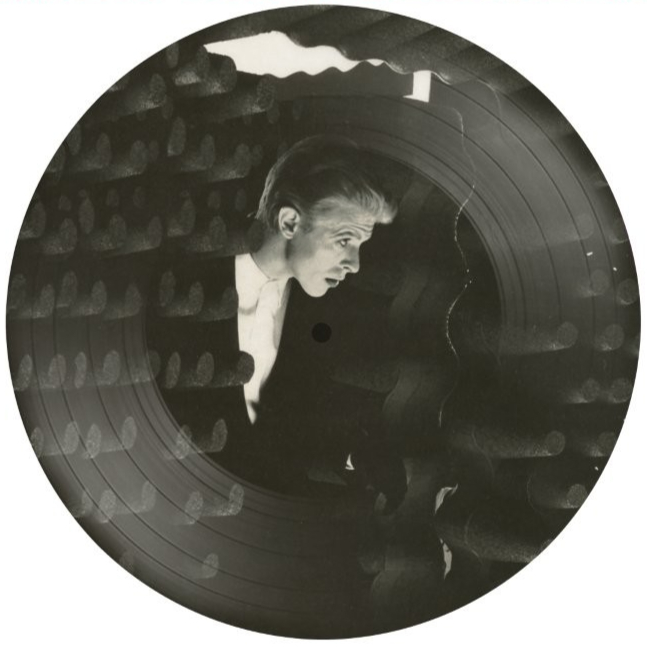
David Bowie’s “Alabama Song” (1980), issued on RCA Records as BOW 5.
🔘 – Related Material
• Stage (1978 / reissues 1991, 2005, 2017)
• Scary Monsters (and Super Creeps) (1980)
• “Space Oddity” (1969 / 1980 version)
• Baal EP (1982)
Explore the tags below for connected posts and themes.

🔘 – Discography
Lodger — 1979
Alabama Song — 1980
Scary Monsters (and Super Creeps) — 1980
Baal — 1982
🔘 – Mini‑Timeline
✦ April–May 1978 — “Alabama Song” performed on Isolar II tour
✦ July 2, 1978 — Studio version recorded at Good Earth Studios
✦ February 22, 1980 — Single released in the UK
✦ March 1, 1980 — Debuts at No. 23 on UK chart
✦ 1982–2017 — Multiple reissues and compilation appearances
🔘 – Glam Flashback
“Alabama Song” is Bowie at his most theatrical — a collision of Brechtian cabaret, art‑rock eccentricity, and the restless experimentation that defined his late‑70s output. Paired with a newly sharpened “Space Oddity,” the single bridges the avant‑garde impulses of the Berlin era with the bold, angular sound of Scary Monsters.
🔘 – Closing Notes
A striking standalone release, “Alabama Song” captures Bowie’s fascination with European theatre, his willingness to rework his own classics, and his instinct for turning unexpected material into compelling pop art.
🔘 – Hashtags
🔘 – Sources
Primary reference sources: Discogs, Official Charts Company, RCA Records, NME, Wikipedia.
🔘 – Copyright Notice
All magazine scans, photographs, and original text excerpts referenced in this entry remain the property of their respective copyright holders. This Chronicle entry is a transformative, non‑commercial archival summary created for historical documentation and educational reference. No ownership of the original material is claimed or implied.



Comments