top of page

Bolan's Explosive Interview: 1972

  • Writer: T.Rex
    T.Rex
  • Feb 5, 1972
  • 8 min read

Updated: Feb 6

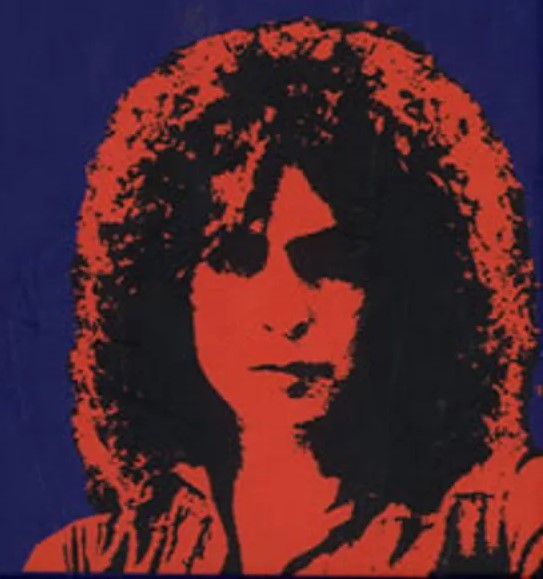
cover and one-page article in New Musical Express, February 5, 1972.


AS A LITTLE KID, I was always into music very much. I didn't start writing until I was 17, and I'm 24 now. I had a guitar as a kid, but I used to just look in the mirror and wiggle about, that sort of stuff.


Then somebody gave me another guitar and I'd been writing a lot of poetry, and I just picked it up one day and started writing songs. I knew some chords and that sort of thing.


I sort of wrote mainly for about three years, but I didn't really play. I strummed about, but I wasn't consciously performing. I never did gig any where, even though I did make a couple of singles on my own.


I slowly began to realise that I wanted to play live to people. And in realising that, I had to practice and learn how to play.


I signed with Decca as a solo artist just around the time Donovan started, so 1 think they thought I was going to be Decca's Donovan or something. They had some fantasy in their head at Decca which I wasn't in volved in.


The only thing Decca did for me was to change my name, actually. From Mara Fald they changed it to Bol-an, which was originally spelled B-o-w-4-a-n-d.


I didn't really object-1 didn't really care, to be honest. We did the first sin gle called "The Wizard" at 10 o'clock in the morning and it was a two hour session for three numbers. And it was, in fact, the ONLY session I ever did for Decca.


It came out here and got a lot of attention, it didn't sell, and people said Mmmmm, Interesting new face on the scene" and all that sort of jive. They thought the words were interesting, and the cat in the Observer wrote and said that I was the new Walter de la Mare or something, which I couldn't relate to at all. That was George Melly, actually, who is in fact very nice. I was just 17 then.


IT TOOK TWO years to le-gally get out of the Decca thing and get away from the managers 1 had. And then I met a guy called Simon Napier-Ball who was managing the Yardbirds at that point, and I did a single with him called "Hippy Gumbo", which I dig.


By then I was getting much more into being concerned with doing my own thing. I didn't produce the record, but I had a lot of control over what was done, or I thought I did anyway. I didn't realise that people could play about with tapes afterwards. And I slowly learnt. I never knew what mixing was and what I did sounded amazing, and then when I heard it back it didn't really sound very good. Again, the record did come out and there was a lot of interest. But for me the only intersting thing that came out of that period was watching the Yardbirds work.


Jimmy Page and Jeff Beck were with them then, and I used to go to their sessions with them and watch them. And I did a "Ready, Steady, Go" with Hendrix. It was his first ever gig here.


'Hey Joe' was out, but it wasn't a hit, and it was amazing to watch him for the first time. Everyone else used to use backing tracks, but he was going to play live because they got him on the show the same day. And I was in the control room with the producer, just sit-ting about, when they start-ed "Hey Joe" and this old lady really freaked out and said "Turn the backing track down!" because it was really loud. All the machines were shaking.


And they said "But there IS no backing track", and people blew it It because he was playing through four hundred watts of stacks and no-one had ever soon it. And that really interested me. And he came up and I spoke with him for a bit, and he said he dug the way I sung. And he said "One days you're gonna be very big and I thought "bull-shit", you know.


THEN I MOVED on to Track, but hang on a minute while I catch us up.


I did the single "Hippy Gumbo with Simon Napier-Bell, and then Track records, which was only just started by Kit Lambert, had a group which Simon managed called John's Children who were interesting visually.


It was decided John's Children needed a kind of Pete Townsend. So they picked me.


They said "Mare, we're gonna put you into this beat group". And it was alright. I never actually got involved with the guys, cause I was sort of brought in to be the writer. They resented that incredibly because they wrote songs which weren't very good, unfortunately. But most people who write bad songs tend to think of themselves as geniuses.


I was really unsure of my own writing, but they thought anyone could write songs. We did rehearsing and went on tour with the Who in Germany, which was amazing. some I did "Desdemona" with that group, which was interesting. I dug doing it. But that was the only thing I did that didn't get tampered with. Because we did it and it was done, and Simon and them were going to do stuff to it, and it heard and really dug it. And they wanted, like, product so they put it out.


A lot of people dug that record. Pete Townsend real-ly dug it. He got into it. I saw Hendrix later, and he really dug it. It was all sort of nice. It looked like it was going to be huge. It really felt like it was going to explode.


Next I went in to record the next song, which was called "Mid-Summer Night's Scene", which was an interesting song as I had it. When I rehearsed it, it didn't really work out. We did one take and it sounded good and it really felt tight but very raw.


I thought that was it. I thought "Wow, we got a follow up it's all over". I felt like it was going to be huge. Something like Zeppelin. It was, like, a lucky take. It was much better than we were.


We were never very good live, because I couldn't play then. I could play three songs

I went home and I heard it the next day, and it was a totally different thing. Simon had over-dubbed all these cobee-doo's. He used to be a film editor, so he thought he had to edit everything. A record's not a record until you cut it to pieces and then put it back again. And I heard it and I read to And people were so glad They said "Ah Maro the prima donna. I said "It's not going to work and I want to split". And I had nowhere to go, but they said "Yeah, good-bye Marc".


They really promoted the group after that but nothing really happened. But it was so obvious, I told them. But now they say "Oh Marc you're so shrewd. And I say a cat with no cars could've told you. I was stuck with Track for a time.


I've always had record companies that wouldn't let me go.


I met stove Took shortly aft-er that. It was in the flower power summer-time. And I used to play in Hyde Park. I was really, like, busking, but I never had the balls to ask anyone for any money.


We used to play a lot and then suddenly we were get ting big crowds around everywhere. You know, we were all right.


I suppose I had a sort of funny little voice. So there was an interest. And it felt nice.


Slowly John Peel got a copy of "Hippy Gumbo" and played it on Radio London the pirate station) and literally got thousands of people writing in. He came off the air and that was the end.


And then the Middle Earth opened and they ask ed John to do something there for nothing, and we four record companies that said "Hey we want to sign you up and make you a star".


Apple were interested, so obviously I said "Oh yeah!" But it didn't feel very good. It felt a bit lame and untogether. And Tony Vinsconti, who was working for Denny Cordell then, came down and was really excited.


Regal Zoophone had just started with Procol Harum and the Move and Joe Cocker, all upcoming big acts. And I went up to their office and they were the only people to let me do an album.


I said "I don't want to do a single, I want to do an al-bum, and in those days everybody did singles and not albums. Pink Floyd was about the only lead band to have an album out at that time. We did the album and fortunately, it was a big album.


He knows it went along and just played. (They never had any mikes down there or anything). And it became sort of fashionable I suppose, and after a while we were pack-ing it solid 2,000 people and we'd got about 10 quid. It slowly grew and we had col lege people calling up and than in one week we had.


Which surprised everyone, most of allus. But we workod for about six months doing it.


But we did release 'Deborah as a single, and that was the biggest buzz of all That was our first single.


They pressed seven hun-dred copies and sold them the first day, which is not really a lot now, but I thought "seven hundred people". It's a lot when you think that only four people know who you are. That re-cord got to about thirty in the charts, which threw everybody. We had a lucky year that first year. We with the feeling. The first two singles were successful and the first two albums were very big.


Our older material wasn't arranged and rehearsed to any great extent.


It was never excited that much about Steve's drumming the one thing he did really well was sing. He was a very good singer, he really had harmony. That's the only thing I miss, because Micky is not that good a singer in comparison with Steve.


Steve got a bit destroyed with various stuff towards the end, but at that point whatever I sung he immediately came up with a harmony for it.


I was very rehearsed but as a band well, we never rehearsed together at all. Because we didn't really get on. I knew exactly what I was going to do, and the fact that Steve could come in there in five minutes and sing it was great.


Most of the noises and all of them things were things that happened at the sessions, although for myself I was very rehearsed on those songs I'd written the songs on the first album two years before. It was all old material.


You know, there's mil-lions of songs we didn't use. A lot of it was going to be for John's Children. We did the first album in three sessions.


The first album cost 400 quid, and "Deborah" cost thirty quid. We did it straight off in an hour. But we were mentally in tune together at that point.


I remember Steve had been a kit drummer in a lot of groups.


The reason we started out acoustic was purely be-cause Track records took back my guitars and amps. Steve had to sell his drum kit for us to live.


We nicked somebody's bongos, and the guitar 1 used for the first year had a broken neck that was selle taped together. It cost me six quid. I used that for long time. Like we never had a pa. for two years. I just didn't trust anyone in the business.


I trusted the kids, but I regarded myself as having been screwed so many times. I've mellowed to-wards that now.


The reason our earlier re-cords were so ragged and bara, Ika "Prophets", wes because I was so paranoic of someone coming along and saying "Hey kid, you gotta put strings on that".


For years everyone said that you had to have orchestras, you've got to have bass-and-drums and make it like a pop record.


In my head there was this little block against anything like that. I thought "no man, I don't want it".


Comments


bottom of page