


📰 Festival Express – News Page: Apr. 1972
- glamslam72

- Apr 15, 1972
- 3 min read
A bustling, panoramic snapshot of Britain’s live‑music calendar in spring 1972, brimming with festival announcements and touring headlines.
The page hums with anticipation and movement.
A moment when rock, soul, and folk converged across the UK and Europe, each artist chasing the season’s stage lights.
The piece captures the pulse of a touring nation, where every weekend promised another field, another crowd, another legend.
🗞 NME
📅 Date: April 15, 1972
⏱ Length: 3–4 min read
📰 Key Highlights
• Great Western Festivals confirm Bardney estate for four‑day Lincoln event
• The Kinks join the Bickershaw Festival lineup with Grateful Dead and Captain Beefheart
• Jerry Lee Lewis booked for Stoke Festival alongside Faces and Lindisfarne
• Fairport Convention and Dr. John headline Camden Festival
• Wilson Pickett, The Doors, and The Everly Brothers announce UK tours
📰 Overview
This news page from NME captures the feverish energy of Britain’s 1972 festival season, a time when the country’s musical landscape was expanding beyond clubs and theatres into sprawling outdoor gatherings. The Great Western Festivals announcement anchors the page, confirming Bardney as the site for the upcoming Lincoln event — a follow‑up to the previous year’s folk festival. The tone is confident, celebratory, and distinctly British, reflecting the growing professionalism of festival organisation.
Surrounding stories highlight the international reach of the scene: The Kinks preparing to share the stage with American icons at Bickershaw, Jerry Lee Lewis returning to Stoke‑on‑Trent, and Wilson Pickett bringing his revue to British audiences. The page reads like a travel map of rock and soul, tracing the routes of artists crisscrossing Europe in pursuit of connection and acclaim.
📰 Source Details
Publication / Venue: NME
Date: April 15, 1972
Format: News Page
Provenance Notes: Verified via preserved page scan; layout, typography, and photographic placement consistent with NME’s early‑70s design style.
📰 The Story
The top headline — “COCKER FOR WEMBLEY?” — sets the tone for a page alive with speculation and excitement. Beneath it, festival organisers confirm Bardney as the site for the Great Western event, promising four days of music beginning May 26. The announcement ends weeks of press rumours, with organisers cheekily dismissing previous reports as “red herrings.”
Elsewhere, The Kinks are confirmed for the Bickershaw Festival near Wigan, joining a lineup that includes The Grateful Dead, Captain Beefheart, and Hawkwind. Ray Davies’ enthusiasm for the American contingent is noted, underscoring the transatlantic exchange shaping the era’s sound.
Further down, Jerry Lee Lewis headlines the Stoke Festival, while Fairport Convention and Dr. John lead the Camden event. Wilson Pickett’s nine‑venue UK tour and The Doors’ May dates mark the continued influx of American acts into Britain’s live circuit. Smaller items — Lulu’s Eurovision withdrawal, Deep Purple’s cancelled U.S. tour, and Ian Wallace’s departure from King Crimson — round out a page dense with movement and change.
📰 Visual Archive
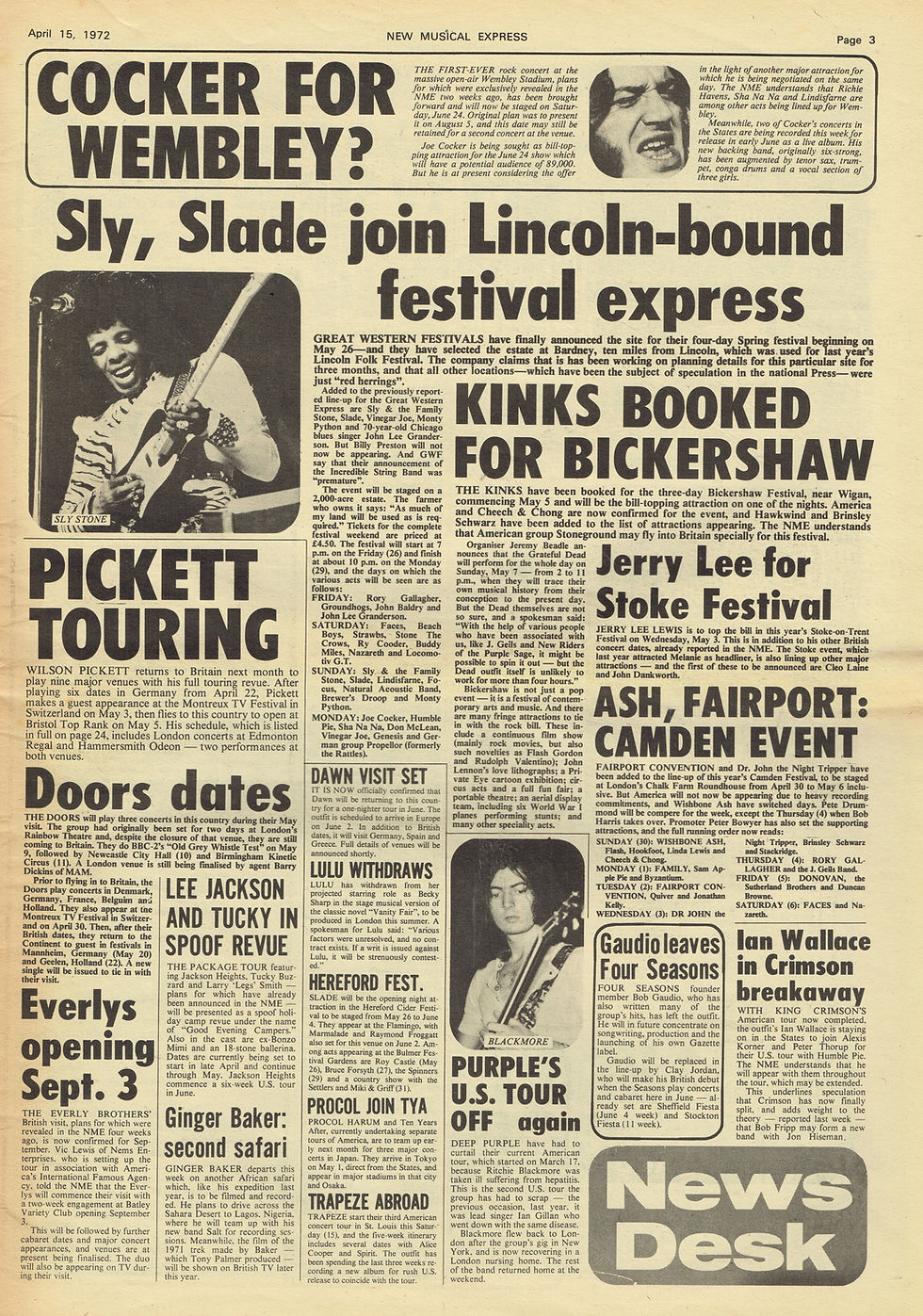
A multi‑column NME news page featuring photographs of Sly Stone, Joe Cocker, and Ritchie Blackmore, alongside festival headlines and tour announcements.
The layout reflects the kinetic rhythm of early‑70s music journalism — bold type, tight spacing, and a sense of constant motion.
Caption: NME Page 3 festival and tour news, April 15, 1972.
📰 Related Material
See tabs at foot of page
📰 Closing Notes
This page stands as a vivid testament to the live‑music boom of 1972 — a year when British festivals became cultural landmarks and touring artists turned the country into a stage without borders. The energy, ambition, and sheer volume of activity reflect a scene at its creative peak.
📝 Copyright Notice
All magazine scans, photographs, and original text excerpts referenced in this entry remain the property of their respective copyright holders. This Chronicle entry is a transformative, non‑commercial archival summary created for historical documentation and educational reference. No ownership of the original material is claimed or implied.


Comments