


🔘 The Man Who Sold the World – Single: Jan. 1974
- LULU
- Jan 11, 1974
- 3 min read

A bold, dramatic reinvention of David Bowie’s 1970 composition, Lulu’s “The Man Who Sold the World” stands as one of the most striking and unexpected glam‑era collaborations — a smoky, theatrical performance shaped directly by Bowie and Mick Ronson.
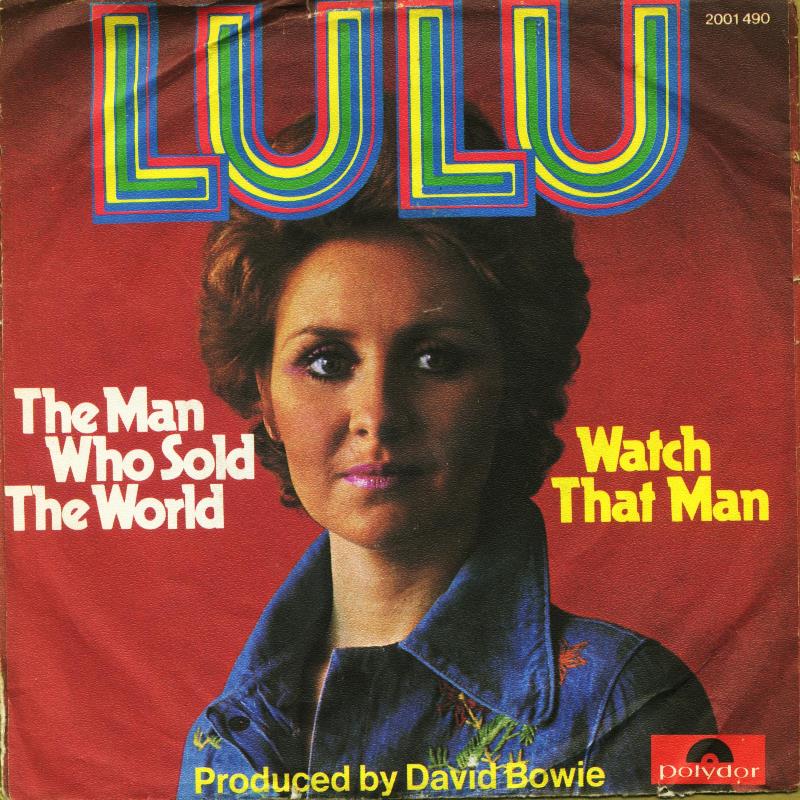
Released on January 11, 1974, the single arrived as Lulu’s first major release under her new association with Bowie. Issued by Polydor Records under catalogue number 2001 490, the track was produced by Bowie and Ronson, who also oversaw the arrangement and instrumentation. Backed with a cover of Bowie’s “Watch That Man,” the single presented Lulu in a darker, more glamorous light, far removed from her earlier pop image. Entering the UK Singles Chart in late January, it climbed into the Top 5, becoming one of the most memorable Bowie‑related releases of the decade.
Label: Polydor Records
Catalogue Number: 2001 490
Format: 7" Vinyl Single (Solid Centre)
Released: January 11, 1974 (UK)
🔘 Track List
UK 7" Single — Polydor – 2001 490 — 1974
A. The Man Who Sold the World
B. Watch That Man
Written by: David Bowie
Produced by: David Bowie, Mick Ronson
Recorded: 1973
🔘 Key Highlights
• Released January 11, 1974
• A-side: Bowie‑produced reinterpretation of his 1970 track
• B-side: “Watch That Man” — also written by Bowie
• Chart debut: Late January 1974
• Performed on: UK pop‑TV rotation
• Recorded at: 1973 sessions with Bowie and Ronson
🔘 The Story
In late 1973, David Bowie and Mick Ronson took Lulu into the studio with a clear mission: to reinvent her image. The result was “The Man Who Sold the World,” a smoky, atmospheric reworking of Bowie’s own song, transformed into a glam‑soul torch performance.
Ronson’s arrangement — heavy bass, crisp drums, and dramatic brass — created a cinematic backdrop for Lulu’s powerful vocal delivery. Bowie contributed backing vocals and saxophone, further stamping the single with his unmistakable presence. The B‑side, “Watch That Man,” continued the Bowie connection, offering a raw, energetic contrast.
Commercially, the single was a major success. Entering the UK charts in late January, it climbed into the Top 5 and became one of Lulu’s most celebrated recordings, as well as a standout entry in the extended Bowie universe.
🔘 Variants (UK)
• 7", 45 RPM, Single — Polydor – 2001 490 — UK — 1974
• 7", 45 RPM, Single, Promo — Polydor – 2001 490 — UK — 1974
• Issued in standard Polydor company sleeve
🔘 Chart Performance
UK — Official Singles Chart
37 — January 19, 1974
20 — January 26, 1974
10 — February 2, 1974
4 — February 9, 1974
6 — February 16, 1974
14 — February 23, 1974
23 — March 2, 1974
34 — March 9, 1974
Total Weeks: 8
🔘 Context & Notes
• A-side: Bowie‑produced reinterpretation
• B-side: Another Bowie composition
• Production: David Bowie & Mick Ronson
• Sleeve notes: Standard Polydor company sleeve
• Historical placement: One of Lulu’s most acclaimed singles
• Reissues / compilation appearances: Featured on numerous Lulu and Bowie‑related collections
🔘 Related Material
• “The Man Who Sold the World” (Bowie, 1970)
• “Watch That Man” (Bowie, 1973)
• *Another Year, Another Moment* (Lulu)
• Bowie’s 1973–74 transitional period
🔘 Discography
Oh Me Oh My (I’m a Fool for You Baby) — 1973
The Man Who Sold the World — 1974
Take Your Mama for a Ride — 1974
Shout — 1975
🔘 Mini‑Timeline
✦ 1973 — Recorded with Bowie & Ronson
✦ Jan 11, 1974 — UK single released
✦ Jan 19, 1974 — Enters UK Singles Chart
✦ Feb 9, 1974 — Peaks at No. 4
✦ Mar 9, 1974 — Completes 8‑week chart run
🔘 Glam Flashback
A smoky, dramatic glam‑soul reinvention — Lulu transformed by Bowie’s vision into something dark, stylish, and unforgettable.
🔘 Sources
Primary reference sources: Polydor Records, Discogs, Official Charts Company, contemporary music‑press documentation, archival references.
🔘 Copyright Notice
All magazine scans, photographs, and original text excerpts referenced in this entry remain the property of their respective copyright holders. This Chronicle entry is a transformative, non‑commercial archival summary created for historical documentation and educational reference. No ownership of the original material is claimed or implied.


Comments