


📰 Love Me Tender– Advert: Mar. 1974
- Mick Ronson
- Mar 14, 1974
- 3 min read
Rolling Stone (Promotional Advertisement)
Date: March 14, 1974
Length: 3–4 min read
A striking full‑page advertisement announcing Mick Ronson’s single “Love Me Tender,” promoting his debut solo album Slaughter on 10th Avenue during a pivotal moment in his post‑Spiders‑from‑Mars evolution.
A glam‑era guitarist steps into the spotlight with a tender, unexpected reinterpretation.
Rolling Stone’s March 1974 issue carried a bold, full‑page advert for Mick Ronson’s “Love Me Tender,” positioning the guitarist not just as Bowie’s right‑hand man but as a solo artist with his own emotional and stylistic range. The imagery and messaging framed Ronson’s debut as both a continuation of glam’s golden age and a personal artistic statement.
📰 Key Highlights
• Full‑page Rolling Stone advert dated March 14, 1974
• Promotes Ronson’s single “Love Me Tender”
• Tied to his debut album Slaughter on 10th Avenue
• Issued under MainMan and RCA Records & Tapes
• Marks Ronson’s transition from Bowie’s guitarist to solo frontman
📰 Overview
By early 1974, Mick Ronson was stepping out from the shadow of his legendary work with David Bowie. His debut solo album Slaughter on 10th Avenue showcased his versatility as a guitarist, arranger, and vocalist. The choice of “Love Me Tender” — a reinterpretation of the Elvis Presley classic — signaled Ronson’s willingness to explore softer, more melodic territory while still carrying the glam‑rock aura that defined his early career.
Rolling Stone’s full‑page advert was part of a coordinated promotional push by MainMan and RCA, designed to position Ronson as a standalone artist capable of commanding his own audience. The ad’s bold photography and minimalist text reflected the era’s visual language: confident, stylish, and star‑making.
📰 Source Details
Publication / Venue: Rolling Stone
Date: March 14, 1974
Format: Full‑page promotional advertisement
Provenance Notes: Based on the original printed advert and verified release data.
📰 The Story
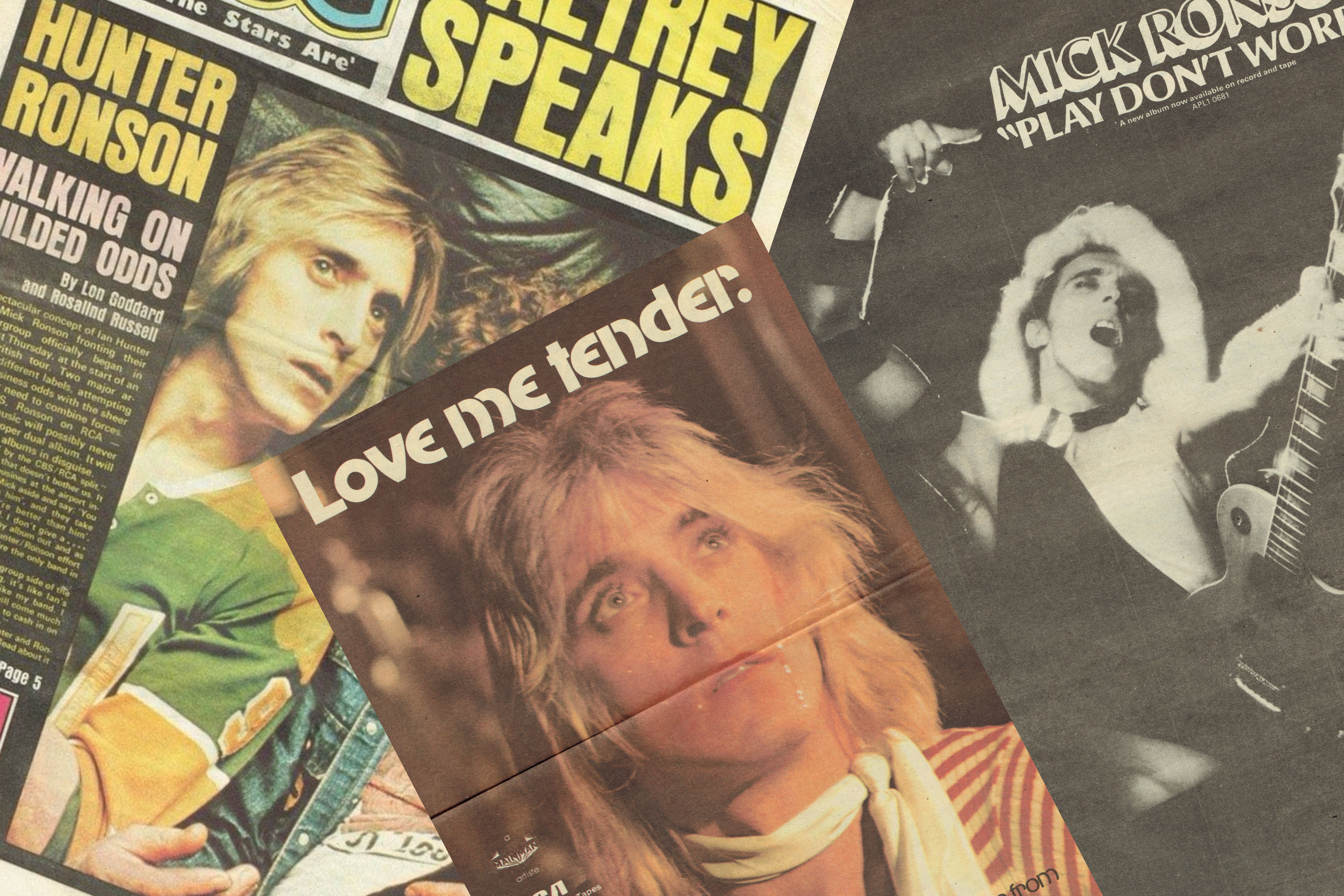
The advert presents Ronson in a striking close‑up portrait — long blonde hair, striped shirt, white scarf — a look that blends glam flamboyance with a softer romanticism. The tagline “Love me tender.” appears above the MainMan and RCA branding, anchoring the single within the broader promotional machinery that had propelled Bowie to superstardom.
“Love Me Tender” served as the emotional counterpoint to Ronson’s more muscular guitar work, revealing a vulnerability that surprised some listeners. The single supported the release of Slaughter on 10th Avenue, an album that blended rock, orchestration, and theatrical flair — a testament to Ronson’s musical breadth.
The advert’s placement in Rolling Stone signaled MainMan’s ambition: Ronson was not merely a sideman stepping out; he was being positioned as a major artist in his own right.
📰 Visual Archive

A full‑page promotional advert featuring a close‑up photograph of Mick Ronson. He wears a red‑and‑white striped shirt and a white scarf, with long blonde hair framing his face. The text reads “Love me tender.” followed by MainMan and RCA branding, and a note identifying the single as being from his debut album Slaughter on 10th Avenue.
Mick Ronson — “Love Me Tender” promotional advert (Rolling Stone, March 14, 1974).
📰 Related Material
• Slaughter on 10th Avenue (1974)
• “Only After Dark” – Single
• Ronson’s work with David Bowie (1970–1973)
📰 Closing Notes
This advert captures a rare moment when Mick Ronson stepped into the spotlight with full industry backing. “Love Me Tender” symbolized his artistic independence, marking the beginning of a solo journey that remains beloved by fans of glam, guitar craft, and the extended Bowie universe.
📰 Sources
• Rolling Stone (March 14, 1974)
• RCA / MainMan promotional materials
• Ronson discography documentation
📝 Copyright Notice
All magazine scans, photographs, and original text excerpts referenced in this entry remain the property of their respective copyright holders. This Chronicle entry is a transformative, non‑commercial archival summary created for historical documentation and educational reference. No ownership of the original material is claimed or implied.


Comments