


🔘 THE PRETTIEST STAR – Single: Mar. 1970
- David Bowie
- Mar 6, 1970
- 4 min read
Label: Mercury (6052 026)
Date: March 6, 1970
Tracklist: 2 tracks
Length: 8–10 min read
Released as the follow‑up to “Space Oddity,” The Prettiest Star stands as one of Bowie’s most personal early singles — a romantic declaration written for Angela Barnett, performed with a young Marc Bolan on guitar, and issued during a period of transition between Bowie’s folk‑pop phase and the heavier experimentation that would define the early 1970s.
🔘 – Sub‑Heading
A love song, a crossroads, and a cameo from Marc Bolan.
🔘 – Excerpt
Issued in March 1970, The Prettiest Star was Bowie’s attempt to follow the success of “Space Oddity” with something more intimate. Featuring Marc Bolan on guitar and written for Bowie’s future wife Angela, the single failed to chart — yet it remains one of the most revealing snapshots of Bowie’s early songwriting.
🔘 – Key Highlights
• Released March 6, 1970 on Mercury
• Written for Angela Barnett (later Angela Bowie)
• Features Marc Bolan on lead guitar
• Follow‑up to “Space Oddity”
• Re‑recorded for Aladdin Sane (1973)
🔘 – Overview
The Prettiest Star arrived at a delicate moment in Bowie’s career. “Space Oddity” had given him his first major hit, but he had not yet found a consistent musical direction. Rather than repeat the cosmic theme, Bowie turned inward, writing a romantic, melodic piece for Angela Barnett — a song that showcased his affection for 1950s pop structures and crooner‑style delivery.
The single’s most notable collaborator was Marc Bolan, then on the cusp of his own breakthrough with Tyrannosaurus Rex. Bolan’s distinctive vibrato guitar lines give the track a shimmering, almost baroque quality, foreshadowing the glam‑rock partnership the two would briefly share in the early 1970s.
Despite strong material and high‑profile collaborators, the single failed to chart — a reminder that Bowie’s ascent was far from linear.
🔘 – The Story
Recorded in early 1970, The Prettiest Star was Bowie’s attempt to consolidate the momentum of “Space Oddity.” Instead of leaning into science‑fiction themes, he wrote a love song — direct, melodic, and emotionally open. The track was offered to Angela Barnett as a proposal of sorts, and she later recalled Bowie playing it to her over the telephone.
Marc Bolan’s involvement is one of the single’s most intriguing elements. Still performing as Tyrannosaurus Rex, Bolan was not yet the glam icon he would become, but his guitar tone is unmistakable. His presence also symbolised the growing creative overlap between the two artists, who would later share stages, producers, and cultural space during the glam era.
The B‑side, “Conversation Piece,” offered a more introspective counterpoint — a reflective, melancholy track that hinted at the emotional depth Bowie would explore on Hunky Dory.
Commercially, the single struggled. Mercury’s promotional support was limited, and Bowie’s public profile was still fragile. The song would find a second life in 1973 when Bowie re‑recorded it for Aladdin Sane, giving it a more muscular, glam‑infused arrangement.
Today, the 1970 single stands as a tender, transitional moment — Bowie between eras, between labels, and between identities.
🔘 – Track List
A: The Prettiest Star – 3:12
B: Conversation Piece – 3:05
🔘 – Variants (UK)
• Mercury 6052 026 — Standard Issue
• Mercury 6052 026 — Promo Copy
• Sleeve variations: company sleeve / export sleeve
🔘 – Chart Performance
• Did not chart in the UK
• Later gained recognition through the Aladdin Sane re‑recording
🔘 – Context & Notes
• Written for Angela Barnett
• Marc Bolan plays lead guitar
• Produced by Tony Visconti
• Released during Bowie’s brief Mercury period
• Represents Bowie’s pre‑glam transitional sound


🔘 – Visual Archive
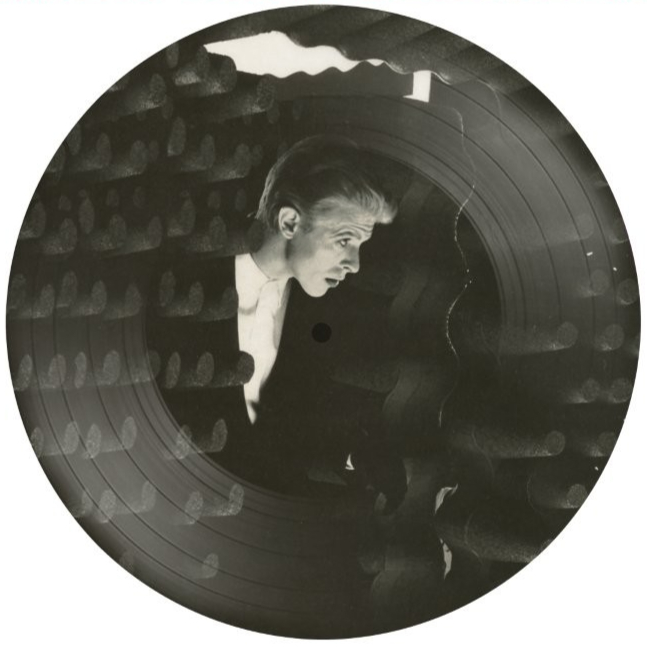
A Mercury company sleeve housing the original 1970 single, with the distinctive black‑and‑white Mercury label. The A‑side displays “The Prettiest Star,” credited to David Bowie, with catalogue number 6052 026.
🔘 – Caption
David Bowie — The Prettiest Star — UK Mercury 6052 026 (1970).
🔘 – Related Material
• “Space Oddity” (1969)
• “Memory of a Free Festival” (1970)
• Aladdin Sane (1973)
🔘 – Discography
Previous Single: “Memory of a Free Festival” (1970)
This Release: “The Prettiest Star” (1970)
Next Single: “Holy Holy” (1971)
🔘 – Mini‑Timeline
Jan. 1970: Single recorded
Mar. 1970: Released on Mercury
1973: Re‑recorded for Aladdin Sane
1970s: Gains cult status among early Bowie collectors
🔘 – Glam Flashback
Three years after this gentle love song, Bowie and Bolan would stand at the centre of glam rock — glitter, platform boots, and electric swagger replacing the soft romanticism of 1970.
🔘 – Closing Notes
Though commercially overlooked, The Prettiest Star remains one of Bowie’s most intimate early works — a love song, a collaboration with Marc Bolan, and a quiet moment before the explosive reinventions that would define the decade.
🔘 – Hashtags
🔘 – Sources
• Mercury Records documentation
• Contemporary press references
• Wikipedia (contextual background)
🔘 – Copyright Notice
All label scans, photographs, and original text excerpts referenced in this entry remain the property of their respective copyright holders. This Chronicle entry is a transformative, non‑commercial archival summary created for historical documentation and educational reference. No ownership of the original material is claimed or implied.

Comments