


🔘 LOVE IT TO DEATH – Album US: Mar. 1971
- Alice Cooper Group
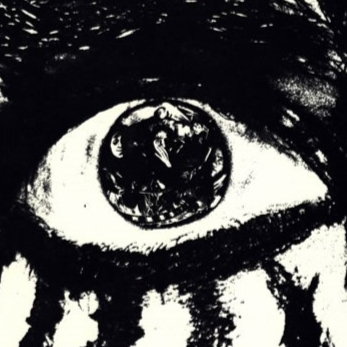
- Mar 9, 1971
- 5 min read
Updated: Mar 6


Label: Straight Records / Warner Bros. – WS 1883
Date: March 9, 1971
Tracklist: 9 tracks
Length: Approx. 16–18 min read
A black‑and‑white detonation from Detroit’s hard‑rock underbelly — the album where Alice Cooper stopped being a psychedelic curiosity and became a shock‑rock phenomenon.
A breakthrough forged in sweat, discipline, and theatrical menace.
🔘 – Key Highlights
• First commercially successful Alice Cooper Group album
• Breakthrough hit “I’m Eighteen” reached No. 21 US, No. 7 Canada
• Produced by Bob Ezrin after months of intensive rehearsals
• Reached No. 35 US; certified Gold (1972) and Platinum (2001)
• Original “thumb” sleeve censored shortly after release
🔘 – Overview
Love It to Death marks the moment the Alice Cooper Group crystallized their identity. After two psychedelic‑leaning albums failed to find an audience, the band relocated to Detroit in 1970, absorbing the city’s aggressive hard‑rock energy. The move proved transformative: Detroit’s raw, high‑volume scene — MC5, The Stooges, Funkadelic — pushed the band toward a tighter, heavier sound.
A young Bob Ezrin was brought in as producer, and his influence was immediate. Ezrin demanded discipline, structure, and relentless rehearsal. Over two months of ten‑ to twelve‑hour days, the band reshaped their material into sharp, focused hard‑rock songs. The result was an album that captured both their theatrical flair and their newfound musical precision.
Released on March 9, 1971, the album became their first major success, driven by the explosive single “I’m Eighteen.” Its success convinced Warner Bros. to fully back the band, setting the stage for a run of classic albums that would define early ’70s rock.
🔘 – The Story
The Alice Cooper Group entered 1970 at a crossroads. Their early work on Frank Zappa’s Straight label had failed to connect, and their chaotic, psychedelic sound felt increasingly out of step with the emerging hard‑rock movement. Their relocation to Detroit changed everything. Immersed in a scene that valued volume, attitude, and spectacle, the band found a new sense of purpose.
Producer Bob Ezrin initially resisted working with them, but after witnessing their theatrical performance at Max’s Kansas City, he recognized their potential. Ezrin pushed the band through rigorous rehearsals, reshaping their loose jams into tightly structured songs. As the attached document notes, Ezrin “ironed the songs out note by note, giving them coloring, personality.”
“I’m Eighteen,” originally an eight‑minute jam, was transformed into a taut three‑minute anthem. Released as a single in late 1970, it became the band’s breakthrough, reaching No. 21 in the U.S. and proving their commercial viability. Warner Bros. greenlit the album, and Love It to Death was recorded in Chicago in December 1970.
The album’s release was accompanied by controversy. The original cover featured Alice Cooper with his thumb positioned to resemble exposed genitalia. Warner Bros. quickly censored the sleeve, first with white strips and later with airbrushing — a detail confirmed in the attached document.
The Love It to Death tour cemented the band’s reputation for shock rock. During “Ballad of Dwight Fry,” Cooper was dragged offstage and returned in a straitjacket; during “Black Juju,” he was mock‑executed in an electric chair. These theatrics became central to the band’s identity and influenced generations of performers.
The album is now regarded as a foundational work in hard rock, punk, and heavy metal, inspiring artists from the Ramones to the Sex Pistols to Nirvana.


🔘 – Track List
Caught in a Dream – 3:10
I’m Eighteen – 3:01
Long Way to Go – 3:04
Black Juju – 9:12
Is It My Body – 2:40
Hallowed Be My Name – 2:30
Second Coming – 3:05
Ballad of Dwight Fry – 6:33
Sun Arise – 4:08


🔘 – LP Variants (US)
• LP, Album, Stereo — Straight / Warner Bros. WS 1883 (uncensored, gatefold)
• LP, Album, Promo, Stereo — Straight WS 1883 (uncensored, gatefold)
• LP, Album, Repress — Warner Bros. WS 1883 (uncensored photo, gatefold)
• LP, Album, Repress — Warner Bros. WS 1883 (cropped sleeve, gatefold)
• LP, Album, Repress — Warner Bros. WS 1883 (censored sleeve, Terre Haute)
• LP, Album, Stereo — Straight / Warner Bros. WS 1883 (Terre Haute, uncensored, gatefold)
• LP, Album, Repress — Warner Bros. WS 1883 (uncensored)
• LP, Album, Reissue — Warner Bros. WS 1883 (Pitman, censored, gatefold)
• LP, Album, Club Edition — Warner Bros. SKAO‑93734 / 93734 / 1883
• LP, Album, Stereo — Warner Bros.‑Seven Arts WS 1883
• LP, Album, Repress — Warner Bros. WS 1883 (Santa Maria, censored, gatefold)
• LP, Album, Repress — Warner Bros. WS 1883 (Pitman, uncensored sleeve, gatefold)
• LP, Album, Uncensored — Straight WS 1883 (Pitman, gatefold)
• LP, Album, Uncensored — Straight WS 1883 (Santa Maria, gatefold)
• LP, Album, Reissue — Warner Bros. WS 1883 (Santa Maria, uncensored sleeve)
• LP, Album, Club Edition — Warner Bros. WS 1883 (Indianapolis, censored)
• LP, Album, Repress — Warner Bros. WS 1883 (cropped sleeve, gatefold)
• LP, Album, Gatefold — Warner Bros. WS 1883 (Jacksonville, censored)
• LP, Album, Stereo — Warner Bros. WS 1883 (dated March 9, 1971)
• LP, Album, Repress — Warner Bros. WS 1883 (uncensored, gatefold)
• LP, Album, Reissue — Warner Bros. WS 1883 (censored, gatefold)
• LP, Album, Repress — Warner Bros. WS 1883 (Pitman, uncensored sleeve, gatefold)
🔘 – 8‑Track Variants (US)
• 8‑Track Cartridge — Warner Bros. M 81883
• 8‑Track Cartridge (white shell) — Warner Bros. M 81883
• 8‑Track Cartridge (yellow shell) — Warner Bros. M 81883
• 8‑Track Cartridge (yellow shell) — Warner Bros. 8WM 1883 / 8WM‑1883
• 8‑Track Cartridge (grey cartridge) — Warner Bros. M 81883
• 8‑Track Cartridge (white cartridge) — Warner Bros. M 81883
🔘 – Cassette Variants (US)
• Cassette, Album, Snapcase — Warner Bros. / Straight M 51883
• Cassette, Album, Snapcase — Warner Bros. / Straight M51883 (multiple identical listings)
🔘 – Chart Performance
US Billboard 200: No. 35
Canada: No. 34
Singles:
• “I’m Eighteen” — US No. 21, Canada No. 7
• “Caught in a Dream” — US No. 94
🔘 – Context & Notes
• Recorded December 1970 at RCA Mid‑America Recording Center, Chicago
• Produced by Jack Richardson & Bob Ezrin
• Released on Straight Records but distributed by Warner Bros.
• First album where band members received individual songwriting credits
• Certified Gold (1972) and Platinum (2001)
• UK release followed later (June 1971) — not part of this variant list
🔘 – Visual Archive
The censored sleeve features the band posed dramatically in black and white, with Alice Cooper’s thumb airbrushed out. The Warner Bros. logo appears in the lower corner, and the handwritten album title sits in the upper right.

The censored 1971 U.S. sleeve of Love It to Death — the Alice Cooper Group’s breakthrough album.
🔘 – Related Material
• Easy Action (1970)
• Killer (1971)
• “I’m Eighteen” (1970)
🔘 – Discography
Previous Release: Easy Action (1970)
This Release: LOVE IT TO DEATH (1971)
Next Release: Killer (1971)
🔘 – Mini‑Timeline
• Late 1970 — “I’m Eighteen” released
• December 1970 — Album recorded
• March 9, 1971 — Album released
• 1972 — Album certified Gold
🔘 – Glam Flashback
Onstage in 1971, Alice Cooper blurred the line between theatre and rock — straitjackets, electric chairs, and all — setting the template for shock rock’s future.
🔘 – Closing Notes
Love It to Death stands as the album where the Alice Cooper Group found their voice — a raw, theatrical, and influential statement that reshaped the direction of hard rock and introduced the world to a new kind of spectacle.
🔘 – Sources
• Attached document (primary source)
• Discogs (catalogue & variants)
• Wikipedia (contextual background)
• Minimal provenance references only
🔘 – Copyright Notice
All album artwork, photographs, and original text excerpts referenced in this entry remain the property of their respective copyright holders. This Chronicle entry is a transformative, non‑commercial archival summary created for historical documentation and educational reference. No ownership of the original material is claimed or implied.


Comments