


Mott the Hoople (May 20, 1972) Hoople – Keeping Themselves In Sight - Sounds
Updated: 3 days ago
SOUNDS |
A full-page feature from Sounds magazine dated May 20, 1972, profiling Mott the Hoople during a pivotal moment in their career. |
FEATURE HIGHLIGHTS
FEATURE | DETAILS |
Publication: | Sounds |
Date: | May 20, 1972 |
Country: | United Kingdom |
Section / Pages: | Page 7 – Feature Article |
Title: | Hoople – Keeping Themselves In Sight |
Writer: | Ray Telford |
Event: | Major feature on Mott the Hoople’s career and US tour |
Era: | 1972 – Pre-“All the Young Dudes” breakthrough period |
Tone: | Supportive and observational |
Photography: | Black-and-white live and portrait shots of the band |
Audience: | UK rock music readers |
ORIGINAL SOURCE MATERIAL
ORIGINAL HOOPLE – KEEPING THEMSELVES IN SIGHT |
 [SOUNDS – MAY 20, 1972] |
THE STORY & CONTEXT
THE STORY | CONTEXT AND NOTES |
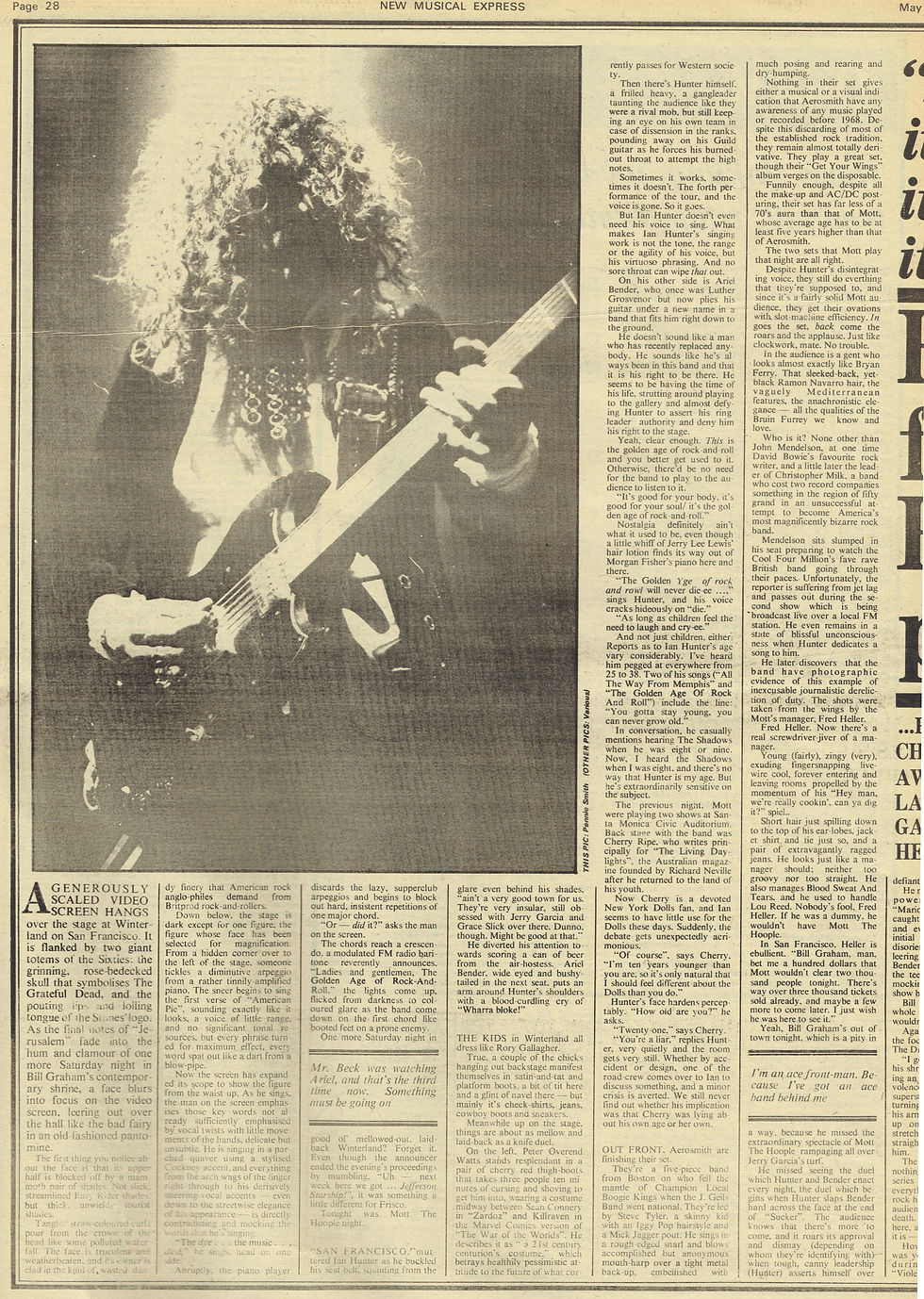
The article examines Mott the Hoople’s determination to establish themselves as a major rock act following mixed critical reception and commercial challenges. It includes insights from Ian Hunter on the band’s US tour experiences, their relationship with critics, and their growing confidence as a live band. The piece also touches on the band’s resilience and their place within the British rock scene alongside contemporaries like David Bowie. | By May 1972, Mott the Hoople were on the cusp of major success, shortly before David Bowie gifted them “All the Young Dudes”. This feature captures the band during a transitional phase — fighting for recognition in both the UK and America while developing their signature hard-rock sound and Ian Hunter’s charismatic frontman persona |
WHAT THE CLIPPING SHOWS
A full newspaper-style page from Sounds with the bold headline “HOOPLE – KEEPING THEMSELVES IN SIGHT”, multiple columns of text, and several striking black-and-white photographs of the band performing and posing. The layout includes additional adverts and illustrations typical of early 1970s music press design.
RELATED MATERIAL
• For other relevant posts, see the tags at the foot of the pag
COPYRIGHT & ARCHIVAL USE |
All magazine artwork, photographs, logos, and original text excerpts remain the property of their respective copyright holders. This entry is a transformative, non-commercial archival summary created for historical documentation and educational reference |

Comments