


🔘 See My Baby Jive – Single: Apr. 1973
- Wizzard
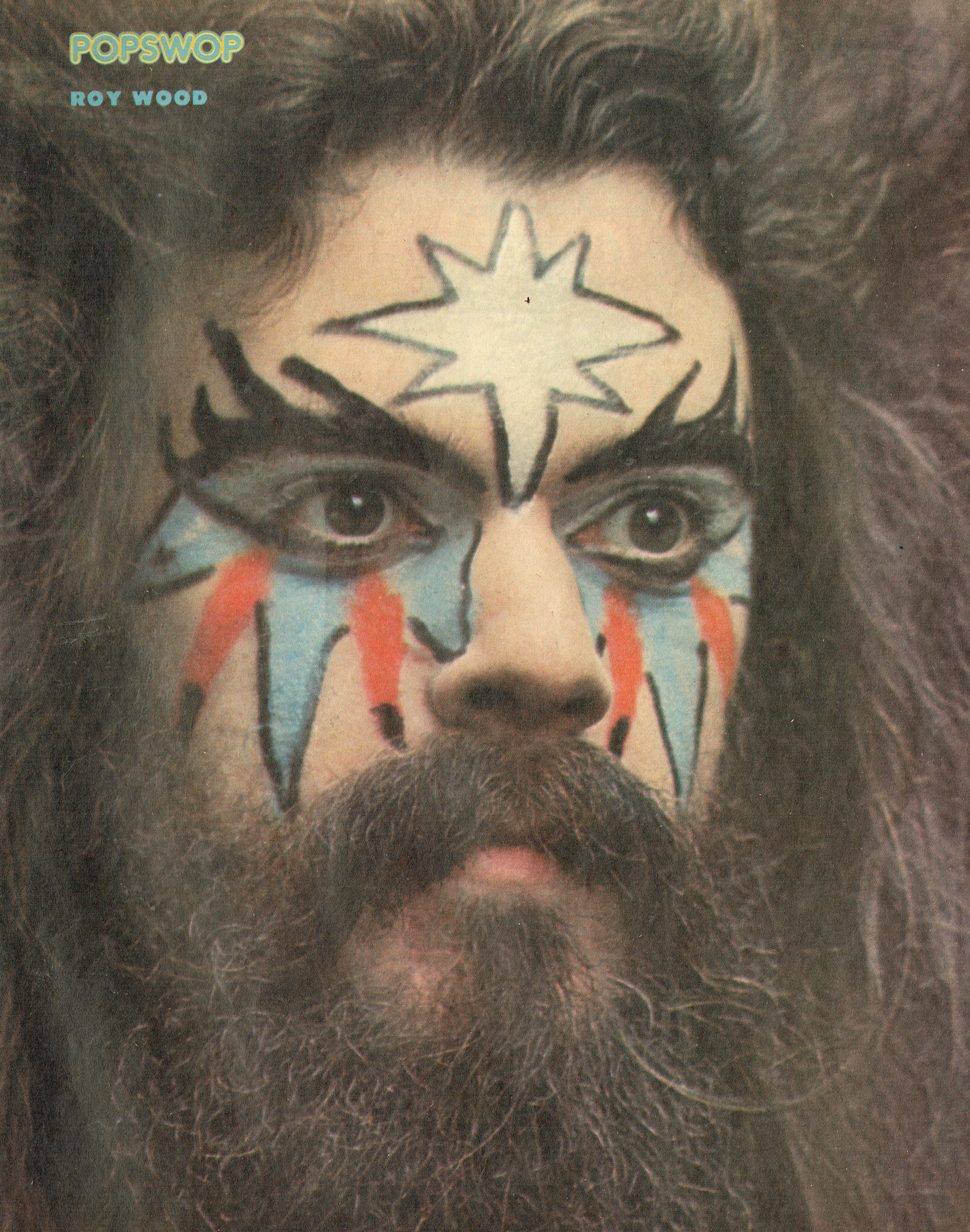
- Apr 6, 1973
- 3 min read
A dazzling burst of orchestral glam, “See My Baby Jive” marked Wizzard’s arrival as one of the most inventive and flamboyant forces of the early 1970s. Written and produced by Roy Wood, the single fused Phil Spector‑style wall‑of‑sound production with Wood’s eccentric multi‑instrumental brilliance. Released on April 6 1973, it became Wizzard’s first UK No. 1 single, spending four weeks at the top of the charts and becoming the sixth best‑selling UK single of the year.

The B‑side, “Bend Over Beethoven,” written by cellist Hugh “H” McDowell, continued the band’s playful, genre‑bending approach. The single also credited backing vocals to “The Suedettes,” adding to its theatrical charm. Its influence extended far beyond the glam era—ABBA later acknowledged the track as a key inspiration for their breakthrough hit “Waterloo.”
Label: Harvest
Catalogue Number: HAR 5070
Format: 7" Vinyl Single
Released: April 6 1973 (UK)
🔘 Track List
UK 7" Single — Harvest – HAR 5070 — 1973
A. See My Baby Jive — 5:00
Written by: Roy Wood
Backing Vocals: The Suedettes
B. Bend Over Beethoven
Written by: Hugh “H” McDowell
Produced by: Roy Wood
Published by: Roy Wood Music / Carlin Music Corp
Recorded: 1973
🔘 Key Highlights
• Released April 6 1973
• A-side: Wizzard’s first UK No. 1 single
• B-side: Written by Hugh “H” McDowell
• UK Chart: No. 1 for four weeks
• International success: No. 1 in Ireland, Top 5 in Germany, Top 10 in the Netherlands and New Zealand
• Sixth best‑selling UK single of 1973
• Backing vocals credited to “The Suedettes”
🔘 The Story
“See My Baby Jive” was Roy Wood’s boldest statement yet—a towering, technicolour glam‑pop anthem built on layers of brass, strings, pounding drums, and soaring harmonies. Wood played a vast array of instruments himself, from guitars and sitar to cello, bassoon, and tuba, creating a dense, joyous soundscape that echoed Phil Spector’s legendary production style.
The single’s infectious energy and theatrical flair propelled it to No. 1 in the UK, where it remained for four consecutive weeks. It also topped the Irish charts and became a major hit across Europe and Australasia. Its influence was immediate and far‑reaching: ABBA later cited it as a key inspiration for “Waterloo,” which would win Eurovision the following year.
The B‑side, “Bend Over Beethoven,” showcased the band’s playful eclecticism, with McDowell’s writing adding a quirky counterpoint to the grandiosity of the A‑side.
🔘 Variants (UK)
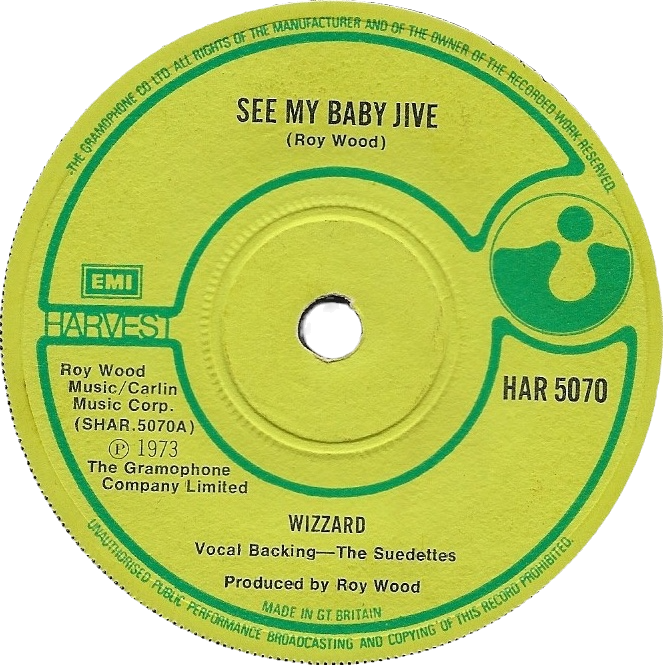

• 7", 45 RPM, Single — Harvest – HAR 5070 — UK — 1973 (solid centre)
• 7", 45 RPM, Single — Harvest – HAR 5070 — UK — 1973 (4‑prong centre)
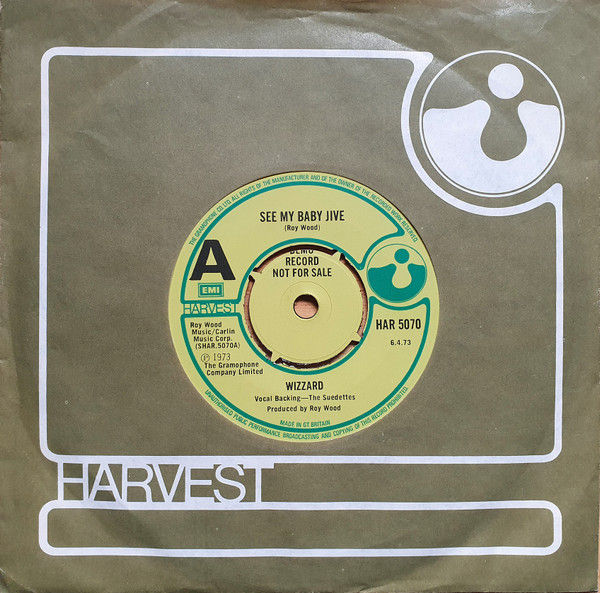

• 7", 45 RPM, Promo — Harvest – HAR 5070 — UK — 1973
• Issued in standard Harvest company sleeve
🔘 Sleeves
• Standard Harvest Records company sleeve (UK vinyl)
• Promo edition: Same sleeve with “DEMO RECORD NOT FOR SALE” labels
• No dedicated picture sleeve issued for this release in UK
🔘 Chart Performance
UK — Official Singles Chart
Peak Position: No. 1
Total Weeks on Chart: [Not listed]
First Chart Date: April 1973
International Chart Peaks:
Ireland — No. 1
Germany — No. 5
Netherlands — No. 10
New Zealand — No. 4
Norway — No. 9
Belgium — No. 19
Australia — No. 12
Austria — No. 20
🔘 Context & Notes
• A-side: One of the defining glam singles of 1973
• B-side: Written by Hugh “H” McDowell
• Production: Roy Wood’s maximalist orchestral glam style
• Sleeve notes: Standard Harvest company sleeve
• Historical placement: Wizzard’s breakthrough and a major glam milestone
• Influence: Acknowledged by ABBA as an inspiration for “Waterloo”
🔘 Related Material
• “Ball Park Incident” (1972)
• “Angel Fingers” (1973)
• *Wizzard Brew* (1973)
🔘 Discography
Ball Park Incident — 1972
See My Baby Jive — 1973
Angel Fingers — 1973
🔘 Mini‑Timeline
✦ Early 1973 — Recorded for Harvest Records
✦ Apr 6 1973 — UK single released
✦ May–Jun 1973 — Spends four weeks at No. 1
✦ 1974 — Influences ABBA’s “Waterloo”
🔘 Glam Flashback
Roy Wood didn’t just write a hit—he built a technicolour glam cathedral, and “See My Baby Jive” rang its bells across the world.
🔘 Sources
Primary reference sources: Harvest Records, Discogs, Official Charts Company, IRMA, European chart archives, contemporary music‑press documentation, archival references.
🔘 Copyright Notice
All magazine scans, photographs, and original text excerpts referenced in this entry remain the property of their respective copyright holders. This Chronicle entry is a transformative, non‑commercial archival summary created for historical documentation and educational reference. No ownership of the original material is claimed or implied.


Comments