
_edited.png)
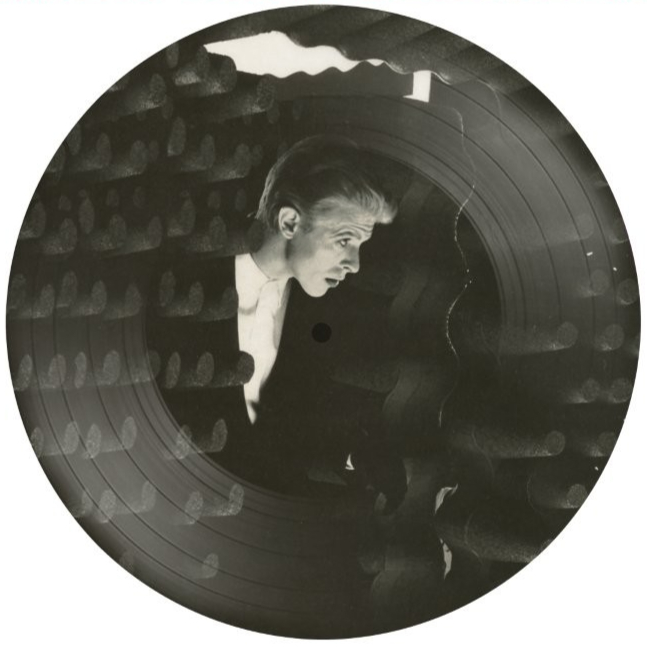
David Bowie: "Sorrow" Single (1973)
- David Bowie
- Sep 27, 1973
- 3 min read
Updated: Sep 22, 2025
David Bowie’s "Sorrow" backed with "Amsterdam", was released as a 7-inch vinyl single in the UK by RCA Victor (catalog number RCA 2424) on September 28, 1973.
This single features “Sorrow,” a cover of a 1965 song by The Merseys, as the A-side, and “Amsterdam,” a cover of a Jacques Brel song, as the B-side.

The A-side drawn from Bowie’s album Pin Ups (released October 19, 1973), a collection of cover versions paying homage to 1960s British rock and pop songs that influenced Bowie’s early career.
The single was a commercial success, reaching No. 3 in the UK Singles Chart, and it capitalized on Bowie’s glam rock stardom during his Ziggy Stardust and Aladdin Sane era. Pressed as a standard 7" vinyl at 45 RPM, it typically came in a generic RCA sleeve.
Historical Context
In 1973, David Bowie was at the peak of his glam rock phase, having retired his Ziggy Stardust persona in July 1973 at London’s Hammersmith Odeon. Following the success of The Rise and Fall of Ziggy Stardust and the Spiders from Mars (1972) and Aladdin Sane (1973), Pin Ups was a nostalgic project, recorded in July 1973 at Château d’Hérouville, France, to bridge the gap before Diamond Dogs (1974). Pin Ups featured covers of songs from 1964–1967, reflecting Bowie’s influences from his teenage years, with a glam rock twist.
The release of “Sorrow” as a single capitalized on Bowie’s UK chart dominance, while “Amsterdam” showcased his admiration for Jacques Brel’s dramatic chanson style, a nod to his earlier theatrical influences. The single’s release came during a transitional period, as Bowie was beginning to explore new directions, including soul and theatrical rock, while maintaining his glam rock fanbase.
Track Analysis
A-Side: Sorrow (2:53, Single Edit)Lyrics and Theme: Originally written by Bob Feldman, Jerry Goldstein, and Richard Gottehrer, “Sorrow” was a 1965 hit for The Merseys (No. 4 UK). Bowie’s version transforms the melancholic pop ballad into a lush, glam-infused track. The lyrics, about heartbreak and lost love (“With your long blonde hair and your eyes of blue”), retain their emotional core but gain a cinematic quality through Bowie’s delivery.

Music and Production: Produced by Ken Scott and Bowie, the track features Mick Ronson’s distinctive guitar and string arrangements, Mike Garson’s piano, Trevor Bolder’s bass, and Aynsley Dunbar’s drums. Recorded at Château d’Hérouville, the single edit (2:53) trims the Pin Ups album version (2:53, though some sources note slight variations) for radio play. The addition of strings and Bowie’s emotive vocals elevates the song beyond its 1960s origins.
Cultural Impact: Bowie’s “Sorrow” became a bigger hit than the original, peaking at No. 3 in the UK and charting in Australia (No. 1) and New Zealand. Its success solidified Pin Ups’s commercial appeal, and the song remains a fan favorite, often cited for its blend of nostalgia and glam flair. It has appeared in media like The Crown and is celebrated for its polished production.
B-Side: Amsterdam (3:19) Lyrics and Theme: Written by Jacques Brel (with English lyrics by Mort Shuman), “Amsterdam” is a dramatic chanson about sailors, prostitutes, and existential longing in the port of Amsterdam. Bowie’s rendition, previously performed live in the late 1960s, retains Brel’s raw intensity, with lyrics like “In the port of Amsterdam, where the sailors all meet.” The song reflects Bowie’s early cabaret influences and theatricality.
Music and Production: Produced by Ken Scott and Bowie, the track features Bowie’s acoustic guitar and emotive vocals, with minimal instrumentation compared to “Sorrow.” Recorded during the Pin Ups sessions, it’s a stark contrast to the A-side’s lush production, emphasizing Bowie’s vocal delivery and storytelling.
Significance: “Amsterdam” was a bold B-side choice, showcasing Bowie’s versatility and love for Brel (he later covered “My Death” and “Port of Amsterdam”). It appealed to fans familiar with his BBC sessions (e.g., 1970 performance) and added depth to Pin Ups’s nostalgic concept. Its rarity as a single track enhances its collectible appeal.

Critical Reception
The Sorrow / Amsterdam single was a commercial and critical success. “Sorrow” was praised for its glamorous reworking of the 1965 original, with NME and Melody Maker noting Bowie’s ability to modernize a classic while retaining its emotional core. The single’s No. 3 UK chart position and international success (e.g., No. 1 in Australia) underscored its appeal.
The single’s role in promoting Pin Ups was seen as a savvy move, though some critics viewed Pin Ups as a stopgap compared to Bowie’s original albums.


Comments