


📰 Young Americans – Album Cover Creation – Feature: Aug.1974
- David Bowie
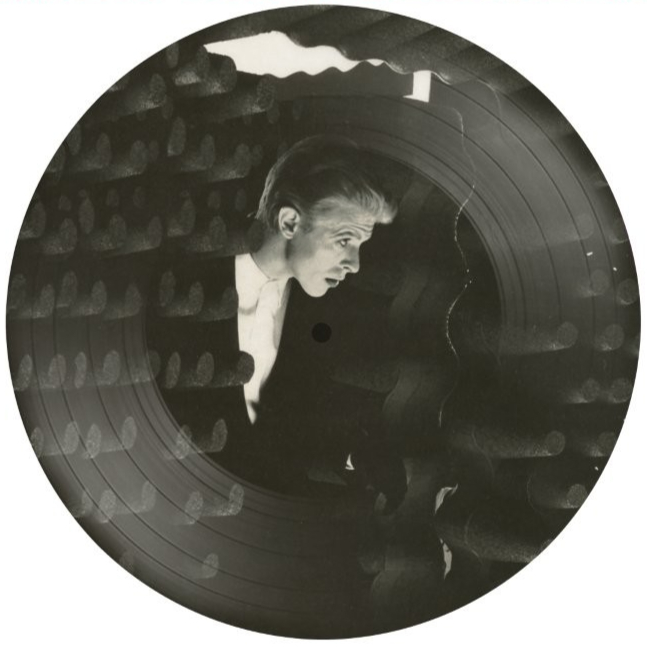
- Aug 30, 1974
- 4 min read
How David Bowie’s search for a Norman Rockwell portrait led instead to a hand‑tinted Hollywood‑style photograph inspired by Toni Basil — becoming one of the most iconic images of his “plastic soul” era.
Bowie originally wanted Norman Rockwell to paint the Young Americans cover, but when the collaboration proved impossible, he turned to photographer Eric Stephen Jacobs, whose hand‑tinted portrait of Toni Basil on the cover of After Dark magazine became the direct inspiration for Bowie’s own album imagery.
📰 Key Highlights
Bowie personally phoned Norman Rockwell to request a painted album cover
Rockwell declined due to his six‑month portrait schedule
Bowie drew inspiration from Toni Basil’s September 1974 After Dark cover
Photographer Eric Stephen Jacobs recreated the style for Bowie
Shot on an old Hollywood soundstage in Los Angeles
Image created in black‑and‑white, then hand‑tinted with translucent oils
Final design completed by Craig DeCamps at RCA
A second Jacobs session produced images later used for The Gouster (2016)
📰 Overview
The Young Americans album cover represents a rare moment in Bowie’s visual history where the inspiration is not only traceable but openly acknowledged. What began as a whimsical attempt to secure a Norman Rockwell portrait evolved into a collaboration with photographer Eric Stephen Jacobs, whose retro Hollywood aesthetic perfectly matched Bowie’s new musical direction. The resulting image — smoky, glamorous, and hand‑tinted — became the definitive visual statement of Bowie’s “plastic soul” era.
📰 Source Details
Artist: David Bowie
Album: Young Americans
Cover Photography: Eric Stephen Jacobs
Design: Craig DeCamps (RCA, New York)
Primary Inspiration: Toni Basil’s After Dark magazine cover (Sept. 1974)
Date of Sessions: Late 1974
Provenance Notes: Based on Bowie’s 1976 Playboy interview and Jacobs’ 2016 Uncut interview.
📰 The Story
• Bowie’s First Choice: Norman Rockwell
Bowie’s initial vision for Young Americans was bold and mischievous: a Norman Rockwell portrait. He tracked down Rockwell’s phone number and called him directly — no managers, no intermediaries. Rockwell’s wife answered and explained that the painter required at least six months for a portrait. Bowie later recalled the exchange fondly:
“I originally wanted him for the cover of Young Americans… I had to pass, but I thought the experience was lovely.”
— David Bowie, Playboy, Sept. 1976
The idea evaporated, but the longing for a distinctly American visual identity remained.
• The Spark: Toni Basil on After Dark
The breakthrough came when Bowie saw Toni Basil on the cover of After Dark magazine (September 1974). Basil had recently choreographed Bowie’s Diamond Dogs tour, and her portrait — smoky, glamorous, hand‑tinted — was exactly the aesthetic Bowie wanted.
Photographer Eric Stephen Jacobs described Basil’s arrival at his studio:
“She was movie star gorgeous… perfect for my new style.”
— Jacobs, Uncut, Oct. 2016
Bowie immediately phoned Jacobs himself, telling him the Basil portrait was precisely the look he wanted for Young Americans.
• The Los Angeles Photoshoot
Jacobs flew to Los Angeles, where Bowie was performing, and the shoot took place on an old movie‑studio soundstage. The goal was to recreate the Basil portrait, but with Bowie as the subject.
The session mirrored the After Dark aesthetic:
Backlighting to halo Bowie’s hair
Cigarette smoke drifting upward
Glistening jewellery
A soft, cinematic glow
Old‑fashioned klieg lights
Bowie in a Tattersall cotton shirt chosen by his wardrobe team
Jacobs later admitted he would have preferred a plain black shirt, but the patterned fabric became part of the image’s charm.
• From Photograph to Icon
The portrait was shot in black‑and‑white, then hand‑tinted with translucent oils — the same technique used on Basil’s cover. Jacobs even painted in the cigarette smoke.
“The smoke coming from David’s cigarette was completely painted in.”
— Jacobs, Uncut, Oct. 2016
The final design was completed by Craig DeCamps at RCA in New York, who framed the portrait in warm, reddish tones that became synonymous with the Young Americans era.
• The Second Session
Bowie and Jacobs later reunited for a second shoot featuring Bowie in a flying suit before a stars‑and‑stripes backdrop. One image — Bowie holding a glass of milk — resurfaced decades later on the cover of The Gouster in the 2016 Who Can I Be Now? box set.
📰 Visual Archive

Toni Basil’s After Dark cover (Sept. 1974) and David Bowie’s Young Americans portrait, photographed by Eric Stephen Jacobs.
📰 Related Material
Explore the tags below for connected posts and themes.
📰 Closing Notes
The Young Americans cover stands as one of Bowie’s most intimate visual statements — a portrait of transition, exhaustion, glamour, and reinvention. What began as a failed attempt to collaborate with Norman Rockwell became a collaboration with Eric Stephen Jacobs that captured Bowie’s fascination with American iconography and Hollywood nostalgia. The result is a cover that feels both mythic and human, perfectly aligned with the album’s “plastic soul” sound.
📝 Copyright
© 1975 RCA Records / Eric Stephen Jacobs.
Reproduced here for archival, research, and educational purposes.
#DavidBowie #YoungAmericans #EricStephenJacobs #ToniBasil #AfterDark1974 #PlasticSoul #RCARecords #AlbumArtHistory


Comments