


David Bowie (June 13, 1978) “Ziggy is now a dramatic crooner with a new story” – Rolling Stone (US)
A feature/review in Rolling Stone covering David Bowie’s performances at the Arie Crown Theater in Chicago (April 17–18, 1978), highlighting his evolution from Ziggy Stardust into a more dramatic, mature performer.

PUBLICATION
Publication: Rolling Stone
Date: June 13, 1978
Country: United States
Section / Pages: Feature / Review Title: Ziggy is now a dramatic crooner with a new story
THE STORY
The article reflects on Bowie’s live show during his 1978 tour, noting his shift away from the flamboyant Ziggy persona toward a more theatrical yet refined stage presence. It includes commentary on his vocal performance, stagecraft, and artistic growth.
CONTEXT AND NOTES
This piece comes during Bowie’s post-Berlin Trilogy period, as he was touring material from Low and “Heroes” while also performing older classics. Rolling Stone’s coverage captures the American press’s view of Bowie’s constant reinvention in the late 1970s.
FEATURE HIGHLIGHTS
Event: Live Performance Review (Chicago shows)
Era: Late 1970s / Stage Tour Era Tone: Observational, appreciative of artistic evolution
Photography: Large black & white stage shot of Bowie performing with microphone and guitar
WHAT THE CLIPPING SHOWS
Full magazine page layout with prominent photo of Bowie on stage and accompanying article text.
RELATED MATERIAL
David Bowie (June 18, 1977) “Be My Wife” – New Single Advertisement – Record Mirror (UK)
David Bowie (June 18, 1977) “Be My Wife” – New Single Advertisement – Melody Maker (UK)
David Bowie (June 25, 1977) “Be My Wife” – New Single Advertisement – Record Mirror (UK)
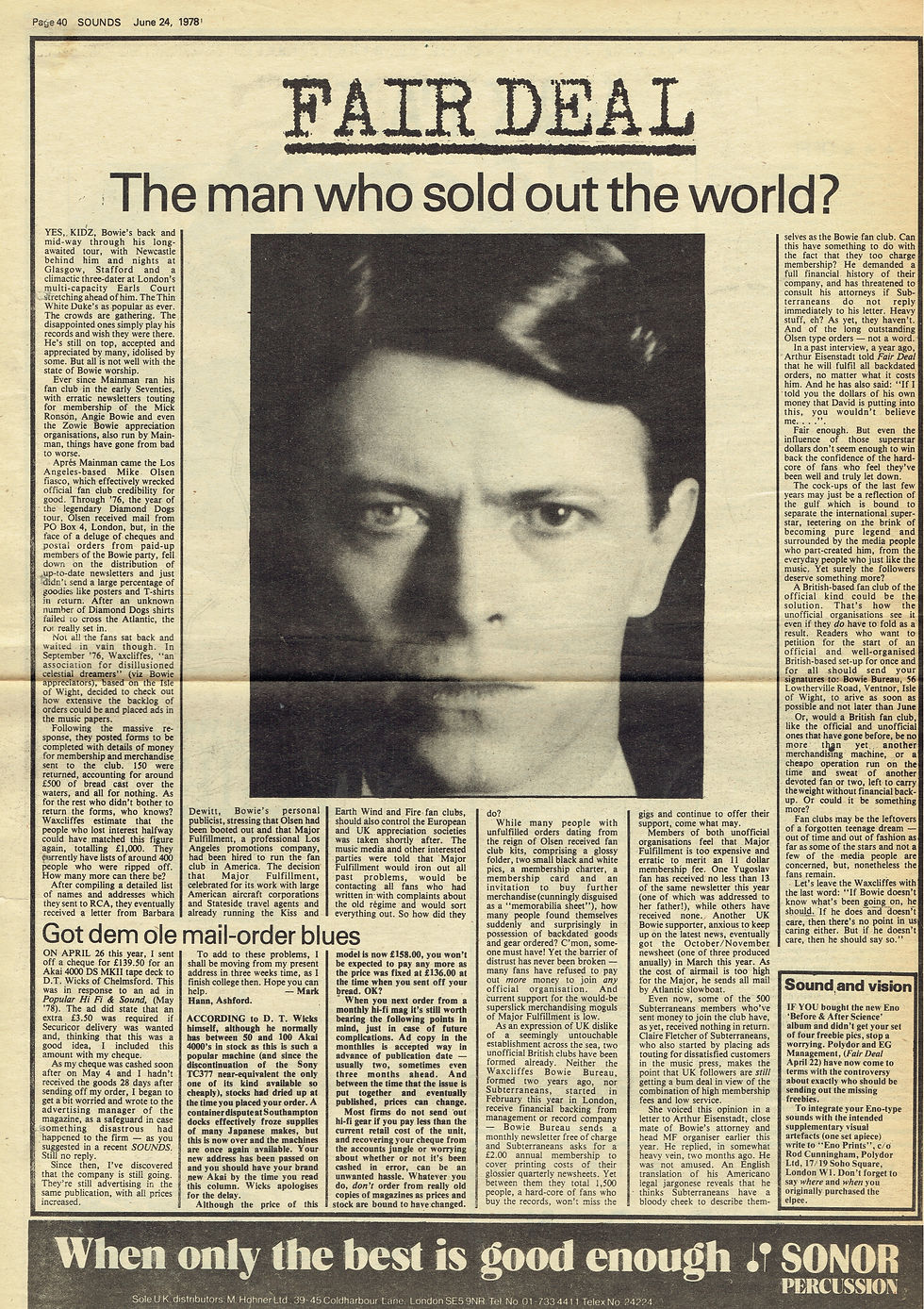
David Bowie (June 24, 1978) “FAIR DEAL — The man who sold out the world?” – Sounds (UK)
COPYRIGHT NOTICE
All magazine scans, photographs and original text excerpts remain the property of their respective copyright holders. This entry is a transformative, non-commercial archival summary created for historical documentation and educational reference.


Comments