


ELO - Glam Slam Guide
- ELO
- Jan 1, 2023
- 4 min read
Updated: Apr 10
🎼 ELO: The Electric Dreamers Who Turned Glam Into Space‑Age Pop
The symphonic engineers who fused rock, classical drama, and futurist imagination into a sound no one else could touch.
🌟 The Origin Story — From The Move → ELO → Wizzard
Before Electric Light Orchestra became the spaceship‑logo juggernaut of the mid‑70s, they began as a radical idea inside The Move, one of Britain’s most inventive late‑60s bands.
🎨 Roy Wood — master of eccentric pop and stacked arrangements — wanted to push rock into new territory:
“What if we took where The Beatles left off with ‘I Am the Walrus’… and built a whole band around that sound?”
🎛 Jeff Lynne, then leading The Idle Race, shared the same dream. He joined The Move in 1970 specifically to help build this new project.
In 1971, the first ELO album arrived:
⚡ chaotic, brilliant, experimental — a collision of cellos, violins, and heavy rock guitars.
But the partnership didn’t last.
🎩 Roy Wood left almost immediately to form Wizzard, taking his technicolor, maximalist instincts with him.
Jeff Lynne stayed.
Quiet, meticulous, and visionary, he took the concept and turned it into a world‑conquering symphonic machine.
From that split came two futures:
🎪 Wizzard — chaotic, glitter‑bomb brilliance
🚀 ELO — sleek, melodic, futuristic, architecturally precise
And it was ELO — Lynne, Tandy, Bevan, and the string brigade — who built the sound that would define the decade.
👥 The Classic Line‑Up (The “Eldorado / A New World Record” Era)
🎸 Jeff Lynne – vocals, guitar, songwriter, producer, the architect
🥁 Bev Bevan – drums, the thunder beneath the symphony
🎹 Richard Tandy – keyboards, synths, ELO’s secret weapon
🎤 Kelly Groucutt – bass, harmonies
🎻 Mik Kaminski – violin, the electric blue streak
🎼 Hugh McDowell & Melvyn Gale – cellos, the orchestral engine
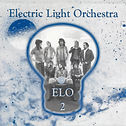
(The Electric Light Orchestra — the glam‑symphonic blueprint.)
📀 Essential Starting Point (The Holy Trinity)
🌌 A New World Record (1976)
The moment ELO became ELO: hooks, strings, and cosmic polish.
🎭 Eldorado (1974)
A full concept album with orchestral sweep; Lynne’s first true masterpiece.
🛸 Out of the Blue (1977)
A double‑album odyssey — “Mr. Blue Sky,” “Turn to Stone,” “Sweet Talkin’ Woman.”
⚡ The Big Moments Everyone Knows
🎵 Mr. Blue Sky (1977) – the eternal sunshine anthem
💃 Evil Woman (1975) – glam‑soul perfection
💙 Livin’ Thing (1976) – strings that feel like neon
☎️ Telephone Line (1976) – Lynne’s melodic genius at full power
🚨 Don’t Bring Me Down (1979) – ELO goes stadium‑rock and wins
💿 The Classic Albums (1973–1979)
1973 — On the Third Day
1974 — Eldorado
1975 — Face the Music
1976 — A New World Record
1977 — Out of the Blue
1979 — Discovery
🎧 Where to Start Listening Today (5 Tracks)
☀️ Mr. Blue Sky – the most joyful production in rock
✨ Evil Woman – strings + groove = ELO’s signature
💫 Livin’ Thing – dramatic, cinematic, unmistakable
⚙️ Turn to Stone – Jeff Lynne’s rhythmic genius
📞 Telephone Line – the soft‑focus heart of ELO
🎬 ELO weren’t just a band — they were the engineers who made glam rock sound like the future.
Quiet, meticulous, and visionary, Jeff Lynne built a world where rock became widescreen cinema.
📚 Detailed Look
🔧 The Move → ELO → Wizzard: The Evolution
The Move were already pushing boundaries when Roy Wood began imagining a new project — one where classical instruments weren’t just embellishments but the core of the sound. Jeff Lynne joined specifically to pursue this idea.
In 1971, the first ELO album arrived:
🎻 a bold, chaotic experiment in merging rock with orchestral textures.
But Wood’s restless creativity pulled him away almost immediately — he left to form Wizzard, taking his love of maximalist, technicolor chaos with him.
Jeff Lynne stayed behind and quietly transformed ELO into something sleek, melodic, and futuristic.
🌱 Early Years (1971–1973)
The first albums were exploratory, mixing heavy rock with baroque strings.
By On the Third Day, Lynne’s production instincts were sharpening — tighter arrangements, cleaner sound, and a growing sense of drama.
🚀 The Breakthrough (1974–1976)
Eldorado was the turning point: a concept album with a full orchestra, lush harmonies, and cinematic ambition.
Then came Face the Music and A New World Record, where Lynne perfected the ELO formula — strings, synths, stacked vocals, and immaculate pop songwriting.
🌠 The Imperial Phase (1977–1979)
Out of the Blue cemented ELO as global superstars.
“Mr. Blue Sky,” “Turn to Stone,” and “Sweet Talkin’ Woman” showcased Lynne’s ability to make rock sound weightless and futuristic.
Discovery pushed further into disco‑glam, proving ELO could adapt without losing their identity.
🏆 The Legacy
Jeff Lynne’s production style — tight drums, stacked harmonies, bright acoustics — became one of the most influential sounds in modern music.
His later work with:
🎸 George Harrison
🔥 Tom Petty
👑 Roy Orbison
🎤 The Beatles (“Free as a Bird,” “Real Love”)
cemented him as one of the great studio minds of the 20th century.
ELO’s influence echoes through:
• Daft Punk
• The Flaming Lips
• Super Furry Animals
• Muse
• The 1975
• Every modern band that blends rock with orchestral colour
🌈 ELO were the quiet revolution — the symphonic heart of glam rock.
Not outrageous.
Not chaotic.
Just brilliant, precise, and visionary.
Jeff Lynne built a universe where rock became widescreen cinema — and the world is still living in it.


Comments