top of page

📰 Rolling on to Rule the World: Feb. 1976

  • Writer: David Bowie
    David Bowie
  • Feb 12, 1976
  • 4 min read

Updated: Feb 12

David Bowie’s six‑page Rolling Stone feature during the Station to Station era.


📰 Overview

This Rolling Stone cover story captures Bowie in early 1976, newly returned from filming The Man Who Fell to Earth and deep into the creation of Station to Station. The article frames him as volatile, brilliant, and in constant metamorphosis, shedding the last traces of glam while stepping into one of his most enigmatic personas.


📰 Source Details

Publication: Rolling Stone

Date: February 12, 1976

Issue: Cover story + six‑page feature

Provenance Notes: Original print edition; part of Bowie’s Los Angeles period press cycle.


📰 The Story

The feature opens with Corinne Schwab — Bowie’s trusted assistant — reflecting on his transformation from Ziggy‑era spectacle to a more controlled, film‑focused figure. Gone are the bodyguards, the glitter, and the Max’s Kansas City mythology. In their place is a gaunt, hyper‑focused artist who has just completed three months in New Mexico filming The Man Who Fell to Earth.


At Cherokee Studios, Bowie is calm, precise, and almost humble as he directs Carlos Alomar, Earl Slick, George Murray, and Dennis Davis through the Station to Station sessions. The journalist contrasts this with flashbacks to 1975, where Bowie is seen producing Iggy Pop demos in a haze of insomnia and intensity — playing every instrument himself before Iggy improvises vocals.


Throughout the piece, Bowie warns the interviewer not to expect the “real” David Jones beneath the personas. Identity, for him, is a tool — a mask he swaps as easily as costumes. The article captures him at a crossroads: exhausted, brilliant, and on the brink of the Thin White Duke.


📰 Key Highlights

• Bowie declares rock “sterile” and hints at abandoning it

• Corinne Schwab emerges as a stabilising force

• Station to Station sessions documented firsthand

• Reflections on filming The Man Who Fell to Earth

• Early glimpses of the Thin White Duke persona

• Iggy Pop demo sessions reveal Bowie’s obsessive work habits


📰 Visual Archive

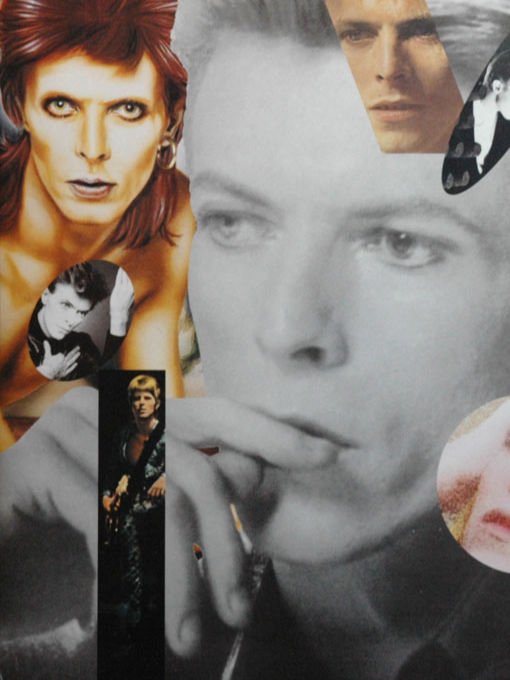
Bowie’s Rolling Stone cover promoting Station to Station and The Man Who Fell to Earth.

You can find the rest of the article at the bottom of this post.


📰 Article Excerpt

GROUND CONTROL TO DAVY JONES


Despite a new album and tour, David Bowie claims to have rocked his last roll. It's the devil's music, he warns-sterile, fascist, downright dangerous. That's why he's abdicated his glitter throne for more promising careers. Like films. Or world domination.


CORINNE SCHWAB IS PROBABLY THE last holdover from David Bowie's glitter-glam phase—the days of Ziggy Stardust, Moonage Daydream, gaudy costumes, hulking bodyguards, ex-manager Tony De Fries, and the back-room-at-Max's-Kansas-City mystique. In her three years as his secretary, Corinne has watched Bowie shrewdly work up to his most difficult move yet: the switch from cultish deco rocker to a wide-appeal film and recording star/entertainer. "I want to be a Frank Sinatra figure," Bowie declares. "And I will succeed."


Wheeling a cart in a Hollywood supermarket just three blocks from where David is working on his new LP, Station to Station, Corinne says she has no doubts about something so obvious as Bowie's success in achieving his stated goal. The way she sees it, David has only one problem. "I've got to put more weight on that boy," she sighs. And with that, she carefully places eight quarts of extra-rich milk in the basket.


Down the street at Cherokee Studios, David Bowie is just back from three vice-free months in New Mexico where he starred in Nick Roeg's film, The Man Who Fell to Earth. He is still glowing from the experience and, says Corinne, the healthiest he's been in years. He is relaxed and almost humble as he scoots around the studio and directs his musicians (Carlos Alomar and Earl Slick, guitars; George Murray, bass; and Dennis Davis, drums) through the songs. It is a complete evolution from the David Bowie of six months before. But then, of course, anything less than a total personality upheaval would be entirely out of character for him. "I love it," he cracked several months earlier. "I'm really just my own little corporation of characters."


He is actually anything one wants him to be at any given moment—a paranoid hustler, an arrogant opportunist, a versatile actor, a gentleman, maybe even a genius. He had, after all, made a warning up front. "Don't expect to find the real me ... the David Jones [his true name] underneath all this."


May 1975—It's four in the morning, Hollywood time, and David Bowie is twitching with energy. He's fidgeting, jabbing a cigarette in and out of his pursed lips, bouncing lightly on a stool behind the control board in a makeshift demo studio, staring through the glass at Iggy Pop.


Bowie has spent the last nine hours composing, producing, and playing every instrument on the backing track, and it is finally time for Pop to do his bit. After all, this is Iggy's demo.


Bowie touches a button and the room is filled with an ominous, dirgelike instrumental track. The shirtless Iggy listens intently for a moment, then approaches the mic. He has prepared no lyrics, and in the name of improv, he snarls:


You go out at night from your sixty-dollar single down in West Hollywood


📰 Related Material

• Explore the tags below for more connected posts and themes.


📰 Closing Notes

This feature stands as one of the clearest windows into Bowie’s Los Angeles period — a moment of brilliance, instability, and transformation that shaped the rest of his career.


📰 Sources & Copyright

All original text and images remain the copyright of their respective publishers and creators.

This post is presented for historical, educational, and archival purposes only.


Comments


bottom of page