top of page

📰 From Europe with Love – Cover Feature: Feb. 1977

  • Writer: David Bowie
    David Bowie
  • Feb 28, 1977
  • 3 min read

Updated: Feb 28


A four‑page Circus Magazine exploration of Bowie’s Low era, charting his European relocation, sonic reinvention, and the birth of the Berlin Trilogy.


Published in February 1977, Circus Magazine devoted its cover and a four‑page feature to David Bowie’s Low, examining his move to Europe, his collaboration with Brian Eno and Tony Visconti, and the avant‑garde shift that reshaped his music and persona.


📰 Key Highlights

Cover story + four‑page feature in Circus Magazine, Feb. 1977


Focus on Bowie’s Low and his relocation to France and Berlin


Commentary from RCA staff, Brian Eno, and Bowie’s PR team


Detailed breakdown of Low’s two‑sided structure


Photographs from Paris, Los Angeles, and Berlin


Discussion of Bowie’s work on Iggy Pop’s The Idiot


Early American press reaction to Bowie’s avant‑garde direction


📰 Overview

In early 1977, David Bowie was deep in the process of reinvention. Having left Los Angeles and the destructive excesses of the Thin White Duke era, he relocated to Europe — first to France, then to Berlin — in search of anonymity, discipline, and a new artistic vocabulary. Circus Magazine captured this moment with a cover feature titled “From Europe with Love”, pairing striking photography with a detailed examination of Low, the first chapter of the Berlin Trilogy.


The feature frames Low as a bold rupture: short, rhythmic, synthesizer‑driven tracks on Side One; atmospheric, quasi‑instrumental pieces on Side Two. RCA executives express uncertainty about how to market the album, yet repeatedly describe it as “ambitious,” “avant‑garde,” and “a work of art.” Brian Eno’s influence is foregrounded, as is Bowie’s impulsive, high‑intensity studio method.


The article also highlights Bowie’s parallel work with Iggy Pop, whose album The Idiot Bowie co‑wrote and produced during the same period. Together, the pieces paint a portrait of an artist in transition — restless, experimental, and determined to break from his past.


📰 Source Details

Publication / Venue: Circus Magazine

Date: February 1977

Issue / Format: Cover + four‑page feature

Provenance Notes: Verified from the scans provided; contextual details aligned with Bowie’s 1976–77 recording and relocation timeline.


📰 The Story

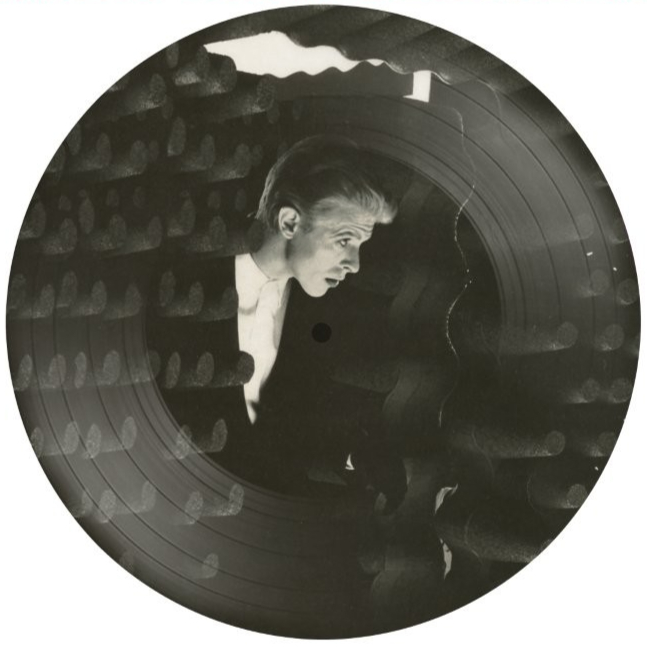
The feature opens with Bowie photographed in Paris during the Low sessions, setting the tone for a deep dive into the album’s unusual structure. Side One is described as “crypto‑disco,” with phased drums, synthesizers, and jagged vocals. Tracks such as “Speed of Life,” “Breaking Glass,” “What in the World,” and “Sound and Vision” are framed as concise, futuristic bursts — a stark contrast to the sprawling Station to Station.


Side Two is presented as a collaboration between Bowie and Brian Eno, drawing comparisons to Another Green World and Taking Tiger Mountain by Strategy. Tracks like “Warszawa,” “Art Decade,” “Weeping Wall,” and “Subterraneans” are described as cinematic, solemn, and influenced by European experimental music. Bowie’s use of phonetic, non‑linguistic vocals is highlighted as part of his new sonic vocabulary.


The article explores Bowie’s life in Berlin — living above a garage, attending exhibitions, working anonymously, and immersing himself in the city’s art and music scenes. His work with Iggy Pop is given significant attention, with The Idiot described as warm‑blooded, streetwise, and a likely influence on the emerging punk movement.


Across its four pages, the feature positions Bowie as an artist in constant motion: restless, impulsive, disciplined, and unwilling to repeat himself. Low is framed not as a commercial gamble, but as a necessary act of reinvention — a new career in a new town.


📰 Visual Archive


Circus Magazine cover and feature on David Bowie’s Low, published February 1977.


Circus Magazine – U.S. – 1977

• Cover story

• Four‑page feature

• Focus on Low and Bowie’s European reinvention


📰 Related Material

Explore the tags below for connected posts and themes.


📰 Closing Notes

This Circus feature remains one of the most detailed contemporary American examinations of Bowie’s Low era — a snapshot of artistic risk, European experimentation, and the beginning of one of the most influential trilogies in modern music.


📰 Sources

• Circus Magazine, February 1977 (cover + feature)

• Bowie’s 1976–77 recording chronology

• Contemporary RCA promotional commentary


Comments


bottom of page