


King, Queen, or Joker? Cover Feature: 1977
- David Bowie
- Jan 22, 1977
- 10 min read
Updated: Jan 31
Bowie's 1977 Rock Star Persona Probe
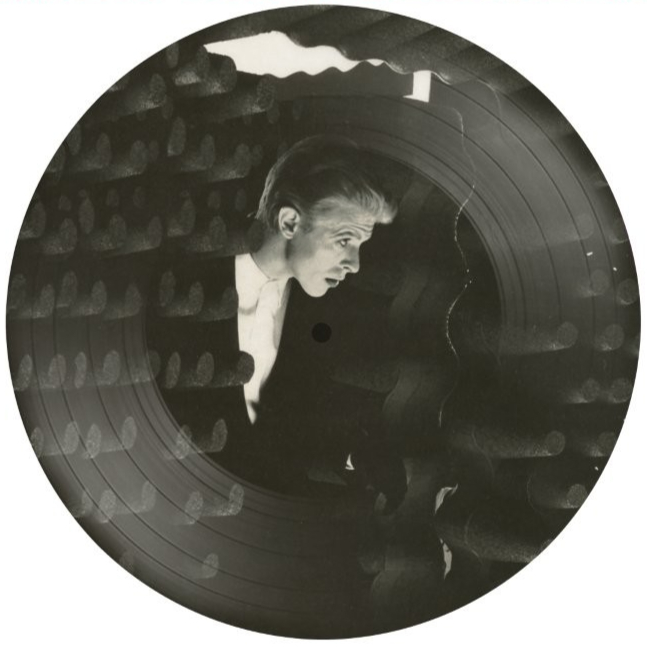
Published in the UK on January 22, 1977, Rock Star magazine’s cover and four-page feature “King, Queen, or Joker?” offered an in-depth look at David Bowie during his Low era transition and reviewed the album.
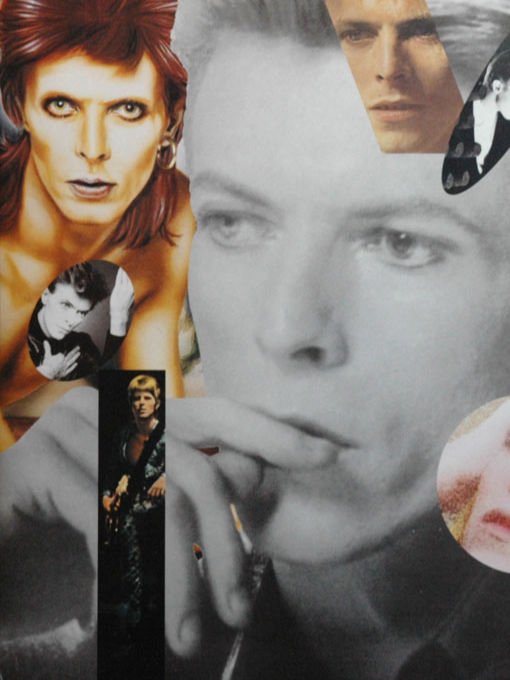
Exploring his shifting personas — from Ziggy Stardust to the Berlin experimental phase — and questioning whether he was rock royalty, a regal figure, or a playful trickster. The piece examined his artistic evolution, the influence of Brian Eno, and his enigmatic public image.
KING QUEEN or JOKER?
David Hancock says: 'I'd blown my brains out in Goa; been hustled out of Baghdad on the double; got beaten up in Syria. But I wasn't ready for David Bowie.'
Feature Overview
Publication Details
Magazine: Rock Star (UK).
Date: January 22, 1977.
Format: Front cover + four-page feature.
Do you have this Rock Star cover/feature in your archive? King, queen, or joker? Share in the comments!

DAVID BOWIE is the black paper between the mirror.
Through him we can see what we want, admire or distort whatever we like..
Bowie has emerged as the most important rock star of the Seventies by reflecting the decade's moods and changes rather than imposing himself upon it.
Sinatramania, Beatlemania and those pesky Rolling Stones became idols, folk heroes or whatever, on their personalities and talent.
But Bowie/Ziggy was something else.
By mid-1972 Bowie had reflected the collective image to such a degree that people actually believed he was Ziggy; reporters would phone up RCA demanding interviews with Ziggy. It was the first time a rock star had become his creation.
But it wasn't just a case of David Robert Jones' monster be bop and hollerin' too well. On no.
Bowie may have invented the name Ziggy but the life breathed into the space age alien came from everyone. From you, me and your best friend. All of us. We demanded Ziggy and we got him.
The mirror had accurately reflected.
I'D BLOWN my brains out a few months earlier in Goa; been hustled out of Baghdad on the double, and got beaten up in Syria. But I wasn't ready for David Bowie.
Both being post war "bulge" babies (he was born January 8, 1947) we should have had something in common. We did. Paranoia. But whereas my paranoia had taken me along the Kathmandu trail, Bowie's had locked him firmly into London for the funeral of the Swinging Sixties.
He'd left Bromley Tech in 1963 and for six months tried making it as a commercial artist for an ad agency. Didn't dig it. Got into an r&b group called the King Bees, and hoping they'd got another Stones, Decca signed them up.
The first single David Bowie ever appeared on was released in June 1964 titled "Liza Jane".
The second flop came in August 1965 when David Jones and the Lower Third released "You've Got A Habit Of Leaving" on the Parlophone label.
Both those records are now worth a bob or two.
Because of the smiling Monkee, Jones changed his name to Bowie and the flops were released on the Pye label right through '66 (see discography).
He changed to the
newly formed Deram label and had a heap more flops ("Laughing Gnome" released April 14 1967 and "Love You Til Tuesday" later that year in July). Made a bad film ("The Image") got into mime courtesy of Lindsay Kemp, generally buggered about for a bit and then on July 11 1969 Philips released "Space Oddity". Ground control to Major Tom
... A star is born. At the time that men were landing on the moon, Kubrick had given us "2001" and Bowie ground control. For Bowie, it was something he wouldn't shake loose until May 1974 and "Diamond Dogs".
It's a classic haunting song that's been a double hit, without the multi-layered hard-bitten provocation that would be the trade mark later. But it reflected the '69 mood of exploration. It was Bowie's first attempt at being the mirror's black paper. Nothing profound he says: "You see, the emphasis placed on what people are saying and whether they're profound or not annoys me a little 'cause I don't want to be profound. The aim of an artist is just to investigate. That's all I want to do; investigate and present the results." But the result for Bowie was to throw the towel in immediately. For two years he'd be stagnant. It may have been his reaction to the success of "Space Oddity"; the death of his dad, a man of great influence who would never have allowed Bowie to get ripped off which it is suspected happened to him at the height of his commercial fame; or simply that he was bone lazy.
HERE THEY ARE
Beckenham High Street. He was reflecting his time. The Swinging Sixties had fizzled out as the permissive society became a reality and everyone ran all over the place in an attempt to "do their thing". Drugs and mysticism were dragging me eastward while Mr Bowie stayed in Beckenham High Street and as a parting gift delivered "The Man Who Sold The World".
Thank you. "I'd rather stay here With all the madmen Then perish with the sadmen
roaming free."
Please yourself. It remains one of his best and probably his most blatantly powerful album to date.
As Rolling Stone's John Mendelsohn put it: "Bowie's music offers an experience that is as intriguing as it is chilling, but only to a listener sufficiently together to withstand its schizophrenia."
It was a critical success. The guys who put the authoritative rap down had seen that Bowie had his finger firmly on the paranoia button for the Seventies. It was to be repeated accurate firing.
Truth is he got a then fashionable Arts Lab together actually it was a room attached to
the Three Tuns pub in December (We went to Madras Christmas week just to get totally out of it) meant "Hunky Dory" and a greater escalation of the self-paranoia and decadence Bowie was beginning to even more accurately reflect.
I know what "The Bewlay Brothers" is all about but am sworn to secrecy by the Illuminati. Bowie had unleashed something new - the Nietzsche-type cult of the Superman; something cold but real.
The lack of feeling of this new race fitted in nicely with the catatonic state of dopers everywhere. Clock into the album lads. Bowie was decadence in a way Christopher Isherwood (one of his idols) could only glimpse. For homo superior love, too, had gone, to be replaced by the much more chic lust.
Things were really hotting up. The relatively suburban Swinging Sixties had become naive. Ch-ch-changes were going down and everyone was caught in the whirlpool. Even the country was starting its decline into the economic wasteland. Bowie was telling it.
On January 22, 1972 the word was out.
"I'm gay," Bowie told the newspapers, "and always have been even when I was David Jones." Sexual liberation was at hand. But the belief that Bowie's "coming out" heralded a new age is way off beam. He was merely a part of the sexual couldn't-give-a-damn attitude which was the obvious outcome of the permissive society.
For his first manager Kenneth Pitt to say, "he became a symbol of freedom for a section of Society which had previously been repressed," doesn't hold water.
In fact the ordinary people kicking down the closet doors in those days were having to contend with a Bowie who swished, camped and frollicked like some wild hermaphrodite.
His exploration of that mist-shrouded no-man's land somewhere between the two sexual identities was outrageous enough for him to become a star, but left a lot of ordinary gays having to do a lot of explaining.
Not all homosexuals are killer queens, honest dearie. His style of dress (weird); his make-up; his marriage to Angie (it was one of convenience. She was a Cyprus-born American and needed a marriage for her to stay in Britain) were encapsulated in Ziggy.
Ziggy, with his simpler and more drug-orientated language, was the culmination of the decadence Bowie had reflected. People craved Ziggy. Something from another planet, something fresh that would wipe away the cultural and economic mire that was beginning to stink.
It was a universal fantasy and David Robert Jones with his sexual ambivalence was only too pleased to fill

National RockStar
Page 15
'I don't want to be profound. All I want to do is investigate and present the results.'
the role.
By the June 9 release of "The Rise And Fall Of Ziggy Stardust And The Spiders From Mars" I was back in the U.K. suffering heavy culture shock. Ziggy didn't help.
Mr Stardust was Janis, Jimi and every other rock casualty. He was even Richard, the morphine addict who had taught me to play backgammon in Afghanistan. Ziggy was termination. He was David Bowie.
"I was camp and outrageous as a child," recalls Bowie, "because my interests weren't centred around the obvious seven year-old interests like cowboys and Indians. My things were far more mysterious. I would pull moodies and say things like 'I think I'm dying' and sit there for hours pretending I was dying."
But Ziggy wasn't dying, he was retreating further and further into fantasy and we were all going with him.
As the world's idol Bowie / Ziggy released one of his finest singles "John I'm Only Dancing" in September 1972 and then plunged headlong into more decadence by checking out Iggy Pop.
Iggy And The Stooges had long been one of Bowie's favourite acts. They were right over the top with Iggy ripping his chest open with broken glass while on stage.
Check out "Broken Glass" on Bowie's new album "Low"). Then there was that other decadent deviant Lou Reed.
The records kept coming. "Jean Genie" at first thought to be about French homosexual writer Jean Genet was in fact all about Iggy.
The decadent whirlpool was spinning round. Bowie was finishing Reed's "Transformer" album. Everything was on the wild side.
I decided to leave quickly for Ethiopia.
become the reflection of America in early 1973. "Aladdin Sane" is the Americanisation of Ziggy.
Critics at the time thought he'd blown it, although the album had an advanced order in Britain of 100,000. In retrospect it can be seen as a cold, clinical, sharp reflection, and if not obvious then a necessary advance into the bleak realms that would bring the scenario he started with "Space Oddity" to a close with "Diamond Dogs".
"Cracked Actor's" blatant lust and the detached feel of the whole album only helped to bolster the feeling that somehow David Bowie wasn't quite of this world; wasn't one of the warm peace and love types we were supposed to be.
Trouble is peace and love had been over a long time and Bowie was giving us the truth slap in our faces.
Those charming
sorted out what that was."
Accused of releasing an album shallow in concept and sterile in execution Bowie finished his 100 days and came back to Britain via the Trans-Siberian Express, Moscow, the Orient Express and Paris. The Fear Of Flying got him home on May 4. Eight days later the
decadence he'd so admirably brought to everyone's attention got out of hand at Earls Court, London. He may have sensed it was going to happen as he tried to unload a lot of paranoia on the newspapers before the concert.
"This decadence thing is just a bloody joke," he said. "I'm very
normal... I am me and I have to carry on with what I started. There is nothing else for me to
do... I never thought Ziggy would become the most talked about man in the world. I never thought it would become that unreal... I feel somewhat like a Dr
was being upstaged by the very real decadence going on in the £2-a-time seats.
At one stage he halted the show and asked the punters to "stop being silly". He then cancelled a scheduled performance for June 30.
The thing he feared worst had happened.
Bowie was no longer in control of the Ziggies. He started back-
pedalling on decadence. It had all been a hype. A grand scheme dreamt up to launch him in the rock world. LISTEN YOU GUYS IT'S ONLY ROCK 'N' ROLL.
But now things were out of his hands, he had to carry on. "There is nothing else for me to do," he said. "I have been under a great strain though. I have also
become disillusioned with certain things... I never believed a hype could be made of an artist before an artist got anywhere. That's what happened you see. But when I saw that our albums were really selling, I knew that one period was over. The hype was over. Well, it wasn't...
Bowie/Ziggy/Us were blurred at the edges.
Ziggy played for time, jiving us that we were voodoo. The kids was just crass, he was the Nazz with God-given ass.*
Ziggy was all of us, David Bowie merely the medium. Rumours spread that Bowie was from another planet. Of course it was true. For the first time rock had stepped outside its own hang-ups of performer and performance to crystallise something totally new and unique. Out of fantasy and decadence had come real creation.
The strain was too much.
Fact is, I wasn't allowed into Libya.
I spent most of the next couple of years knocking around Tunis and checking out the decadent heritage of French colonialism. It
was a gas. And Bowie. Well he'd taken it all too far, but boy could he play saxophone.
He left Blighty at the same time to begin a 100-day world tour. After becoming the swish symbol, Mr Tack of the one large pupil, one small one, was allowing himself to
Spiders From Mars, Woody Woodmansey, Trevor Bolder and Mick Ronson were still with Aladdin (sorry, Ziggy) but they were soon to spin off the edge. Bowie's Altamont was at hand.
Bowie was losing himself as an artist and blending into the personnas he was singing about more than any previous pop performer. He said at the time: "I don't necessarily think David Bowie's at all important. I think the content and the atmosphere which is created by the music that I write is more
important than I am. "I've always felt like a vehicle for something else, but then I've never
Frankenstein And so he was. But now the people were demanding their monster. Many had turned into monsters themselves. The 18,000 fans who turned up for that Earls Court show demanded and got a Sodom and Gomorrah. K-K-K KRIST the acoustics in the hall were so bad.
Most people couldn't hear a word he was singing, and then it turned excessive. Most appeared to have been drunk (with people ripping their clothes off to dance naked), or just pissing in the aisles. Bowie's camp satin and
tat, designed by Kansai,
Part of the "hype", or the real decadence, depending on how you look at it, came on July 3 when he washed the Hammersmith Odeon with tears and said: "This show will stay the longest in our memories, not because it's the end of the tour... but because it's our last show."
He was lying, of course.
But I didn't know that as I mulled over the news, sipping a shattered iced Ricard in Max's and wondering why Tunis, even when it stank, was one of the most companionable of cities.
All I knew was that I'd missed the act. Both Bowie and I were in a fix. I decided to do nothing about it. Bowie made "Pin-Ups".
His valiant attempt to return to basics by an album of his rock faves from the years '64 to '67 seems on the surface to be the antithesis of




Comments