


Low Funeral in Berlin Article: 1977
- David Bowie
- Jan 29, 1977
- 13 min read
Updated: Jan 30
Bowie's Berlin Transformation Scoop
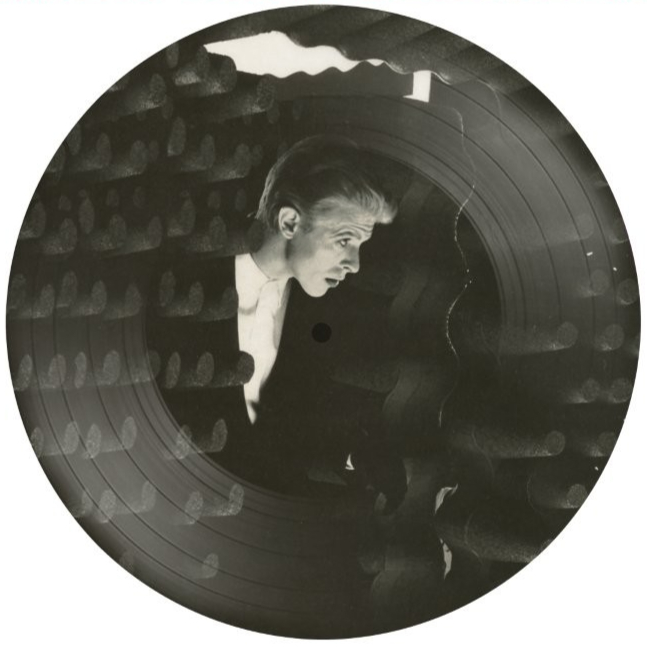
Published in the UK on January 29, 1977, Melody Maker’s two-page article “Low Funeral in Berlin” examined David Bowie’s latest persona shift after relocating to Berlin. The piece described how Bowie’s famous red hair had returned to its original mousy color and been cut into a crew cut, paired with a curving mustache reminiscent of a prosperous bürgermeister. Having gained some weight and wearing a cap pulled low, he was reportedly frequenting both cultural establishments and working-men’s haunts in the city. The article framed this as more Günter Grass than Joel Grey, tying it to his fascination with all things German — including his well-publicized comments on fascism the previous summer. It reflected on his bewildering metamorphoses: from acoustic performer and mime artist to ambiguous commentator on rock stardom with Ziggy, doom-monger with Diamond Dogs, moon-age soul singer with Young Americans and Station To Station, and star of Nicolas Roeg’s futuristic film The Man Who Fell To Earth.
(complete article below)
Legacy
This article is an early 1977 Bowie press piece — documenting the shift to the Berlin era, Low’s release, and the Thin White Duke’s enigmatic, low-profile life in the city.
Do you have this Melody Maker article in your archive? Ready for the Berlin funeral? Share in the comments!
Sources
Information is drawn from my personal knowledge and supplemented by web sources, including davidbowie.com, Discogs, 45cat, AllMusic, Rate Your Music, Wikipedia and BBC Official Charts Company

DAVID BOWIE'S last image, as a kind of wasp-waisted per-former in a Weimar cabaret, would hardly prepare one for reports of the figure he's currently cutting in Berlin, where he now lives.
It seems that the famous red hair, now returned to its original mousey colour, has been scalped to a crew cut, that he's grown the curving moustache of a prosperous bürgermeister, and, having put on some weight, and wearing a cap pulled down low, he spends his time frequenting both the cultural establishments and working-men's haunts of that city.
More Gunter Grass than Joel Grey, he obviously continues in his fascination with all things German that reached notorious proportions early last summer in his well-publicised speech about fascism.
None of this will much surprise keen Bowie-watchers, who have observed his bewildering metamorphoses from an acoustic performer and mime artist to an ambiguous commentator upon rock stardom with "Ziggy," a doom-mongerer with "Diamond Dogs," moon-age soul singer with "Young Ameri-. cans" and "Station To Station," and the star of Nicolas Roeg's futuristic art-film, The Man Who Fell To Earth. a
to see It's not difficult why Bowie is the most interpreted, and the most reviled, rock star of this generation.
He's consistent only in the diversity of his actions. He doesn't respond in the way expected of rock stars when each tour he presents ta different public face, and no two albums are truly alike.
Eclectic to a fault, unlike all other major rock per-formers he has wilfully neglected to define his own oeuvre, beyond reflecting a certain preoccupation as a lyricist with a technological a future and as musician with mutations of mainstream styles.
as While undeniably a stylist, is borne out by the attractive pastiches of "Pin-Ups," he has too much artistic substance to justify that as a condemnation.
"Diamond Dogs", for ex-ample, despite its musical roughness, seems increasingly to me a classic projection of a lost and rabid society, even though I was indifferent to it when it was released.
Similarly, although I still don't much like a lot of "Young Americans" and find it rather empty, I can nevertheless appreciate the different perspective he brought to white soul, which at first seemed merely parodic.
Brian Eno and Tony Visconti tell Michael Watts about the making of David Bowie's controversial new album, 'Low'
Perhaps, therefore, much critical distrust of him may have two origins: in his refusal to stand still and be explained, and in the cold-ness and isolation, the cerbration evident at the heart of his work, which puts off critics and record-buyers who have become accustomed to the warmth and responsiveness of the rock 'n' roll tradition, a tradition that he has gone out of his way to
usurp. Of all his records, the new album, "Low," is the most controversial, and right in the target-line of this critical bias.
It's radically different from "Station To Station", because it appears to have been conceived as a "mood" album.
Its creation revolves around the synthesizer: the vocals on the first side are brief, and on the second, which consists of four electronic instrumentals, they are used only as textural aids. Furthermore, this "mood", even as far as it's expressed in whatever lyrics there are, is utterly bleak and depressed, as the album's title would suggest.
a Yet for several reasons "Low" strikes me as remarkable record, and certainly the most interesting Bowie has made.
It's so thoroughly contemporary, less in its pessimism, perhaps, though that's deeply relevant to these times, than in its musical concept: the logic of bringing together mainstream pop in the album's disco bass-and-drums and conventional lyric - and experimental music perfectly indicates what could be the popular art of the advanced society we are moving into, in a way that the Rolling Stones, say, or even the Sex Pistols, whose music relies totally upon its black-derived rhythms, could not hope to express. The devices of experimental music are scattered throughout the album for instance, in his employment of
phoneticism (on "Warszawa" and "Subterraneans") and the reduction and unspecific nature of language - but in themselves they are not unusual; after all, the German groups like Kraftwerk and T. Dream have also devised superior Muzak, and the synthesizer has long been a staple weapon even in the vulgar hands of ELP.
But it's interesting not only that Bowie is moving across the tracks from the lyric and vocal tradition, unlike these bands, but that he's also an artist who to a large extent has "fan" following, far more populist than T. Dream or ELP.
The successful synthesis of popular and experimental music described by Brian Eno, who played a major role in the making of "Low," as two parallel mainstreams will more likely be achieved by a popular artist such as Bowie who has a greater understanding of, and intimacy with, the mass audience.
In this context "Low" is quite a daring venture for a performer whose modus operandi, i.e. the size of his tours and venues, the cost of his albums, etc, is determined by the charts.
An artist of the same magnitude, like Stevie Wonder, for example, may have a better appreciation of synthesizers and have more satisfactorily assimilated electronics into (black) pop music, but he's always respected the conservatism of his audience and used this knowledge to enhance his abilities rather than trans-form the nature of his music.
On the other hand, Lou Reed's "Metal Machine Music," an album which invites some comparison with "Low," seems like a bizarre aberration, or certainly eccentricity, because our past an a experience of him as deadpan lyricist, often working the theme of decadence, doesn't prepare us to believe in the experiment; moreover, it had limited influence because RCA didn't promote it.
RCA, it appears, have also been dismayed by "Low." The album should have been out for Christmas (the dead-line for its recording was November 16), but RCA executives freaked because they weren't. sure how to market it. Some of them thought they had another "Metal Machine Music" on their hands.
There is also a story that Tony DeFries, who managed Bowie during his rise to stardom, and has retained his proprietary manner, tried to have the album stopped on the grounds that there weren't enough vocals and it would damage Bowie's career. All of which has been disproved by Bowie's seemingly automatic entry into the charts.
According to Tony Visconti, the American who co-produced "Low" with Bowie, and who has worked with him since 1967 and "Space Oddity," Bowie was deter-mined to surprise everyone with "Low" out of a fear, irrational though it may appear, of seeming predictable.
"To promote the last two albums he must have done more than 200 shows," says Visconti, whose wife, the former Mary Hopkin, sings briefly on "Sound And Vision." "He was absolutely tired of being RCA's sure thing, and he also felt he was losing his pioneer spirit.
"David described the album to me as far back as July, because he asked me if I could produce Iggy's album first and then his own, which he said was going to be very revolutionary.
"He was trying to produce Jimmy's (Osterberg, Iggy's real name) album at the Chateau d'Herouville, but he said the engineers were proving hopeless.
"I told him it was impossible for me, and just to do his best." (The album, in fact, is called "The Idiot," based upon a painting Bowie found, dating from 1906, of a man who Visconti says bears a striking resemblance to Iggy Pop).
Visconti, however, was enthusiastic about helping to record what was then being called "New Music Night And Day," title designed to express the difference be-tween sides one and two, which in the planning stages was even more radical. a not Bowie intended both sides to be absolutely contrasting, but the first was meant to be "raw rock 'n' roll,' the strange rockmusak that's resulted, where two of the cuts, "Speed Of Life" and "A New Career In Town," even have no vocal at all.
What happened explains Visconti, was that Bowie then laid down ten tracks in the style of the first side, and was going to abandon the idea of two different sides but for the event that he developed something of a mental block about the lyrics.
"Ever since 'The Man Who Sold The World' he has written the lyrics after the music, but in this case he couldn't come up with more than one verse for some things, which is why a lot of the tracks fade out.
"His mood was far from optimistic when we were recording at the Chateau. It was absolutely the worst. A lot of things were happening to him, and we had a lot of setbacks.
"For one thing, we found the studio totally useless. The people who now own it don't seem to care. We all came down with dysentery. David and I were in bed for two days.
"Also, he chose the Chateau to get away from all those people in America, but they all found out where he was. He really is too gregarious for his own good, he's too kind, and he just couldn't tell them to f off. So we got no work done."
The album was finished, in fact, in a week and a half at Hansa By The Wall, a studio in the old "West End" of Berlin. They were watched by East German border guards as they recorded.
More distressingly, Bowie was suing his immediately previous manager, Michael Lippman, in Paris. There were several reasons for the dissolution of their associa-tion, but Bowie maintained for one that Lippman pledged he would get the right to score The Man Who Fell To Earth, which eventually went to John Phillips.
"Subterraneans," the last track on "Low," was actually composed for the soundtrack, which Bowie worked on with Paul Buckmaster.
"He was away for about four days in Paris, dealing with this deposition," says Visconti, "and he was absolutely down for that month. I must say I have great respect for him for calling it 'Low,' 'cause that's exactly what he was.
to "The reason there are not that much lyrics is that he had absolutely nothing say; there was nothing out-side himself. So I think for the first time in his lyrics he's really saying something about himself."
The decision to persevere with the Two-Side concept was further promoted during Bowie's absence in Paris when Eno wrote "War-szawa," the piece that begins side two.
Eno's involvement with "Low" was important, but not crucial, as has been suggested. He was only at the Chateau for one week in the whole of the September they recorded there, and is on just two of the four tracks on the second side.
Nevertheless, his records, like those of the German groups T. Dream, Neue and Kraftwerk, had a catalytic effect. Indeed, when Eno got to the Chateau he was astonished to find that both Iggy and Bowie could hum, note for note, "No Pussyfooting," the electronic album he made with Bob Fripp.
Several of Eno's hypotheses and attitudes towards music, such as the artistic potential of Muzak, are shared by Bowie, he feels.
Eno, for instance, is approaching the Planned Music Company, which markets
Continued on p54

Bowie's 'Low'
from page 36
Muzak in this country, with view to producing records for them that are not only environmental but which also express that tension between doubt and certainty that creates art Fambient music, he calls it, "that works in the sat way as nice lighting: tints the environment.'
He's been encouraged in this belief by the commercial success of his owr "Discreet Music" on Obscure low definition musi that is apparently popela at dinner parties; it pule the "fun" into functional.
"I think this is something Chat Bowie is interested in as well," he argues. "The point of using phonetics, I believe, was to get rid of the language element.
If you use language you cannot but help lead the mind is a particular way. As soon there's language it creates focus, and it's very, very difficult not to accept that as the central point of the piece, with the other instruments ranked, ог а ranged, round it, supporting it.
"Now if you want to have music that's got a 'drifting' aspect to it, it's very hard to make lyrics that will fit. "I
think he has just become aware of this problem of focus in a piece of music, of how much you want and how much you don't want.
was all "One of the interesting questions that those German bands brought up that they produced music that was very unfocal - it had a lot of 'drift' in it, if you like, whereas rock music has traditionally had a lot of 'anchorage.'
"Like myself, he was very impressed by the 'drift' music, but also like myself he's impressed by the other tradition, the kind of vocal rock tradition, so the problem of the age, as far as I'm concerned, is to bring those two things together comfort-ably. That's why the record is experimental.
a "When I did 'Another Green World' 1 had problem because I had some numbers of this 'drifting' nature, and others that were songs. I solved the problem by mixing them all up together, so the dichotomy isn't so evident as if one had
put them on separate sides. "I could have done it one side as songs and one as instrumentals, and to tell you the truth, the reason I didn't was because I didn't dare.
"I thought, this is gonna be too bizarre to do. I thought it would indicate that I thought these two things to be unrelated to one another. So I admire him for what he did.
"But I don't think I've had such an influence on him as the press has made out, or assumed. It is his album, and he got in touch with because I think he recognised that I was in a similar position. me
"I know he liked 'Another Green World' a lot, and he must've realised that there were these two parallel streams of working going on in what I was doing, and when you find someone with the same problem you tend to become friendly with them."
of In fact, Eno suspects Bowie strongly influenced his own approach to music concerning the marketing disposable records, a corolla-ry of his fascination with Muzak: my "He said when he first heard 'Discreet Music' he could imagine in the future that you would go into super-markets and there would be a rack of 'ambience' records, all in very similar covers. "And this is addition they would just have titles like Sparkling,' or 'Nostalgic,' or 'Melancho-ly,' or 'Sombre.' They would all be mood titles, and so cheap to buy you could chuck them away when you didn't want them anymore." Bowie, by all accounts, is said to lead a rigorous intellectual life. According to Visconti, he literally assaults himself with ideas. In Berlin he has been going to art galleries almost every day; his knowledge of art approaches that of a connoisseur, Visconti claims: "Every time I go there he's into something new. Also, he's the only guy who, when he's on tour, never stays in his hotel room. He always puts on a disguise and goes out onto the streets. last time I was in Berine y wat out to k working-clas: clace, a kind of Hammersmith Palais, And there are all the drag clubs which are quite respectable over there's. He really wants to know what people are doing and thinking. "We can work together because he's a very non-technical person he probably couldn't change a plug and I can translate what he wants.
"I'm a very, very fast worker, so he's not frustrated with me, and I'm an arranger and a musician as well (he plays bass). But he's so full of ideas, if anything, I have to edit him. In fact, it's too intense to be around him for any length of time."
Eno also pays tribute to his intellectual curiosity, pointing out that Bowie has resisted every encouragement from the music industry not to be interesting. "In a sense," Eno says, "I think that most of his albums are quite experimental in that they strike me as always being to do with hybridising things. He's quite conscious of being eclectic. 'Low' is a transitional record, you see, as most records are by people who are interesting.
of Yet Bowie impresses even his friends as being fundamentally detached from people. Certainly he's contemptuous the music industry and press, but also none of his personal friends, it's said, are musicians, apart from Iggy (whom he now manages) and perhaps his guitarist, Carlos Alomar, with whom he has a very good working relationship (Visconti
says that "Fame" grew out of Alomar's riff to a version of Springsteen's "It's Hard To Be A Saint In The City," which Bowie was producing in Philadelphia for a three-piece including Ava Cherry and Warren Peace called the Astronettes. Be-cause of business hassles, the group never appeared on record).
Visconti is one of his oldest friends, and he maintains that Bowie takes pride in being emotionless. "I've seen him at the edge of despair, but marriage and love are concerned, he claims to be above it. Everything goes to as far as his head and not his heart." "Be My Wife," therefore, whose emotional message could not be more explicit, would appear to be an unusually unguarded moment in the career of an artist who has generally heeded that dictum of Arnold Wesker: that an action taken without intellect is flabby and sentimental.
Whether "Low" is yet another role for the cracked actor, or, as I think, an Inspired attempt at creating truly modern rock music -or even, as is possible, both of those options it cannot be called flabby. At the very least, though Bowie may be a snake, his twists and turns are as extraordinary to behold as the periodic sheddings of his appearance.
In the meantime, he continues to live abroad, perhaps for the next two years, and perhaps still in Berlin, walled-in city that is stuffed with all the benefits of civilised culture. Berlin lacks only one attribute, but that a major one: the beauty of nature. And where in David Bowie will you find that?



Comments