


📰 The Man Who Fell to Earth – Review: Mar. 1976
- David Bowie

- Mar 1, 1976
- 3 min read
Updated: Mar 1
A one‑page film review examining David Bowie’s first major starring role in Nicolas Roeg’s surreal science‑fiction masterpiece.
Published in March 1976, this review explores David Bowie’s hypnotic performance in The Man Who Fell to Earth, praising his alien presence, the film’s visual daring, and its unsettling portrait of isolation.
📰 Key Highlights
One‑page film review, Mar. 1976
Covers Bowie’s starring role as Thomas Jerome Newton
Notes the film’s premiere at the Leicester Square Theatre
Directed by Nicolas Roeg
Highlights Bowie’s “hypnotic” presence and otherworldly appearance
Mentions supporting cast: Candy Clark, Rip Torn
Discusses the film’s score, including Stomu Yamashta and Roy Orbison
Frames the film as visually striking, complex, and emotionally disorienting
📰 Overview
By early 1976, David Bowie had already reshaped the landscape of rock music several times over. With The Man Who Fell to Earth, he stepped into cinema with a role that seemed almost pre‑ordained: an alien stranded on Earth, undone by human excess, longing for home. Nicolas Roeg’s film, adapted from Walter Tevis’s novel, premiered in London in March 1976 and immediately drew attention for its dreamlike structure, fragmented editing, and Bowie’s uncanny performance.
The review positions the film as a “celluloid oddity” — a work of art that defies conventional narrative and instead immerses the viewer in a world of paranoia, longing, and cultural critique. Bowie’s presence is central: fragile, luminous, and unsettlingly believable as a being not of this world.
📰 Source Details
Publication / Venue: Unknown (newspaper or magazine)
Date: March 1, 1976
Issue / Format: One‑page film review
Provenance Notes: Based on the provided scan and Bowie’s documented 1976 film‑promotion cycle.
📰 The Story
The review opens by noting the film’s London premiere and the significance of Bowie’s first starring role. As Thomas Jerome Newton, Bowie plays an extraterrestrial who arrives on Earth seeking the means to save his dying home planet. His mission collapses as he becomes entangled in human greed, suspicion, and emotional vulnerability.
• Bowie’s Performance
The reviewer emphasises Bowie’s “hypnotic” presence — a quality that Roeg exploits through long, lingering shots and stark lighting. Bowie’s thin frame, pale features, and detached mannerisms make him appear genuinely alien, blurring the line between performance and persona.
• Supporting Cast
Candy Clark is praised for her emotional range, grounding the film’s surrealism with human warmth.
Rip Torn brings a cynical, earthy counterpoint to Bowie’s ethereal stillness.
• Visual Style
Roeg’s direction is described as visually arresting:
fragmented editing
saturated colours
symbolic imagery
disorienting shifts in time and perspective
The review notes that the film demands attention and rewards repeat viewings.
• Music
The score blends atmospheric compositions by Stomu Yamashta with unexpected inclusions like Roy Orbison, adding to the film’s tonal strangeness.
• Themes
The review highlights:
alienation
addiction
the corrupting influence of modern society
the tragedy of a mission lost to human frailty
The film is recommended for viewers willing to embrace ambiguity and visual experimentation.
📰 Visual Archive

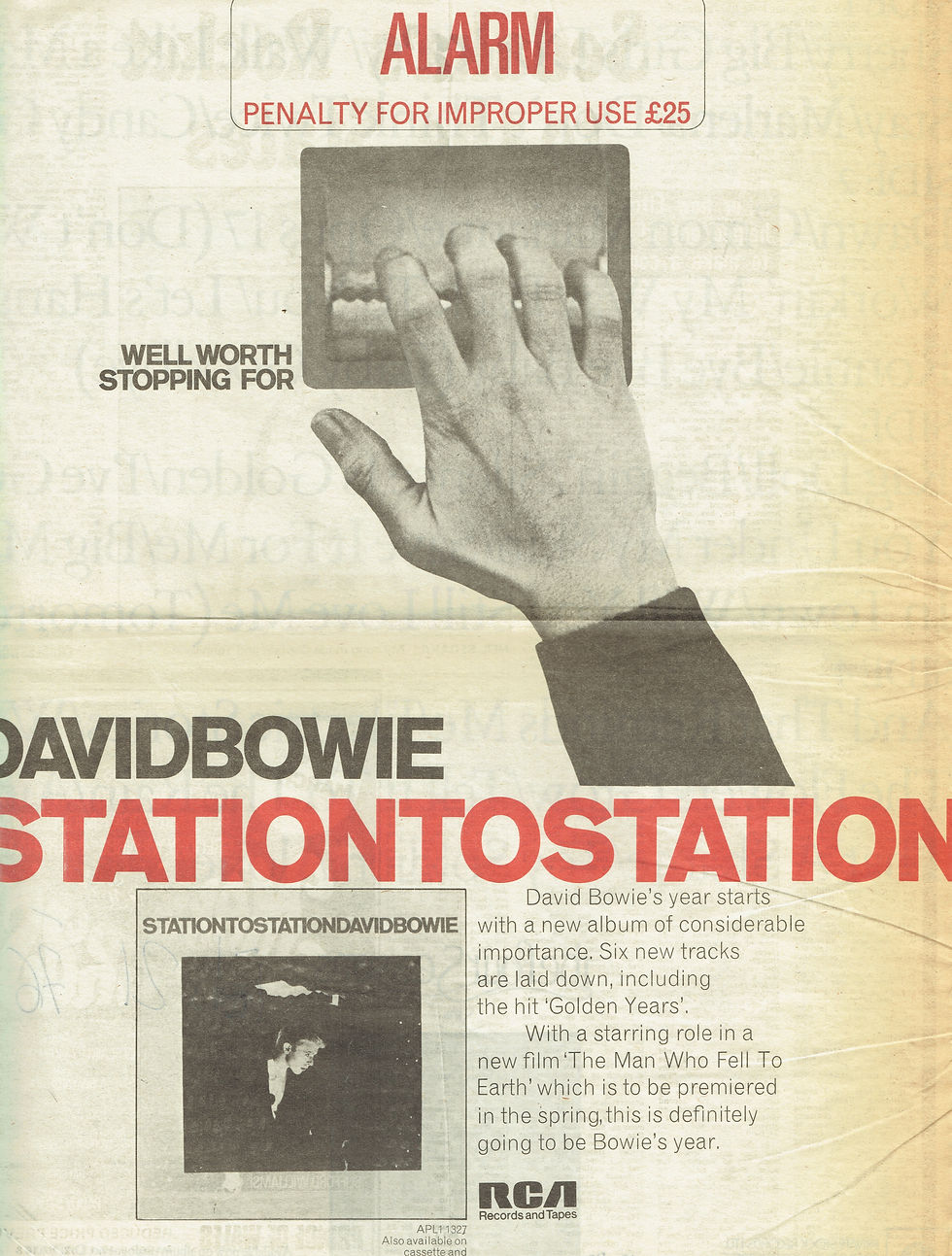
David Bowie in The Man Who Fell to Earth, featured in a one‑page review, March 1976.
📰 Related Material
Explore the tags below for connected posts and themes.
📰 Closing Notes
This review captures the moment Bowie crossed fully into cinema, delivering a performance that remains one of his most haunting. The Man Who Fell to Earth stands as a landmark of 1970s science‑fiction — enigmatic, stylish, and inseparable from Bowie’s own myth.
📝 Copyright
© 1976 Original Publisher (unknown).
Reproduced here for archival, research, and educational purposes.
#DavidBowie #TheManWhoFellToEarth #NicolasRoeg #1976Cinema #BowieOnFilm #ThomasJeromeNewton #SciFiClassics


Comments