


📰 Gold Diggers of 1984 : Mar. 1972
- Alice Cooper Group
- Mar 30, 1972
- 3 min read
Updated: Mar 29
Rolling Stone
Date: March 30, 1972
Length: 10 min read
A provocative, theatrical deep‑dive into Alice Cooper’s rising shock‑rock empire, framed through Rolling Stone’s signature blend of cultural critique, backstage access, and Annie Leibovitz’s stark, moody photography.
A portrait of spectacle, danger, and the strange glamour of early‑70s rock theatre.
Chris Holdenfield’s feature captures Alice Cooper and his band at the moment they transform from underground oddities into mainstream provocateurs, using snakes, stage chaos, and dystopian fantasy to redefine rock performance.
📰 Key Highlights
• Rolling Stone cover story featuring Alice Cooper with live snake
• “Gold Diggers of 1984” — a dystopian, theatrical framing of Cooper’s stage world
• Feature written by Chris Holdenfield, photos by Annie Leibovitz
• Early documentation of Cooper’s shock‑rock persona
• Rolling Stone Issue No. 105 — a landmark cultural snapshot
📰 Overview
Rolling Stone’s March 30, 1972 issue places Alice Cooper front and centre, both on the cover and in a multi‑page feature that explores the band’s growing notoriety. The cover image — Cooper draped in a massive snake, staring directly into the lens — sets the tone for the article’s exploration of spectacle, fear, and performance art.
Inside, “Gold Diggers of 1984” frames Cooper’s world as a kind of dystopian carnival, where theatricality and menace collide. Chris Holdenfield’s writing blends reportage with cultural commentary, while Annie Leibovitz’s photography captures the band in dim, atmospheric settings that emphasise their outsider mystique.
The feature reflects a moment when Alice Cooper was redefining what rock could look like — pushing boundaries, unsettling audiences, and turning shock into a form of pop‑cultural currency.
📰 Source Details
Publication / Venue: Rolling Stone
Date: March 30, 1972
Format: Feature / Cover Story
Provenance Notes: Based on Rolling Stone Issue No. 105, including the cover and interior feature pages.
📰 The Story
The article opens with a theatrical hook — “Gold Diggers of 1984” — positioning Alice Cooper as both performer and provocateur. Holdenfield describes the band’s stage environment as a chaotic, surreal world where props, costumes, and shock tactics merge into a kind of dystopian theatre.
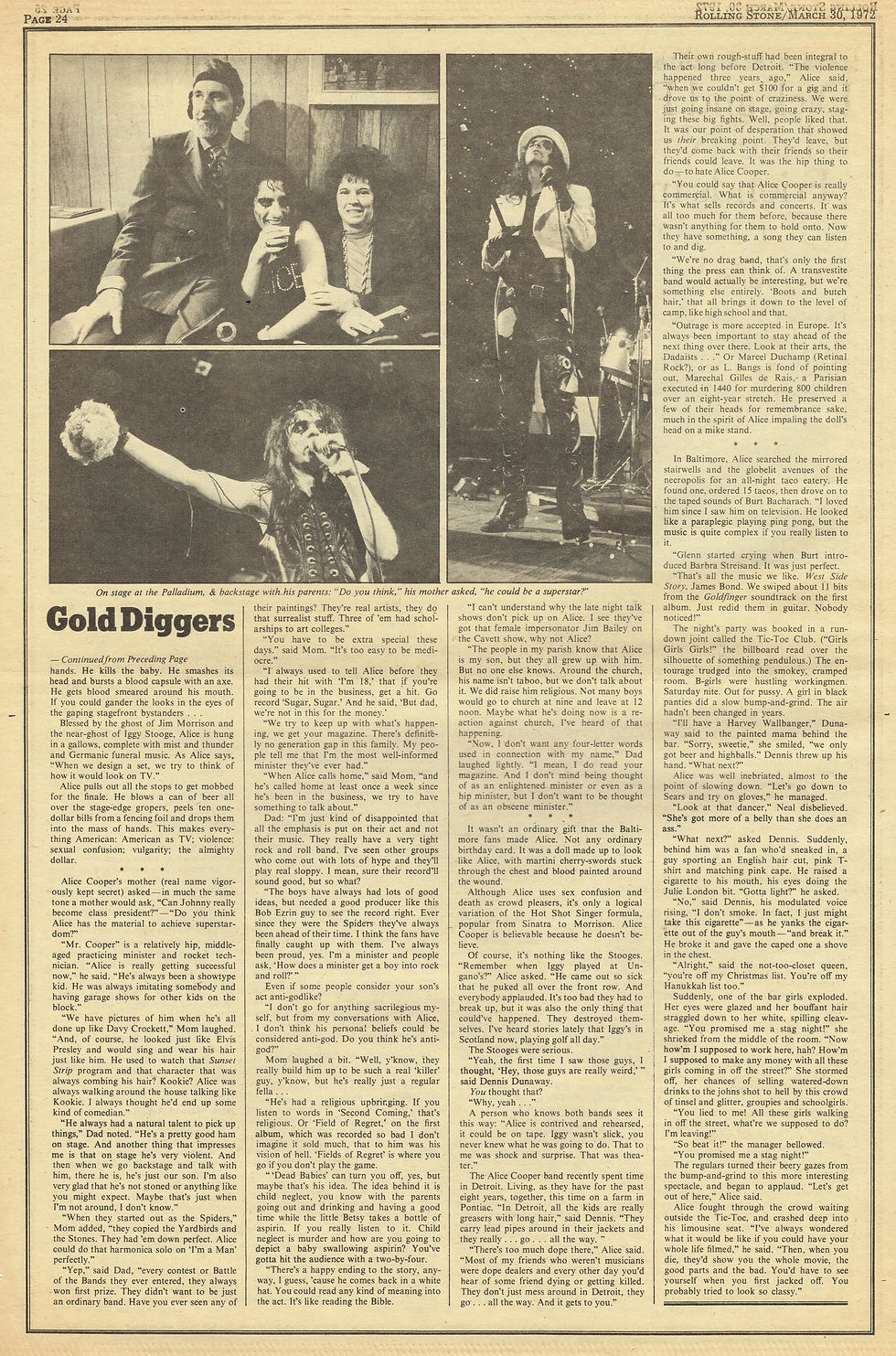
Leibovitz’s accompanying images reinforce this tone: dimly lit backstage scenes, looming props, and the band framed as shadowy figures in a world of their own making. The feature emphasises Cooper’s ability to blur the line between character and reality, presenting him as a cultural disruptor whose performances challenge the norms of early‑70s rock.
The cover photograph — Cooper with a snake coiled around him — becomes a visual shorthand for the band’s entire ethos: dangerous, playful, and impossible to ignore. Rolling Stone uses the moment to explore not just the band’s antics, but the broader cultural appetite for spectacle, rebellion, and theatricality.
📰 Visual Archive


• Rolling Stone Issue No. 105 cover featuring Alice Cooper with snake
• Interior feature page: “Gold Diggers of 1984” with large atmospheric photograph
• Annie Leibovitz’s backstage and performance imagery
Alice Cooper on the cover of Rolling Stone, March 30, 1972 — photographed with his signature snake, signalling the rise of shock‑rock theatrics.
📰 Related Material
Check out the tags at the bottom of the post.
📰 Closing Notes
This Rolling Stone feature captures Alice Cooper at the moment he becomes more than a musician — a cultural force blending theatre, horror, satire, and rock into a new form of performance art. The cover and feature stand as early documentation of a persona that would shape the aesthetics of rock for decades.
📝 Copyright Notice
All magazine scans, photographs, and original text excerpts referenced in this entry remain the property of their respective copyright holders. This Chronicle entry is a transformative, non‑commercial archival summary created for historical documentation and educational reference. No ownership of the original material is claimed or implied.


Comments