


🎼No. 1 In Heaven – Album US: Apr. 1979
- Sparks
- Apr 18, 1979
- 3 min read
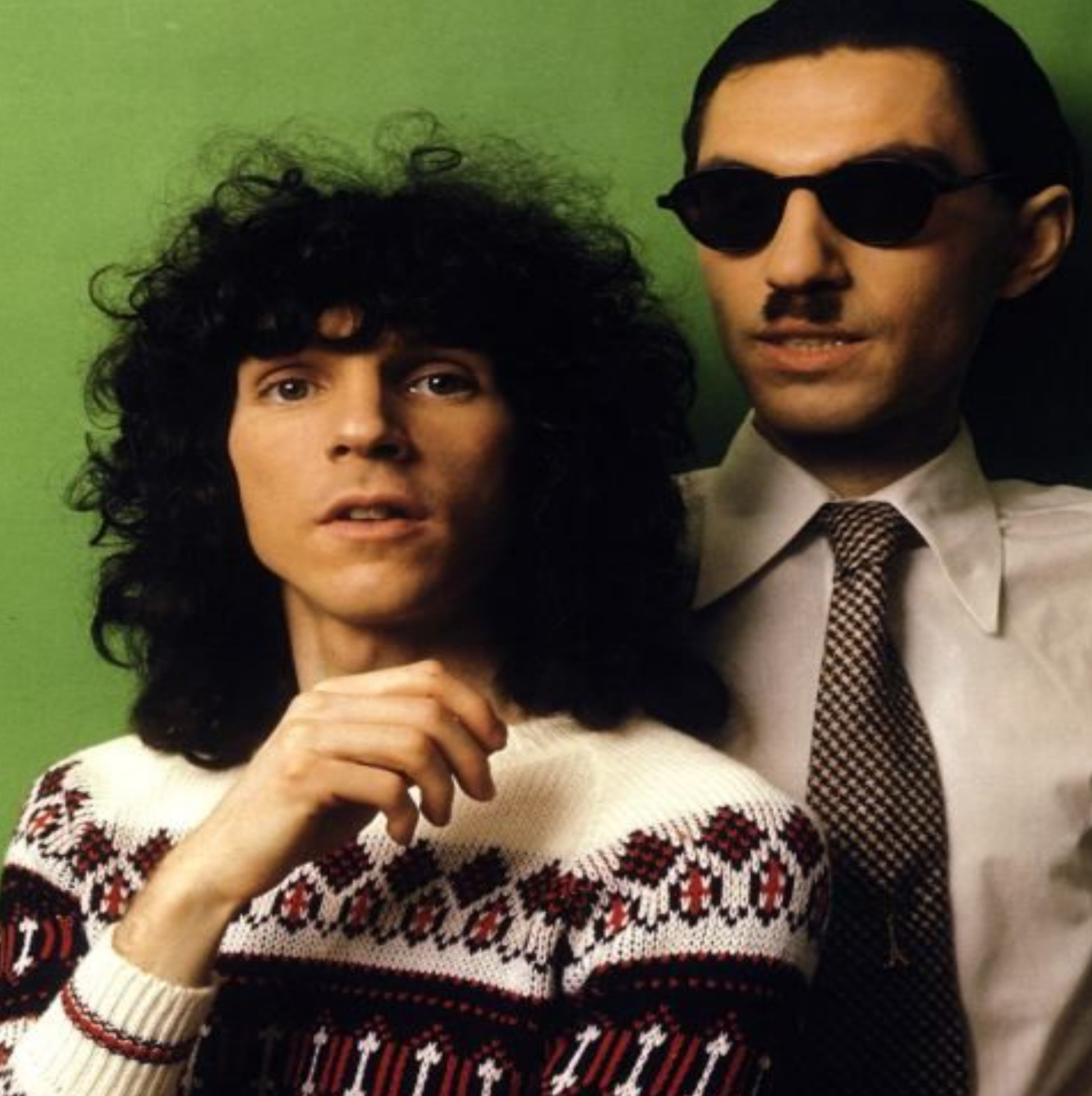
A landmark shift in Sparks’ sound, No. 1 In Heaven marked the duo’s bold leap into electronic music, created in collaboration with pioneering producer Giorgio Moroder. Recorded between Munich and Los Angeles, the album redefined Sparks’ identity and became a foundational influence on the emerging synth‑pop movement.

Recorded at Musicland Studios in Munich and later in Los Angeles, the album represented a complete reinvention after the commercial struggles of Big Beat and Introducing Sparks. Its release on Elektra in the United States renewed interest in the band and stands as their only album for the label.
The album was released in the UK on Mar 2 1979
🔘 Personnel
• Ron Mael – keyboards, synthesizer, vocals
• Russell Mael – vocals
• Keith Forsey – drums
• Giorgio Moroder – synthesizer, vocoder
• Dan Wyman – synthesizer programming
• Chris Bennett – backing vocals
• Dennis Young – backing vocals
• Jack Moran – backing vocals
Production & Artwork
• Giorgio Moroder – producer
• Jürgen Koppers – engineer
• Steven Bartel – design
• Moshe Brakha – photography
🔘 Key Highlights
• Sparks’ first full collaboration with Giorgio Moroder
• Recorded at Musicland Studios, Munich
• Major stylistic shift into electronic and synth‑driven music
• Influential on later synth‑pop artists
🔘 The Story
By 1978, Sparks found themselves at a creative crossroads. After returning to Los Angeles and releasing two commercially disappointing albums, the Mael brothers sought a new direction. Their admiration for Giorgio Moroder — whose work with Donna Summer had reshaped electronic dance music — led to a collaboration that would redefine their sound.
Working at Musicland Studios in Munich, Sparks embraced a fully electronic approach, abandoning the traditional rock‑band format. Moroder’s production, combined with Ron Mael’s songwriting and Russell Mael’s distinctive vocals, resulted in a sleek, futuristic sound unlike anything in their catalogue.
Released in the US on Elektra on 18 April 1979, No. 1 In Heaven revitalised Sparks’ career and became a touchstone for the synth‑pop movement that would dominate the early 1980s.
Label: Elektra
Format: LP Album
Released: April 18 1979 US March 2 1979 (UK)



🔘 Track List – LP
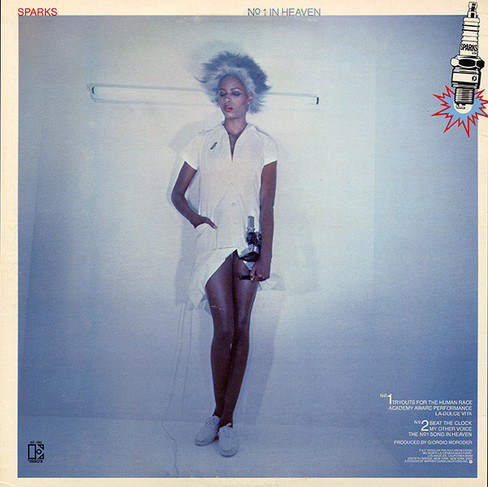
A1. Tryouts For The Human Race — 6:06
A2. Academy Award Performance — 5:01
A3. La Dolce Vita — 5:55
B1. Beat The Clock — 4:22
B2. My Other Voice — 4:55
B3. The No. 1 Song In Heaven — 7:27
🔘 Variants
• LP, Album, Stereo, Specialty Pressing — Elektra 6E‑186 (US, 1979)
• LP, Album, Promo, Red Labels — Elektra 6E‑186 (US, 1979)
• LP, Album, Promo, White Labels — Elektra 6E‑186 (US, 1979)
• LP, Album, PRC (CA) Pressing — Elektra 6E‑186 (US, 1979)
• LP, Album, Promo, White Butterfly Labels — Elektra 6E‑186 (US, 1979)
• Cassette, Album — Virgin TVC 2115 (US, 1979)
• Cassette, Album — Elektra TC‑5186 (US, 1979)
• LP, Album, Test Pressing — Elektra 6E‑186 (US, 1979)
• LP, Album, PRC (IN) Pressing — Elektra 6E‑186 (US, 1979)
• 8‑Track Cartridge, Album — Elektra/Asylum ET‑8186 (US, 1979)
🔘 Chart Performance
• US Billboard Bubbling Under the Top LPs: #204
🔘 Context & Notes
• Recorded at Musicland Studios, Munich, and Sound Arts / Westlake Studios, Los Angeles
• Issued with custom printed inner sleeve with lyrics, credits, and additional photo
• Features Elektra “Butterfly” labels on this pressing
🔘 Discography
Introducing Sparks — 1977
No. 1 In Heaven — 1979
Terminal Jive — 1980
🔘 Singles
• La Dolce Vita — Released: February 1979
• The Number One Song in Heaven — Released: March 1979
• Tryouts for the Human Race — Released: May 1979
• Beat the Clock — Released: July 1979
🔘 Glam Flashback
A bold leap into the electronic future that reshaped Sparks’ destiny.
🔘 Sources
Discogs, 45cat, Wikipedia, Billboard, BBC Charts.
🔘 Copyright Notice
All magazine scans, photographs, and original text excerpts referenced in this entry remain the property of their respective copyright holders. This Chronicle entry is a transformative, non‑commercial archival summary created for historical documentation and educational reference. No ownership of the original material is claimed or implied.


Comments