


David Bowie & Iggy Pop (October 4, 1979) – “Bad Boys In Berlin” Feature - Rolling Stone
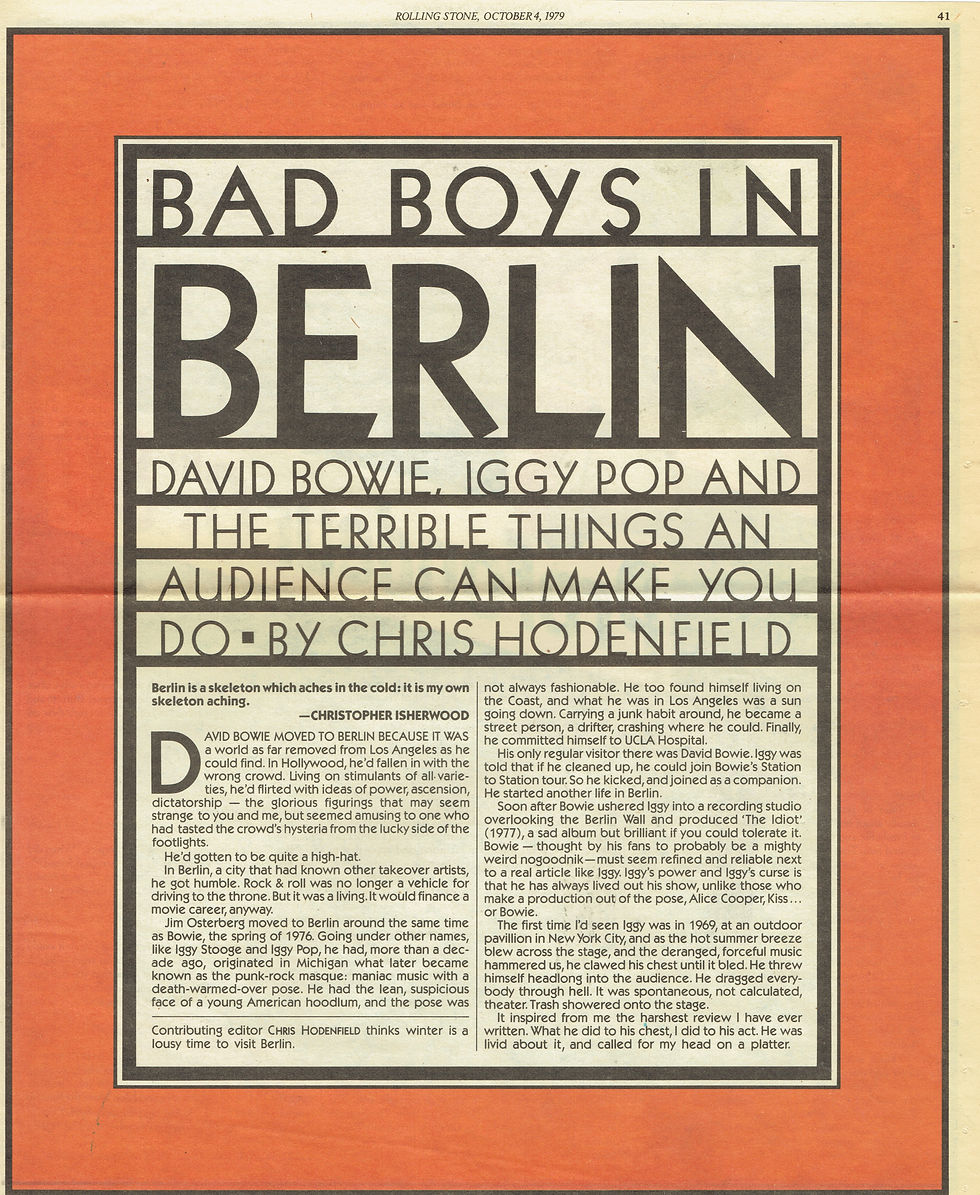
This major four-page Rolling Stone feature by Chris Hodenfield examines the lives and careers of David Bowie and Iggy Pop during their years in Berlin. Blending biography, personal observation and musical analysis, the article explores how the city influenced both artists and became the backdrop for one of rock music's most creative and transformative partnerships.
Publication: Rolling Stone
Date: October 4, 1979
Country: United States
Published under the headline "Bad Boys In Berlin", the feature investigates the relationship between David Bowie and Iggy Pop and their decision to relocate to Berlin during the latter half of the 1970s. Writer Chris Hodenfield presents Berlin as a city of reinvention, describing it as a place where both musicians could distance themselves from fame, excess and the pressures of the American music business.

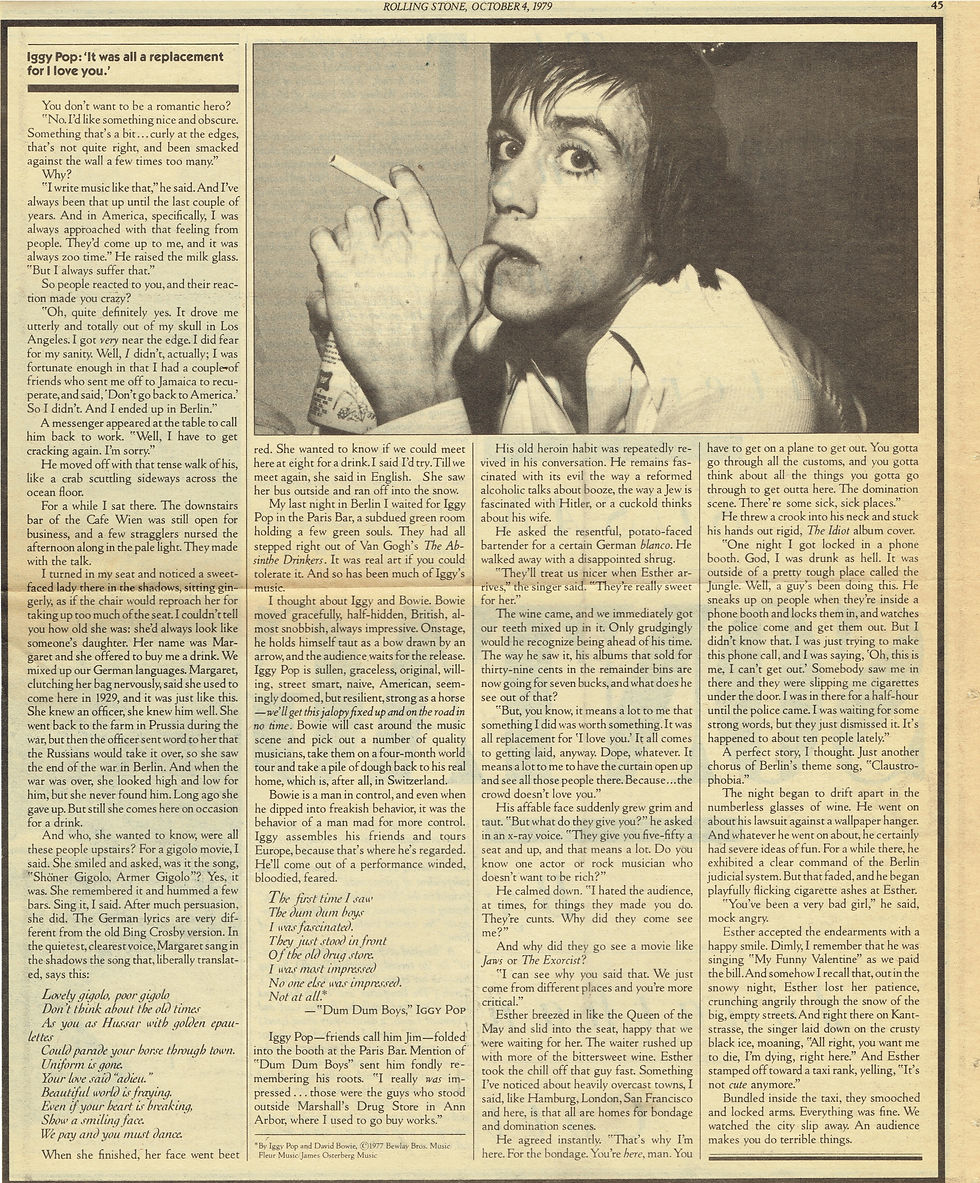
The article traces Iggy Pop's decline following the collapse of The Stooges and his struggles with addiction, before examining the role Bowie played in helping his friend rebuild his life and career. Berlin is portrayed as a refuge where Pop could escape destructive habits and begin a process of personal and artistic recovery.
Bowie's own reasons for moving to Berlin are explored in depth. The feature describes his desire to leave Los Angeles behind and seek a more disciplined and creative environment. Hodenfield presents the city as a catalyst for artistic experimentation, allowing Bowie to pursue new musical directions while avoiding many of the distractions associated with celebrity life.

The article discusses the creation of key recordings associated with the Berlin period, including Bowie's collaborations with Brian Eno and the albums that would become collectively known as the Berlin Trilogy. Iggy Pop's solo work is also examined, with particular attention given to the way Bowie contributed to and influenced those recordings.
Throughout the feature, the friendship between Bowie and Pop remains the central theme. The article presents them as two artists helping each other navigate personal difficulties, creative ambitions and changing musical tastes. Berlin emerges not merely as a location but as an active influence on their work and outlook.
Photographs accompanying the feature show Bowie and Pop during the Berlin years, reinforcing the article's focus on creativity, friendship and transformation. The overall presentation combines cultural commentary, music journalism and personal history to create one of the period's most substantial examinations of both artists.
CONTEXT AND NOTES
By October 1979, Bowie and Iggy Pop had become closely associated with Berlin and the innovative music produced during their time there. Their recordings from this period would later be regarded as some of the most influential work of the decade.
The feature is significant because it documents the Berlin years while they were still relatively recent events. Rather than treating the period as history, Rolling Stone presents it as an ongoing artistic evolution, capturing contemporary reactions to music that would eventually become central to both artists' legacies.
The article is also notable for emphasising friendship and collaboration rather than rivalry. By focusing on their shared experiences, Hodenfield presents Bowie and Pop as creative partners whose influence on one another helped shape some of the most important music of the late 1970s.
All magazine scans, photographs, and original text excerpts referenced in this entry remain the property of their respective copyright holders.
This Chronicle entry is a transformative, non-commercial archival summary created for historical documentation and educational reference.
No ownership of the original material is claimed or implied.


Comments