


📰 Play Don’t Worry - Album Review: Feb. 1975
- Mick Ronson
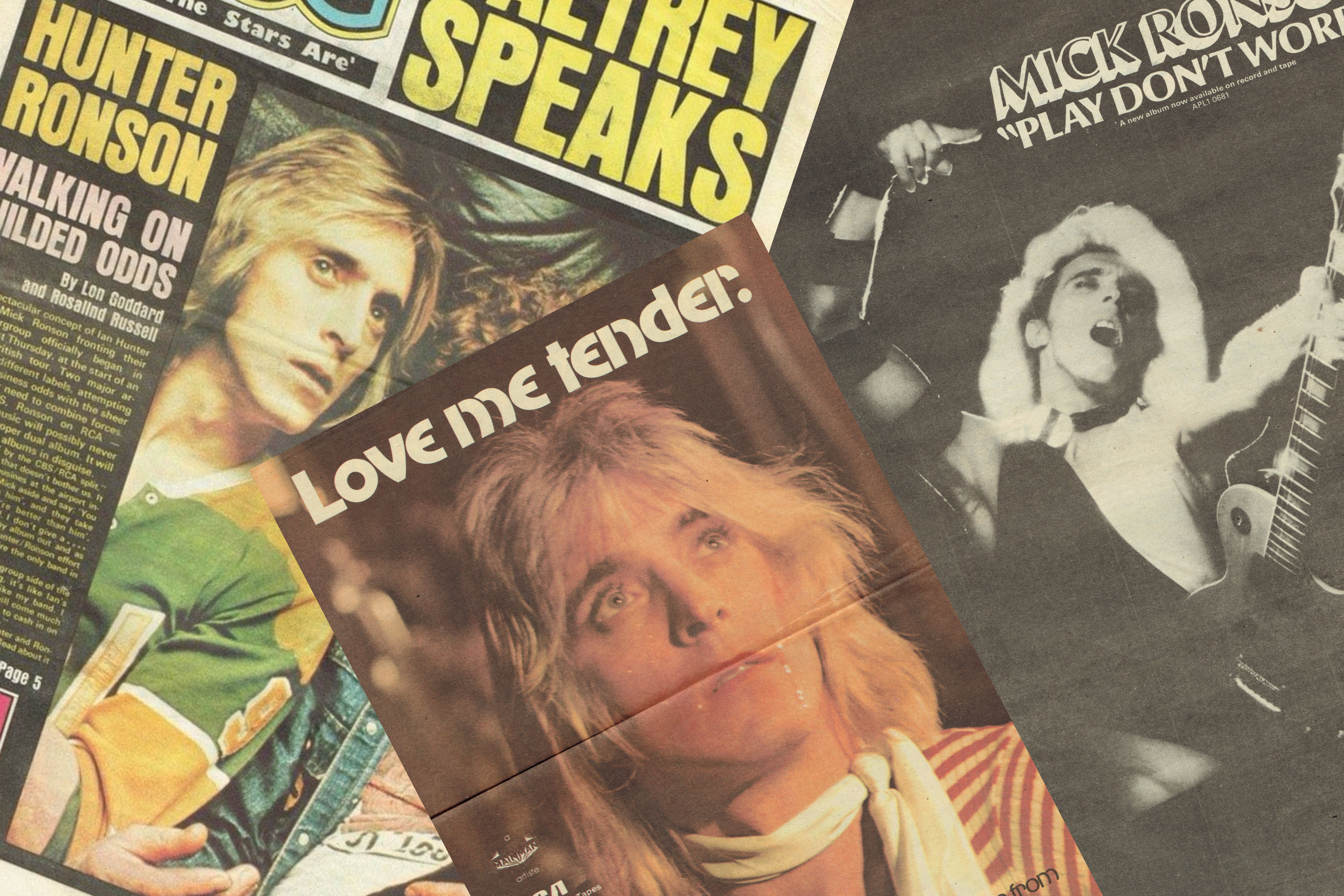
- Feb 22, 1975
- 3 min read
A one‑page album review examining Ronson’s second solo LP — a record of virtuosity, vulnerability, and glam‑era residue wrapped in a provocative gatefold sleeve.
📰 Key Highlights
• Published in Record Mirror, February 22, 1975
• One‑page album review
• Album: Mick Ronson – Play Don’t Worry (RCA APL1‑0681)
• Recorded at Trident Studios and Scorpio Sound, London
• Produced by Mick Ronson
• Notes Ronson’s multi‑instrumental performance
• Comments on the provocative gatefold sleeve
• Situates the album within Ronson’s post‑Bowie trajectory
📰 Overview
This review positions Play Don’t Worry as a bold but uneven follow‑up to Ronson’s 1974 debut Slaughter on 10th Avenue. The critic admires Ronson’s musicianship — he plays nearly everything — but questions the album’s stylistic cohesion and the decision to package it in a sleeve that evokes glam‑rock theatrics already fading from fashion. The piece reads as both admiration and frustration: Ronson is clearly talented, but the critic wonders whether he is still searching for a post‑Ziggy identity.
📰 Source Details
Publication / Venue: Record Mirror (Albums Section)
Date: February 22, 1975
Format: One‑page album review
Provenance Notes: Contemporary UK press response to Ronson’s second solo LP.
📰 The Story
The Sleeve – Glam’s Last Gasp
The review opens with a sharp observation:
the gatefold sleeve features four photographs of Ronson, three in underpants, one in jeans, his arms bound with gaffer tape — the “roadie’s cure‑all.”
The critic calls the imagery a throwback to the agonised Guitar Hero poses of early‑’70s glam, “thought to have been buried with the last gasps of T. Rextasy, circa 1972.”
It’s a pointed remark: Ronson’s visual presentation feels out of step with 1975’s shifting rock landscape.
📰 The Music – Ronson the One‑Man Band
The review lists Ronson’s contributions:
• voice
• guitars
• drums
• bass
• harmonica
• piano
• clavinet
• recorder
• synthesizer
He is supported by an impressive cast:
• Aynsley Dunbar – drums
• Trevor Bolder – bass
• Mike Garson – piano
• Tony Newman – drums
• Richie Dharma – drums
• John Mealing – piano
• Vicky Silva, Beverley Baxter, Miquel Brown – vocals
• Ian Hunter & the Microns – vocals
The critic acknowledges Ronson’s technical brilliance, but suggests the album sometimes feels like a showcase rather than a unified artistic statement.
📰 The Sound – Glam Residue & Hard‑Rock Muscle
The review notes:
• Ronson’s guitar tone remains muscular and melodic
• arrangements often echo the Bowie/Ronson partnership
• the album blends glam, hard rock, and orchestral touches
• some tracks feel like experiments rather than fully realised songs
The critic argues that Ronson’s strengths — arrangement, texture, tone — occasionally overshadow the songwriting itself.
📰 The Verdict – Talent in Search of Direction
The review concludes that Play Don’t Worry is:
• ambitious
• beautifully played
• uneven
• visually provocative
• stylistically transitional
Ronson is praised as a musician of rare ability, but the critic suggests he is still defining his solo identity after years as Bowie’s right‑hand man.
📰 Visual Archive

Mick Ronson – Play Don’t Worry album review, Record Mirror, February 22, 1975.
📰 Related Material
Explore the tags below for connected posts and themes.
📰 Closing Notes
This review captures Ronson at a pivotal moment — a virtuoso stepping out from the shadow of Ziggy Stardust, experimenting boldly, and wrestling with the question of what a Mick Ronson album should be.


Comments