


⭐ A Beard of Stars – Album: Mar. 1970
- Tyrannosaurus Rex
- Mar 12, 1970
- 4 min read
LP Album — Regal Zonophone, SLRZ 1013 / 1E 062 ○ 91091
Released: March 13, 1970 (UK)
The final Tyrannosaurus Rex album — and the first spark of the electric transformation that would become T. Rex.
A Beard of Stars stands at the crossroads of Marc Bolan’s artistic evolution. Released in March 1970, it captures the moment when Tyrannosaurus Rex — once a mystical, acoustic folk duo — began its metamorphosis into the electric, swaggering force soon known as T. Rex.
The album emerged from a turbulent period. After Unicorn, Bolan bought his first electric guitar in March 1969 and used it on the single “King of the Rumbling Spires,” a sign of his desire to evolve . But tensions with Steve Peregrin Took — fuelled by Took’s drug use and insistence on contributing his own songs — made the spring 1969 sessions fraught . After the US tour that autumn, Took was quietly dismissed.
Bolan found Mickey Finn through photographer Pete Sanders, and the new lineup began recording on October 31, 1969 . Tony Visconti recalled that Finn’s “positive spirit” made the sessions “very creative and experimental” . Bolan played most instruments himself, with Finn adding percussion, Moroccan clay drums, tabla, bass, and finger cymbals.
Musically, the album blends the enchanted folk of early Tyrannosaurus Rex with the first real signs of Bolan’s electric future. Tracks like “Woodland Bop,” “Pavilions of Sun,” “By the Light of a Magical Moon,” and especially “Elemental Child” showcase Bolan’s growing fascination with electric guitar — he even claimed to have taken informal lessons from Eric Clapton .
Four tracks (“Great Horse,” “Wind Cheetah,” and two others) were salvaged from earlier sessions with Took, but his parts were mixed out and replaced by Bolan, Finn, and Visconti . The album’s lyrical world remains steeped in Romantic poetry and Tolkien‑esque imagery, but Bolan’s enunciation is clearer and the songwriting more direct.
Released in March 1970, the album reached No. 21 on the UK Albums Chart and later reappeared in 1972 as part of a double‑LP reissue with Unicorn, charting at No. 44.
🔘 Track List
Side A
Prelude
A Day Laye
The Woodland Bop
Fist Heart Mighty Dawn Dart
Pavilions of Sun
Organ Blues
By the Light of a Magical Moon
Wind Cheetah
Side B
A Beard of Stars
Great Horse
Dragon’s Ear
Lofty Skies
Dove
Elemental Child
🔘 Variants
UK Variants
• LP, Album, Stereo — Regal Zonophone SLRZ 1013 / 1E 062 ○ 91091 (1970)
• Cassette, Album, Stereo — Regal Zonophone TC‑SLRZ 1013 (1970)
Pressing Notes
• Fully laminated cover
• Insert with lyrics and credits
• Photography by Pete Sanders
• Cover design by June Child
• Pressed by The Gramophone Co. Ltd.
• “Dragon’s Ear” appears as “Dragons Ear” on the label
🔘 Chart Performance
UK — Official Albums Chart
• Peak: No. 21
• First chart date: March 14, 1970
• Weeks on chart: 6
• Chart run:
21 → 48 → 26 → 53 → 51 → 43
🔘 Context & Notes
• First album with Mickey Finn; Took’s parts removed from earlier sessions .
• Recorded at Trident Studios between October 31 and November 13, 1969.
• “Elemental Child” recorded in two parts — main song + extended electric coda .
• Bolan introduced “Dove” as his first love song during a BBC concert taped on New Year’s Day 1970.
• The album’s electric elements foreshadow the glam‑rock transformation that would explode later that year.
• Reissued in 1972 with Unicorn; deluxe editions released in 2004 and 2014.
🔘 Contemporary Reviews (1970)
New Musical Express (Nick Logan)
Logan praised the album’s tasteful use of electric guitar, writing that Bolan’s playing “comes across effectively as an extension of what Marc is already famed for vocally.” He highlighted “Wind Cheetah” and “The Woodland Bop,” calling the album “their most distinctive and perhaps most successful so far.”
Melody Maker (Chris Welch)
Welch celebrated Bolan’s electric shift: “Never before has T. Rex sounded so heavy or exciting.” He singled out “Elemental Child” for its “energetic and groovy heavy rock guitar work,” noting the Clapton influence and calling the album “a whole new variety of effects.”
Rock et Folk (J.C.)
A more ambivalent review, noting Bolan’s voice as “a slight organ which seems perpetually on the brink of catalepsy,” but praising the musicianship and lyric sheet. “Elemental Child” was described as “probably the most pop‑like piece… and also the longest,” and the reviewer admitted it was their favourite track.
🔘 Visual Archive


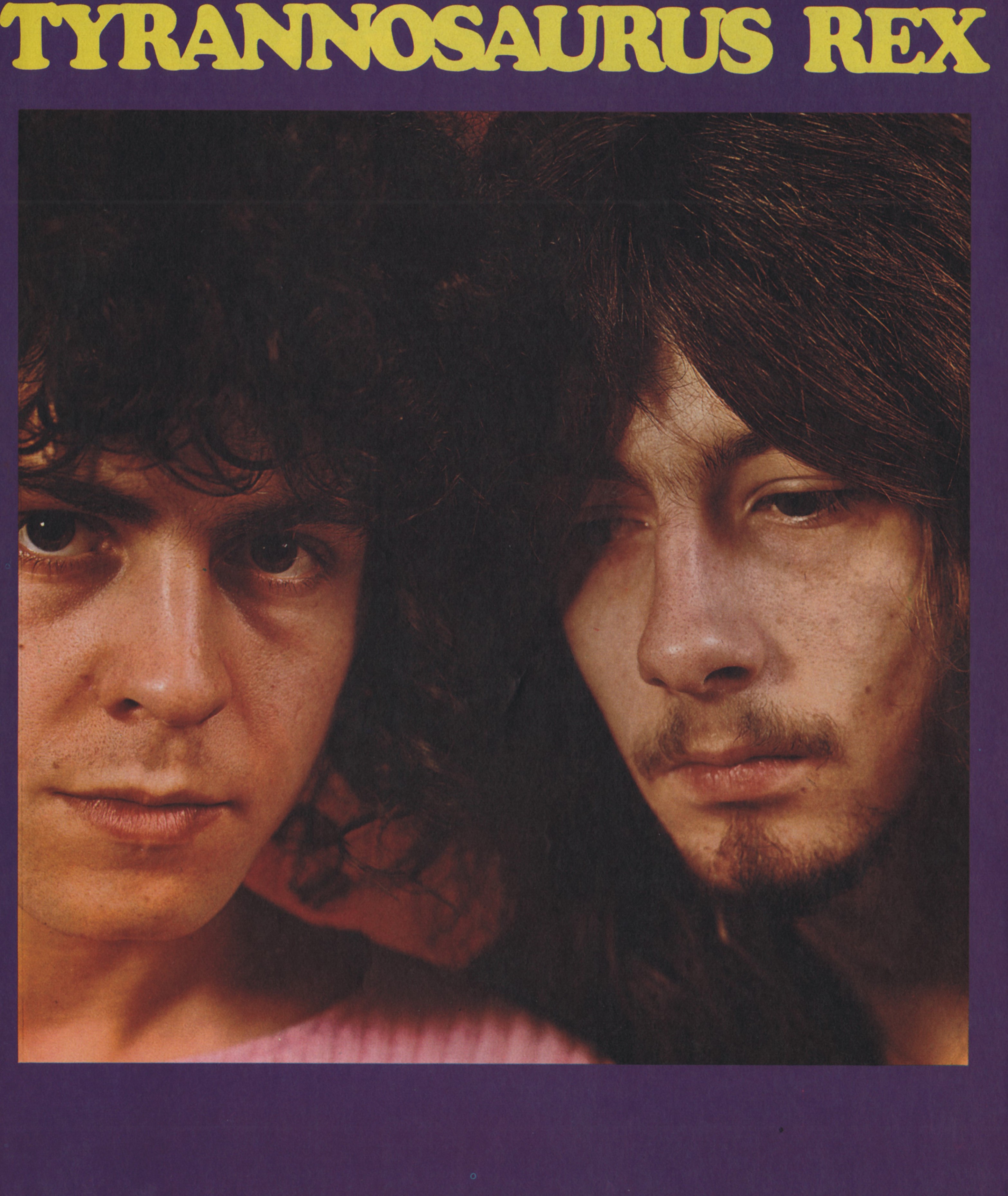
A monochrome portrait of Marc Bolan with voluminous curls and a ruffled shirt, framed in soft contrast. The band name appears above, with the Polydor logo in the corner. The image reflects the mystical, psychedelic folk aesthetic of the era.
Tyrannosaurus Rex — A Beard of Stars (1970), photography by Pete Sanders.
🔘 Related Material
• Unicorn (1969)
• T. Rex (1970)
• “By the Light of a Magical Moon” (1970 single)
• Early Electric Transition Sessions (1969–1970)
🔘 Discography
• A Beard of Stars (1970)
• Unicorn (1969)
• T. Rex (1970)
🔘 Mini‑Timeline
• March 1969 — Bolan buys first electric guitar
• May 1969 — Early sessions with Took
• Aug–Sept 1969 — US tour; Took dismissed
• Oct 31, 1969 — First session with Mickey Finn
• Nov 13, 1969 — Recording completed
• Jan 1970 — “By the Light of a Magical Moon” single released
• Mar 13, 1970 — Album released
• Mar 14, 1970 — Enters UK Albums Chart at No. 21
• Nov 1972 — Reissued with Unicorn
🔘 Glam Flashback
A Beard of Stars is the moment Marc Bolan steps out of the enchanted forest and onto the electric stage. The mysticism remains, but the future is already humming in the wires.
🔘 Closing Notes
This album stands as one of the most important transitional works in Bolan’s catalogue — the bridge between the acoustic spellcraft of Tyrannosaurus Rex and the electric mythology of T. Rex.
🔘 Sources & Copyright
All information drawn from the user‑provided document, including historical background, recording details, reviews, and discography.
All album artwork and photography remain the property of their respective copyright holders.
#TyrannosaurusRex #ABeardOfStars #MarcBolan #MickeyFinn #1970 #RegalZonophone #TonyVisconti #GlamSlamChronicles #Archive


Comments