


📰 Bolan Paved the Way ‑ Article: Apr. 1973
- T.Rex

- Apr 7, 1973
- 3 min read
Updated: Apr 7
Tony Visconti’s Bolan Paved the Way for People Like Bowie appeared as a one‑page article in Melody Maker on April 7, 1973, offering a candid reflection on Marc Bolan’s influence during the height of the glam era. The piece framed Bolan as a trailblazer whose early success helped open the door for artists like Bowie, while also highlighting Visconti’s unique vantage point as a producer deeply connected to both figures at a pivotal moment in 70s pop evolution.
Melody Maker
Date: April 7, 1973
Length: 6 min read
A behind‑the‑desk look at early‑70s record production, framed through Tony Visconti’s reflections on Marc Bolan, David Bowie, and the shifting landscape of British rock.
Inside the control room where glam was engineered.
The piece captures a moment when producers were becoming as culturally influential as the artists they shaped, with Visconti positioned as a quiet architect behind some of the era’s most defining sounds.
📰 Key Highlights
• Melody Maker feature spotlighting Tony Visconti’s production work
• Visconti credits Marc Bolan for opening doors for artists like Bowie
• Discussion of evolving studio techniques and rising production standards
• References to Bolan, Bowie, The Strawbs, and other early‑70s acts
• Rare photograph of Visconti in his studio environment
📰 Overview
This *Melody Maker* feature from April 7, 1973 offers a rare glimpse into the world of early‑70s record production, focusing on Tony Visconti — one of the most influential behind‑the‑scenes figures of the glam era. The article situates Visconti at the centre of a creative shift, where producers were no longer anonymous technicians but collaborators shaping the artistic identity of major acts.
Visconti’s reflections on Marc Bolan and David Bowie highlight the interconnectedness of the glam movement. Bolan’s commercial breakthrough, he argues, created the cultural space for artists like Bowie to experiment, evolve, and ultimately thrive.
📰 Source Details
Publication / Venue: Melody Maker
Date: April 7, 1973
Format: Feature / Interview
Provenance Notes: Based on the original Melody Maker article “Producing the Goods,” featuring Tony Visconti.
📰 The Story
The article opens with a striking photograph of Tony Visconti seated in a studio surrounded by tape machines, consoles, and racks of equipment — a visual shorthand for the meticulous craft behind the glam‑rock explosion. Visconti discusses his work with Marc Bolan, crediting Bolan’s early success with T. Rex as the catalyst that allowed more experimental artists, including Bowie, to gain mainstream acceptance.
He reflects on the rapid evolution of studio technology and how it enabled producers to push sonic boundaries. The piece touches on his work with The Strawbs and other acts, illustrating the breadth of his influence across genres.
Visconti’s comments underscore the collaborative nature of the era: artists and producers pushing each other toward new sounds, new identities, and new levels of ambition. His assertion that “Bolan paved the way for people like Bowie” frames glam not as a series of isolated stars but as a creative ecosystem.
📰 Visual Archive
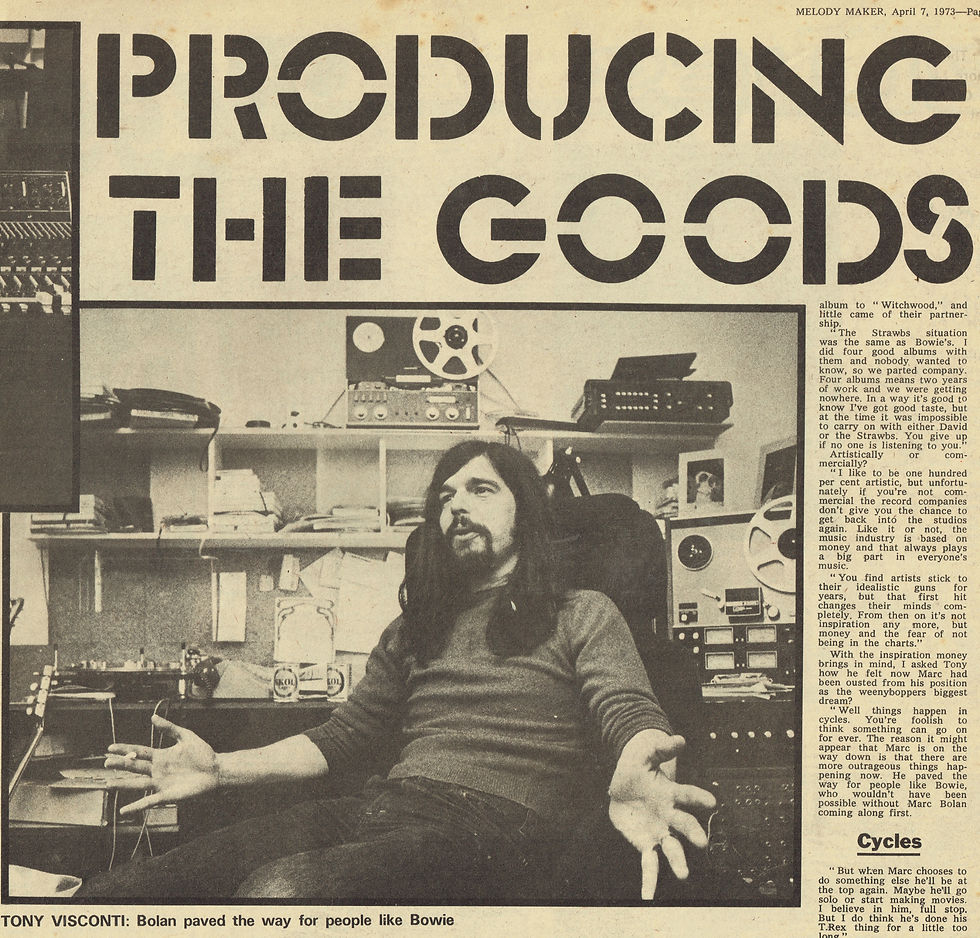

• Full‑page Melody Maker layout
• Large studio portrait of Tony Visconti
• Caption: “TONY VISCONTI: Bolan paved the way for people like Bowie.”
• Article column discussing Bolan, Bowie, and production craft
Tony Visconti in 1973 — the quiet architect behind glam’s most enduring innovations.
📰 Check out the tags at the bottom of the post.
📰 Closing Notes
This Melody Maker feature captures a pivotal moment when the glam‑rock movement was reshaping British music, and when producers like Visconti were emerging as essential creative partners. His reflections on Bolan and Bowie offer a rare, grounded perspective on how artistic revolutions are built — not by one figure alone, but through a chain of influence, innovation, and shared ambition.
📝 Copyright Notice
All magazine scans, photographs, and original text excerpts referenced in this entry remain the property of their respective copyright holders. This Chronicle entry is a transformative, non‑commercial archival summary created for historical documentation and educational reference. No ownership of the original material is claimed or implied.

Comments