


📰Band Breakdown – Slade – Mar.1972
- Slade
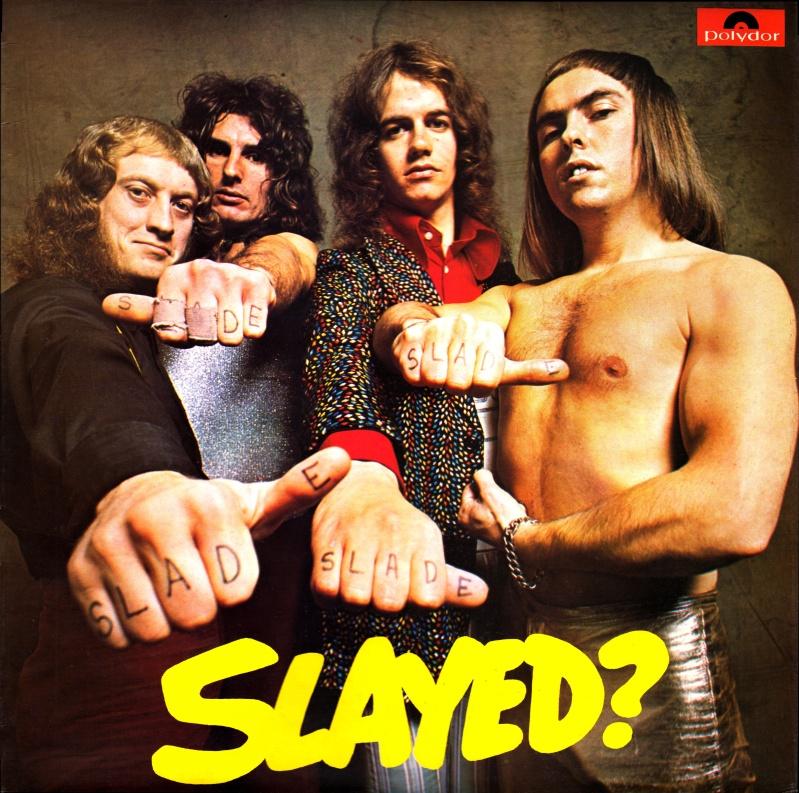
- Mar 4, 1972
- 8 min read
Melody Maker (Chris Charlesworth)
Date: March 4, 1972
A two‑page Melody Maker deep‑dive into Slade’s origins, personalities, musicianship, and the long road that led to their 1972 breakthrough — capturing the band just as they shed their skinhead image and stepped into national prominence.
📰 Sub‑Heading
A raw, unfiltered portrait of Slade at the moment their identity, sound, and ambition crystallised.
📰 Excerpt
This Melody Maker Band Breakdown traces Slade’s evolution from Midlands club survivors to one of Britain’s most explosive live acts. Through candid interviews with Noddy Holder, Dave Hill, Jim Lea, and Don Powell, the article reveals the grit, humour, and determination that powered their rise.
📰 Key Highlights
• Two‑page Melody Maker Band Breakdown, March 4, 1972
• Profiles of all four members: Noddy Holder, Dave Hill, Jim Lea, Don Powell
• Focus on the band’s long struggle through the club circuit
• Exploration of the “skinhead” era and its impact
• Insight into their stagecraft, humour, and audience psychology
• Early history: The Vendors, The In‑Between, Ambrose Slade
• Equipment lists and discography included
• Photographs by Barrie Wentzell
📰 Overview
By early 1972, Slade were on the cusp of becoming one of Britain’s defining rock acts. Melody Maker’s Band Breakdown captures them at this pivotal moment, offering a rare, intimate look at the personalities behind the noise.
The article emphasises the band’s long apprenticeship on the British club circuit — years of hard graft, rough gigs, and relentless touring. It also confronts the controversial “skinhead” period, acknowledging both the publicity it generated and the stigma it created. With the guidance of manager Chas Chandler, Slade had finally broken through, and the feature positions them as a band whose success was earned the hard way.
Each member is profiled in depth, revealing the contrasting energies that fuel Slade: Noddy’s bawdy charisma, Dave’s theatrical extroversion, Jim’s musical discipline, and Don’s quiet seriousness. Together, they form a unit defined by loyalty, humour, and sheer determination.
📰 Source Details
Publication / Venue: Melody Maker
Date: March 4, 1972
Format: Two‑page Band Breakdown feature
Provenance Notes: Sourced from original print scans; includes full article text, photography, equipment lists, and discography.
📰 The Story
The feature opens by noting Slade’s longevity — unlike many chart acts of the moment, they had been “in the game a long time.” Their early years were marked by the skinhead image, which brought both notoriety and negative press. With Chandler’s guidance, they pushed past it, focusing on their stage act rather than relying solely on hit singles.
Noddy Holder
Noddy is portrayed as the band’s ringleader — loud, cheeky, and unfiltered. His stage banter, often risqué, is described as both provocative and central to Slade’s identity. He insists that the band’s success comes from giving audiences a good time, not from technical perfection. Though he retains traces of the skinhead look, he now views that era with mixed feelings.
Dave Hill
Dave (“H”) is the extrovert — flamboyant on stage, eccentric off it. His musical journey began with classical aspirations before shifting to electric guitar. He recounts the band’s early incarnations (The Sundowners, The Vendors, The In‑Between) and the chaotic Bahamas period that preceded their Fontana years. Dave acknowledges the skinhead phase as both a publicity boon and a burden.
Jim Lea
Jim is the band’s most formally trained musician, having studied violin from childhood. Thoughtful and serious, he is portrayed as the group’s musical backbone and financial conscience. His admiration for Paul McCartney as a bassist underscores his own disciplined approach.
Don Powell
Don is the quietest member — tough‑looking, understated, and deeply committed to the craft of drumming. His background in marching drums and his relentless work ethic define his role. He is described as the band’s most serious musician, often found in the studio refining parts.
The article concludes by emphasising the band’s unity. Slade’s refusal to change members, even during the hardest years, is presented as the key to their eventual success.
📰 Visual Archive


Slade profiled across two pages of Melody Maker, March 4, 1972 — a defining portrait of the band before their breakthrough year.
UNLIKE many of the groups currently enjoying chart success with hit singles, Slade have been in the game a long time.
It's been a hard struggle to overcome the adverse publicity that surrounded them during their skinhead" period. But with the help of manager Chas Chandler, they have finally broken through.
They've done it the hard way, working on their stage act instead of relying entirely on hit records to attract audiences.
Slade have plodded around the British Club circuit to ensure that anybody interested could see them live.
They've refused a lucrative offer from America in order to stay and concentrate on Britain, and they steadfastly refuse to cross the Atlantic until record success over there tempts them to make the journey.
WHEN the audience is sitting tight at the front of the stage and NODDY HOLDER is the centre of atten-tion, he's apt to say something likely to upset the hall management.
"'Ello lovey, what's your name?" he'll say to some girl. Then he'll grin from ear to ear, open his eyes wide and tell the whole hall what colour knickers she's wearing.
His hair flops from out his flat hat to give him a naughty schoolboy look. He tends to leer at girls from the stage like a Dickensian character might leer at a little boy chimney-sweep. He's got a pretty evil laugh too, which he uses to great effect when explaining that Dave Hill is not quite as masculine as he'd have you believe.
He's pretty adamant when it comes to getting an audience on their feet. In his boots and, occasionally, braces, he sets the style for the night's show. If you don't like it, well he didn't ask you to come and for all he cares you can get the hell out of it. He'll tell you, as well.
During our interview Noddy rubs his eyes like he's had a good night the night before. He laughs frequently, and likes a dirty joke. One of his songs is called "Dirty Joker" and it could easily be Nod.
"We're not the best musicians in the world at all. Jim is a good musician. He's clever, but we want to have a good time. We're not good musicians, it's just that we like to enjoy ourselves. A lot of people know about us having a good time on stage, but some have started to listen to the music as well now.
"People put us down because they think it's wrong for a group to be having a good time with the audience. They think we ought to be concentrating hard on the music, but what's the point? The kids come to see us because they know we'll give them a good time. That's why they've bought the record, because they know us from the stage act."
Noddy still retains a slight skinhead look although the other three have dropped the look completely. "Dave was the first to cut his hair and we followed suit. Six months ago I would have said we regretted the skinhead thing because we were going downhill, but now I'm not so sure. The idea of skinheads stamping around in boots is our thing. Get Down And Get With It' is our national anthem and that's a real stom-per. It was too rowdy to get exposure on radio though."
A grim determination to "make it" some day has kept Slade together during hard times. Sticking together with same line-up, says Noddy, is a main reason for their cur-rent success.
"We never thought of packing up. We had to stick at it because we knew the bad times would turn into good times sooner or later. It would never have worked if we had brought anybody else in. The fact that four of us have stuck together has brought us through. Look at the Who. They've stuck together through the good and bad, but if one of them had to leave they would flop out. Groups that stick together are the ones that make it."
DAVE HILL or "H" as he is known to the rest of the group - is the extrovert of Slade. On stage he's the one who moves around the stage all the time, and off stage he's the daftest. He was the one to start the skinhead image; now his hair is the longest of the lot, and his clothes are the most removed from skinhead styles.
After an unsuccessful term in the recorder class at school, Dave bought his first guitar at 15. "There was music in my family, but it went back as far as my grandfather who was a Doctor in Music. At one time I wanted to learn the piano,
and another time I fancied learning sax. "I had a Spanish guitar for years and learned to play all the right notes and fancy chords and no pop stuff. Then I swopped this for a cheap electric guitar, and formed a group with some other kids on the estate called the Sundowners. I left them to join another called the Ven-dors, and then joined the In Between which had Don as the drummer.
At first we were playing blues and using a harmonica. We had a fat singer with a great voice, but he was too lazy to turn up for rehearsals, so we sacked him and Nod came in, Then we auditioned some bass player and Jim joined."
Slade's first single-as Ambrose Slade-was a single on Columbia entitled "You Better Run." This came in 1968, and fol-lowed a stint playing at Tiles Club in London. There they were spotted by an American producer, who made recording with them, but nothing came out of the deal.
"Then we went off to the Bahamas for what seemed like years and came back to make some records for Fontana. They wanted us to make a live album, and we made it with Chas Chandler for the first time and called it 'Beginnings.' It's never been put out. We did the early singles with Chas, but none of them were very big hits."
The skinhead bit came after Dave chop-ped his hair in the Bahamas. "We really decided to do it because we wanted to look different from all the other groups with long hair, and it gave us some pub-licity which we needed.
"The boots and braces were incredible in the stage show because we have always been looners on stage. We thought people might look at skinheads in a new light because of us, but a lot of people went round saying we were a load of ruffians. We sometimes played to crowds of skin-heads, but we didn't play reggae so we weren't the heroes they were looking for. We got some bad publicity for it all, but it's a question of all publicity was good publicity."
On looking back, Dave thinks the skin-head phase did the group a lot of good, but like the other three he is indebted to manager Chandler. He is just what our group needed because he bullied us to do things and he was right behind us all the time. He is just about a fifth member of the group."
📰 Related Material
• Slade Alive! (1972)
• Melody Maker – Slade Cover Feature (Mar. 4, 1972)
• Slade – Early 1970s Live Performances
📰 Closing Notes
This Band Breakdown stands as one of the most revealing early profiles of Slade — capturing their humour, grit, and unity just before they became one of Britain’s biggest bands.
#Slade #MelodyMaker1972 #NoddyHolder #DaveHill #JimLea #DonPowell #GlamRock #BritishRock #ReleaseChronicle
📰 Sources
• Melody Maker, March 4, 1972 – Band Breakdown feature
• Contemporary Slade interviews and tour documentation
• Minimal provenance references from collector archives
📝 Copyright Notice
All magazine scans, photographs, and original text excerpts referenced in this entry remain the property of their respective copyright holders. This Chronicle entry is a transformative, non‑commercial archival summary created for historical documentation and educational reference. No ownership of the original material is claimed or implied.


Comments