Reeves Gabrels (May1997) Earthling from Mars – Feature
- David Bowie

- May 1, 1997
- 3 min read
Updated: 7 days ago
A vivid, technical, and personal portrait of Reeves Gabrels, exploring his creative partnership with David Bowie during the Earthling era — a fusion of avant‑garde guitar experimentation and digital innovation.
Publication: Guitarist Magazine
Date: May 1, 1997
Country: United Kingdom
Section / Page: Feature pp. 46–47
Format: Interview / Profile / Photo Feature
What the Clipping Shows
The opening spread introduces Gabrels’ collaboration with Bowie, framed by the headline “Earthling from Mars” and the tagline:

“His style has been described as if he was trying to kill someone with it.”
Dominic Hilton’s feature sets the tone — analytical yet playful — describing Gabrels as Bowie’s sonic provocateur. The layout features a blue brick backdrop, bold typography, and inset portrait of Gabrels with his guitar.
The Story Behind ItBy early 1997, Bowie and Gabrels were redefining rock through digital experimentation. Gabrels’ aggressive, textural guitar work became the backbone of Earthling, merging industrial noise with melodic precision.
“Reeves Gabrels has been bringing the future to Bowie’s music for nearly a decade.”
This first section establishes Gabrels as both technician and artist — the man translating Bowie’s conceptual ideas into sound.

What the Clipping Shows
A full‑page portrait of Gabrels in a black leather jacket and ruffled shirt against a blue brick wall. The accompanying text continues the introduction, exploring his restless creativity and technical eccentricity.
The Story Behind It
Gabrels discusses his approach to tone and texture, describing how he manipulates sound to evoke emotion rather than perfection. His partnership with Bowie is framed as a meeting of equals — two artists challenging each other’s boundaries.
“When I met David, I thought he was just like the guys I hang out with at home, except he’s been a rock star for 20 years.”
This section humanises Gabrels, showing the warmth and humour behind his experimental edge.

What the Clipping Shows
The article’s technical core, titled “Virtual relief from the equipment headaches.” Gabrels explains his transition from analog setups to digital rigs, embracing virtual gear to streamline his creative process. A sidebar photo shows him performing live with Tin Machine.
The Story Behind It
Gabrels recounts the frustrations of traditional equipment and how digital tools freed him to focus on expression. He describes his use of Whammy pedals, amp modelling, and virtual effects to achieve the chaotic yet controlled sound of Earthling.
“A big change happened for me when I started using virtual gear — it freed me from the headaches of hardware.”
Experimental Philosophy

What the Clipping Shows
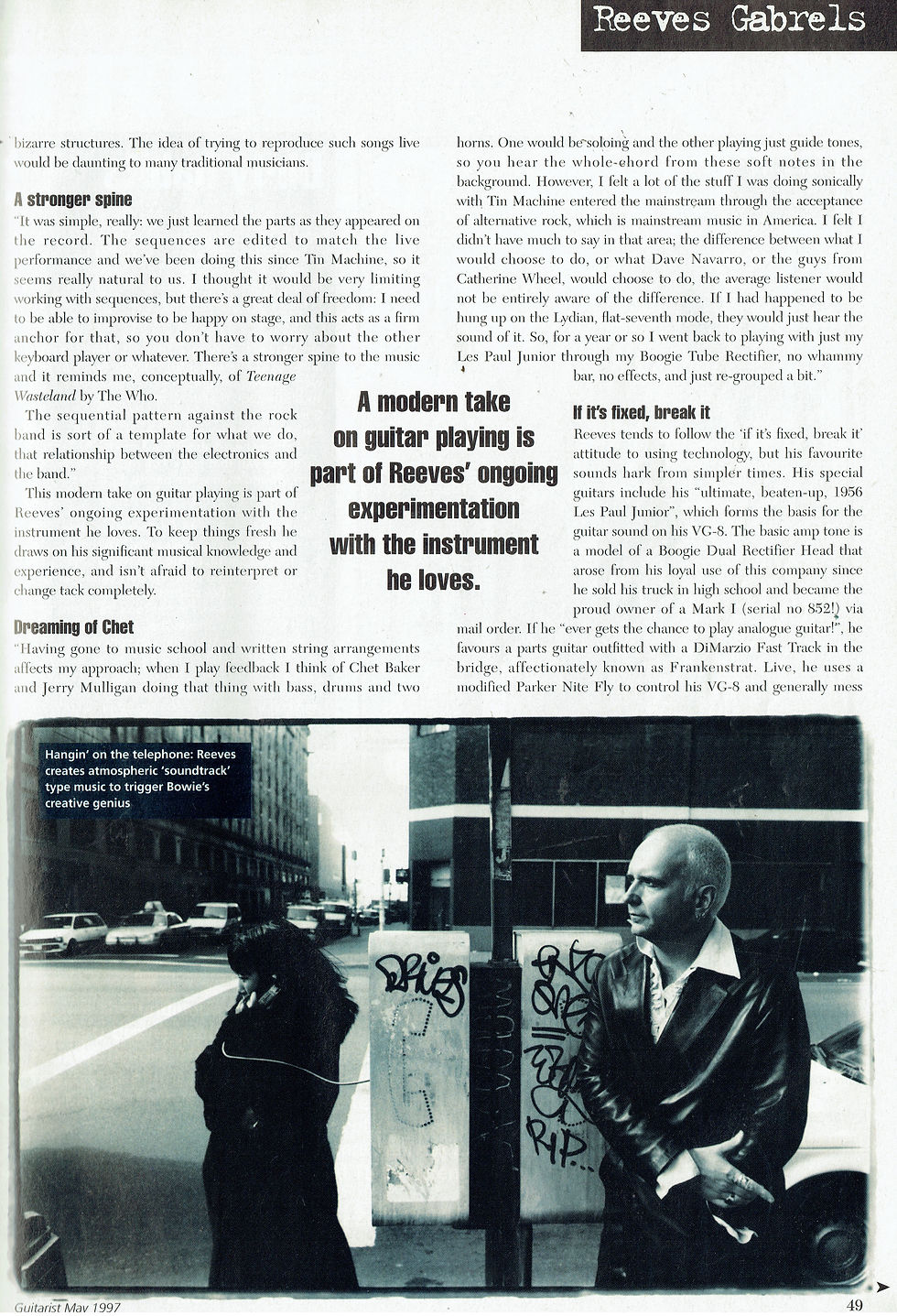
A black‑and‑white street photograph of Gabrels beside a graffiti‑covered wall, captioned “Hanging on the telephone.” The text explores his artistic mindset through sections titled “A stronger spine,” “Dreaming of Chet,” and “If it’s fresh, break it.”
The Story Behind It
Gabrels reflects on his jazz influences, particularly Chet Baker, and how he applies emotional phrasing to electric guitar. He rejects formulaic playing, preferring risk and imperfection.
“A modern take on guitar playing is part of Reeves’ ongoing experimentation with the instrument he loves.”
This section captures Gabrels’ philosophy of perpetual reinvention — breaking what works to find something new.

Recording & Reflection
What the Clipping Shows
A colour photograph of Gabrels beside a public phone booth, captioned “The man who built his own studio.” The text focuses on his recording process and emotional connection to Bowie’s work, including the section “Dirty habits.”
The Story Behind It
Gabrels describes Bowie’s surreal creative prompts — “play like Eddie Van Halen on acid” — and how they pushed him to extremes. He emphasises emotion over precision, treating technology as a means to human expression.
“David throws me these bizarre references and then boxes me in a corner just to see me kick the sides out.”
The closing paragraphs highlight Gabrels’ belief that feeling outweighs technique:
“Emotional connection is everything — if the listener doesn’t feel it, the gear doesn’t matter.”
This final section completes the portrait of Gabrels as both innovator and collaborator — the guitarist who helped Bowie reinvent rock for the digital age.
Related Material
Additional material connected to this entry is listed in the tag index at the foot of the page.
Closing Notes
This five‑page Guitarist feature captures Reeves Gabrels at his creative zenith — a fearless innovator bridging analog emotion and digital experimentation. His partnership with David Bowie remains one of the most forward‑thinking collaborations in modern rock.
Copyright Notice
All magazine scans, photographs, and original text excerpts referenced in this entry remain the property of their respective copyright holders.This Chronicle entry is a transformative, non‑commercial archival summary created for historical documentation and educational reference.No ownership of the original material is claimed or implied.


Comments