


A Beginner’s Guide - Mick Ronson
Updated: Jul 21
(The Guitar Hero of Glam)
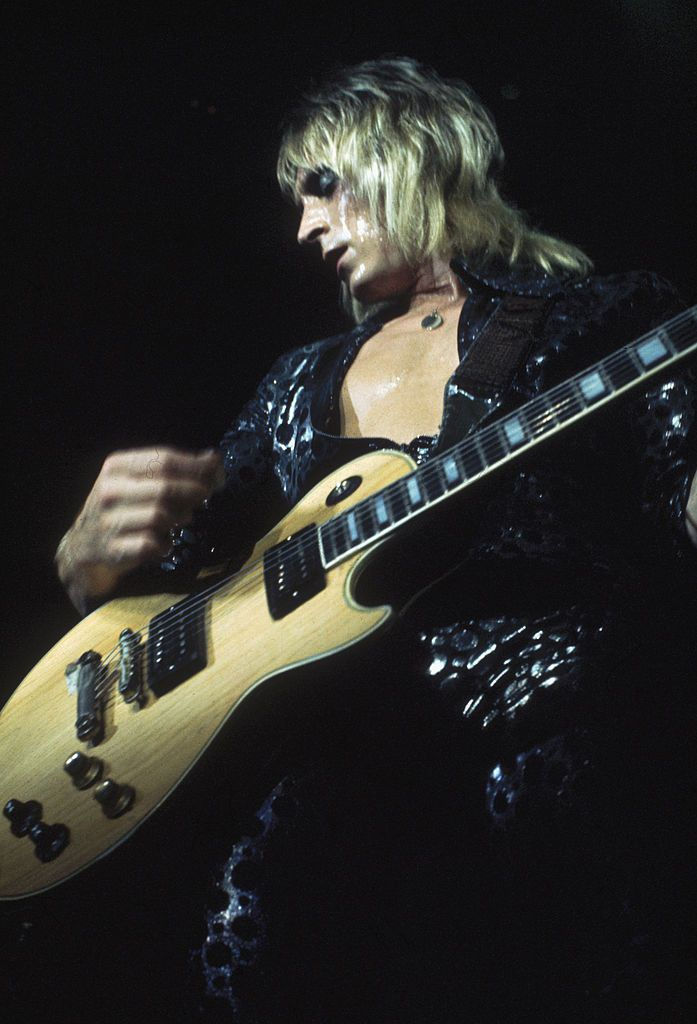
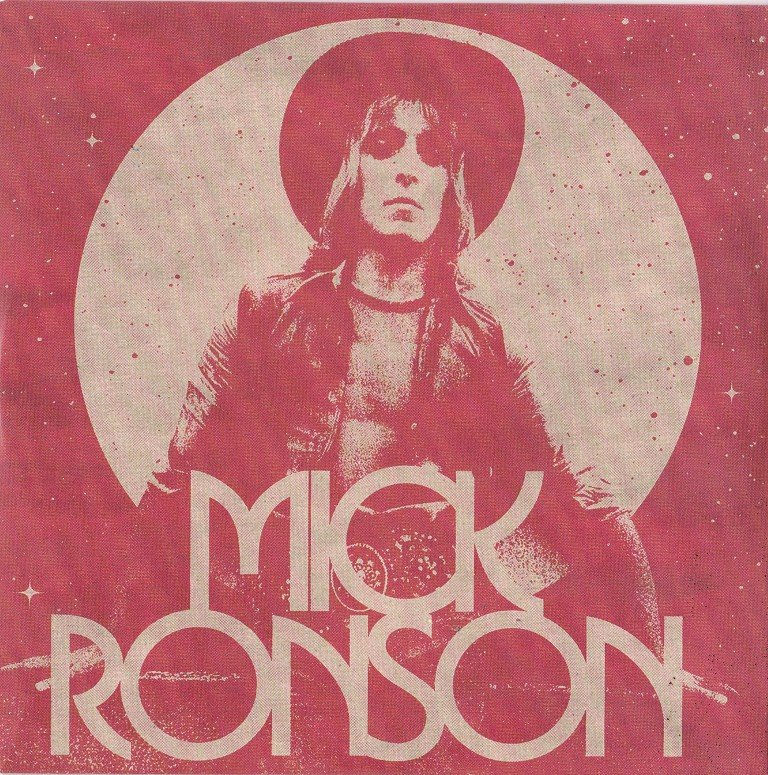
Mick Ronson (born Michael Ronson, May 26, 1946 – April 29, 1993) was an English guitarist, songwriter, producer, and arranger. Widely regarded as one of the greatest and most influential guitarists of the glam rock era, he is best known for his groundbreaking work as David Bowie’s musical director and lead guitarist during the Ziggy Stardust period. His melodic, powerful, and theatrical playing style helped define the sound of 1970s rock.
EARLY LIFE & MUSICAL BEGINNINGS
Born in Hull, Yorkshire, Mick Ronson began playing guitar as a teenager. He played in several local bands before joining The Rats in the late 1960s. His big break came in 1970 when he was introduced to David Bowie. Bowie was immediately impressed by Ronson’s versatility, tone, and stage presence, and invited him to join what would become The Spiders from Mars.
THE SPIDERS FROM MARS & DAVID BOWIE (1970–1973)
Ronson became the musical cornerstone of Bowie’s Ziggy Stardust era. His dynamic guitar work, innovative arrangements, and flamboyant stage style were central to the success of landmark albums such as:
The Man Who Sold the World (1970)
Hunky Dory (1971)
The Rise and Fall of Ziggy Stardust and the Spiders from Mars (1972)
Aladdin Sane (1973)

Ronson co-arranged many of Bowie’s classic songs and delivered iconic solos on tracks like “Moonage Daydream,” “Suffragette City,” and “Ziggy Stardust.” His partnership with Bowie helped define the visual and sonic aesthetic of glam rock.
SOLO CAREER & COLLABORATIONS
After leaving Bowie in 1973, Ronson released two acclaimed solo albums:
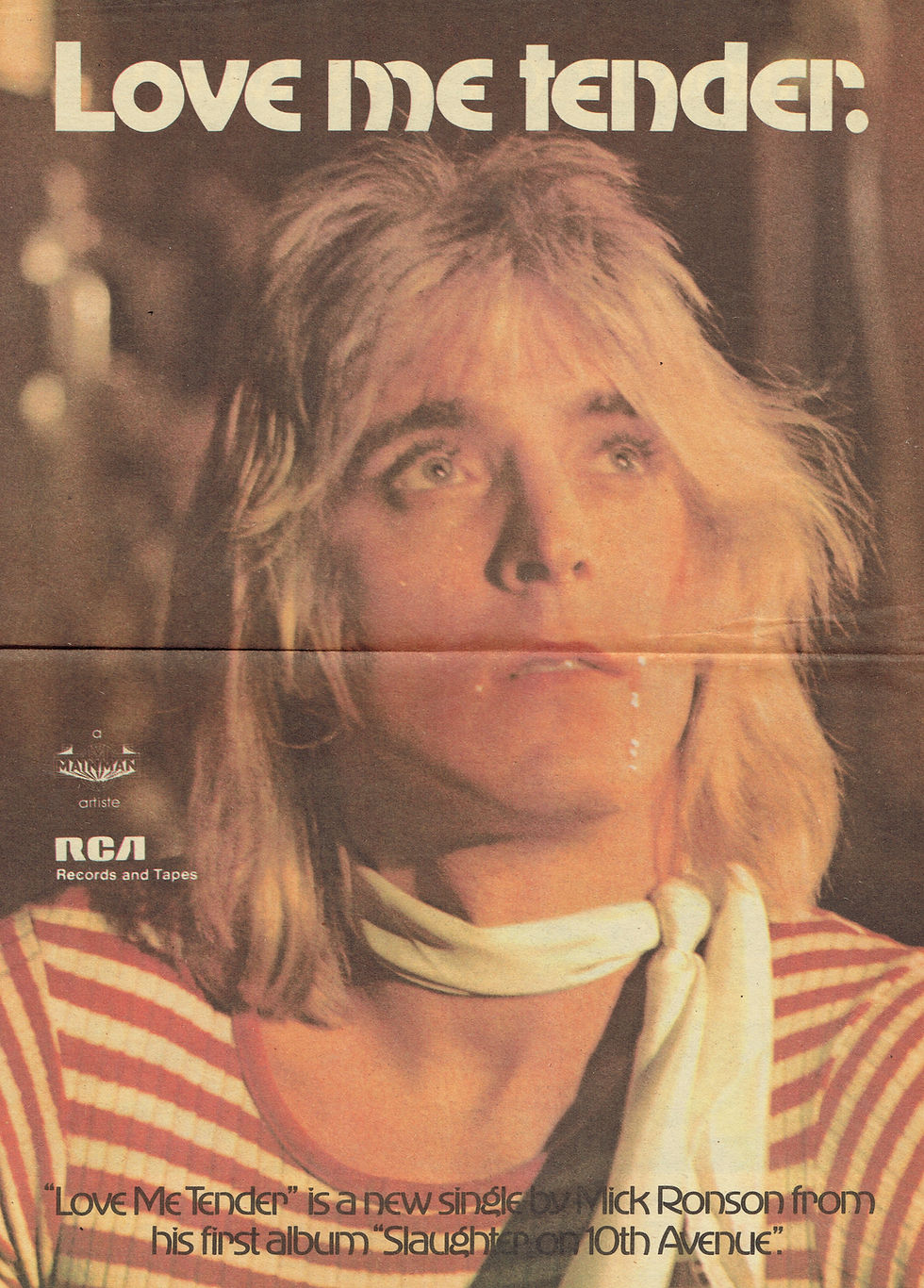
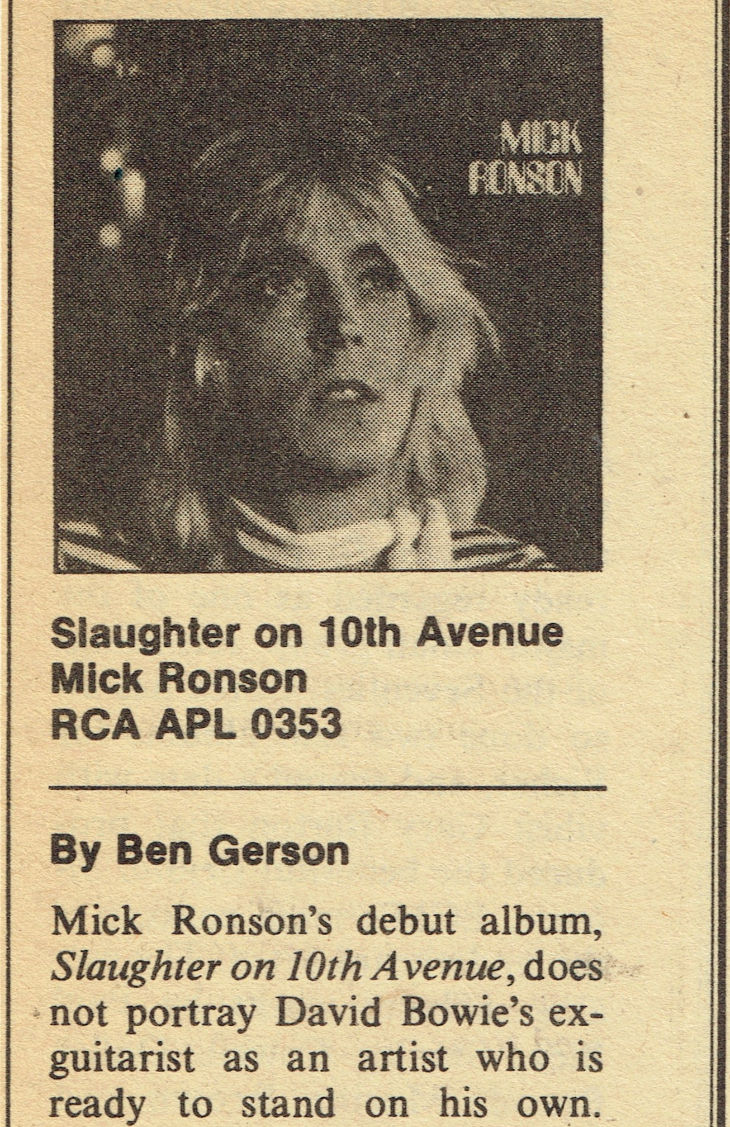
Slaughter on 10th Avenue (1974)
Play Don’t Worry (1975)
He also became a highly sought-after session musician and producer, working with artists such as Lou Reed (Transformer), Ian Hunter, Mott the Hoople, Ellen Foley, and many others. He frequently collaborated with Ian Hunter throughout the 1970s and 1980s.
LATER YEARS
In the 1980s and early 1990s, Ronson continued recording and touring. He rejoined David Bowie for the 1992 Freddie Mercury Tribute Concert and contributed to Bowie’s 1993 album Black Tie White Noise. Sadly, Mick Ronson passed away on April 29, 1993, at the age of 46 after a battle with liver cancer.
LEGACY
Mick Ronson is remembered as one of the most stylish and technically gifted guitarists in rock history. His work with David Bowie helped shape the sound and look of glam rock, while his solo career and session work demonstrated his wide-ranging talent as a musician, arranger, and producer. He influenced countless guitarists who followed, from glam to punk to hard rock.
KEY ALBUMS
David Bowie – The Rise and Fall of Ziggy Stardust (1972)
Mick Ronson – Slaughter on 10th Avenue (1974)
Ian Hunter – You’re Never Alone with a Schizophrenic (1979)
WHY MICK RONSON MATTERS
He was far more than “just” a guitarist — he was a key architect of the glam rock sound and a brilliant musical partner to some of the era’s greatest artists. His melodic solos, powerful tone, and charismatic stage presence continue to inspire musicians decades later.
All images, photographs, and artwork referenced remain the property of their respective copyright holders. This entry is a transformative, non-commercial archival summary created for historical documentation and educational reference.

Comments