


Lou Reed (July 1, 1974) – “A Kid Off the Block” Cover Feature – Let It Rock Magazine
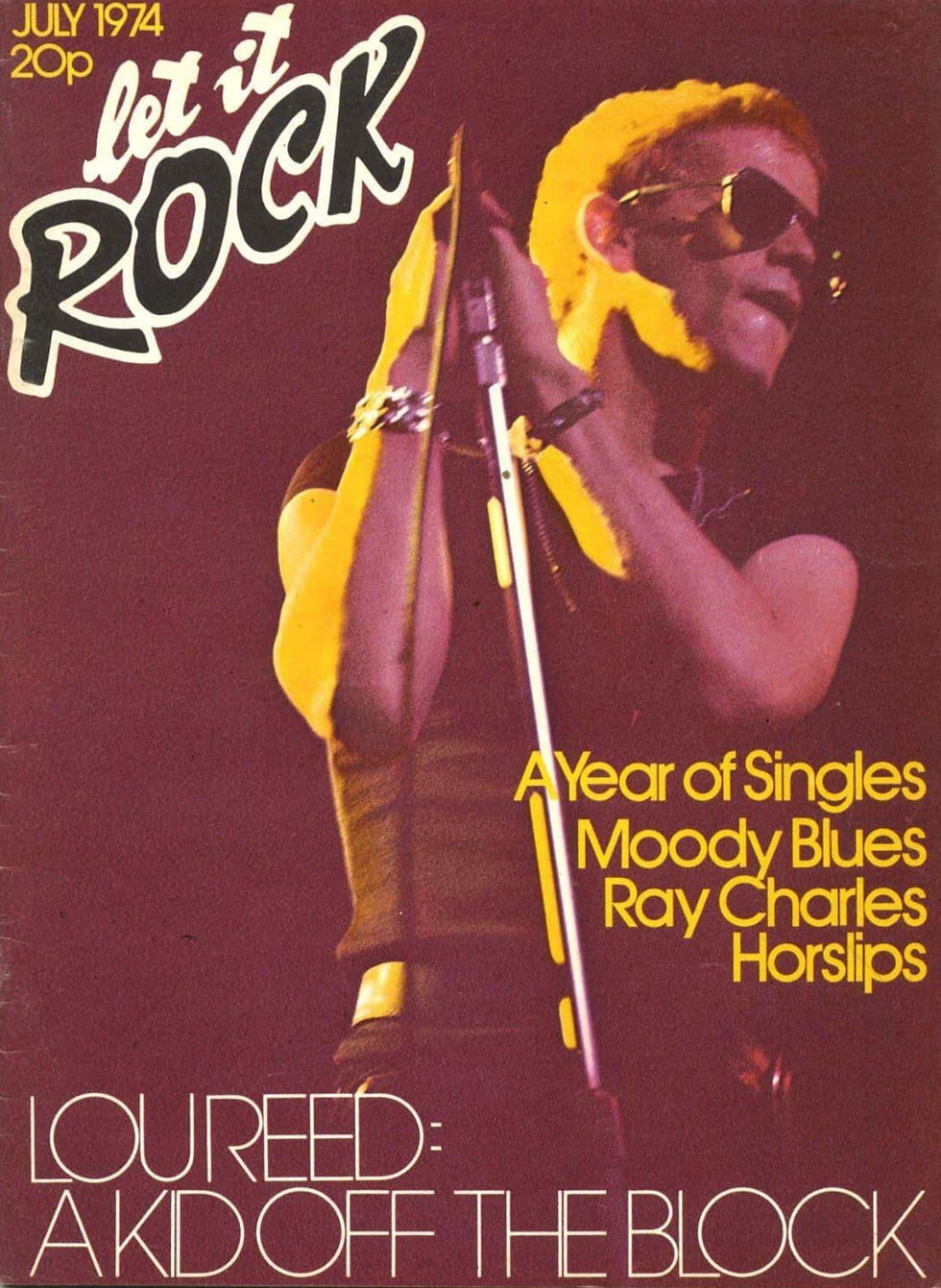
This Let It Rock magazine cover from July 1974 spotlights Lou Reed under the headline “A Kid Off the Block.”
The striking image and bold typography capture Reed’s cool, detached stage persona at the height of his solo fame, reflecting the magazine’s focus on rock artistry and cultural commentary.
Publication: Let It Rock
Date: July 1974
Country: United Kingdom
THE STORY
The cover features Lou Reed performing live, bathed in stage lighting that casts vivid yellow highlights against a deep maroon background.
Wearing sunglasses and gripping a microphone stand, Reed embodies the urban edge and theatrical minimalism that defined his mid‑1970s image.
The headline “A Kid Off the Block” suggests a profile exploring Reed’s evolution from his Velvet Underground roots to his solo success with albums like Transformer and Berlin.
The issue also teases other features — “A Year of Singles,” “Moody Blues,” “Ray Charles,” and “Horslips” — positioning Reed among a diverse lineup of artists shaping the decade’s musical landscape.
The design is quintessentially Let It Rock: bold, modern, and typographically expressive, with a focus on personality‑driven photography and cultural insight.
By 1974, Lou Reed had established himself as one of rock’s most provocative figures. Following the success of Transformer (1972) and the controversial Berlin (1973), he was touring extensively and experimenting with darker, more theatrical sounds.
Let It Rock, known for its intelligent music journalism, often examined artists who blurred the lines between art and rebellion — making Reed an ideal cover subject.
This cover reflects the era’s fascination with authenticity and attitude, capturing Reed’s transformation into a symbol of New York cool and artistic defiance.
WHAT THE CLIPPING SHOWS
Lou Reed cover story titled “A Kid Off the Block”
Additional features on Moody Blues, Ray Charles, and Horslips
Distinctive Let It Rock design with bold color contrast and expressive typography
All magazine scans, photographs, and original text excerpts referenced in this entry remain the property of their respective copyright holders. This Chronicle entry is a transformative, non‑commercial archival summary created for historical documentation and educational reference. No ownership of the original material is claimed or implied.


Comments