


🔘 Queen II – Album: Apr. 1974
- Queen
- Apr 9, 1974
- 4 min read
Updated: Apr 9
Queen’s second album marked a dramatic leap in ambition, theatricality, and sonic identity. Built around a dual‑side concept — “Side White” and “Side Black” — the record introduced the dense vocal layers, stacked guitars, and fantasy‑driven narratives that would define Queen’s early sound.

Released on April 9 1974 by Elektra Records (EKS‑75082), the album represented Queen’s first major artistic statement in the US market. Produced by Roy Thomas Baker, with additional production by Robin Geoffrey Cable, it showcased the band’s emerging signature: multi‑tracked harmonies, ornate arrangements, and a theatrical glam‑rock aesthetic. Though initially met with mixed reviews, the album later gained cult status and is now regarded as a cornerstone of Queen’s early evolution.
Label: Elektra
Catalogue Number: EKS‑75082
Format: LP (12"), Gatefold
Released: April 9 1974 (USA)
🔘 Track List
USA LP — Elektra – EKS‑75082 — 1976
Side White
• Procession — 1:12
• Father to Son — 6:14
• White Queen (As It Began) — 4:34
• Some Day One Day — 4:23
• The Loser in the End — 4:02
Side Black
• Ogre Battle — 4:10
• The Fairy Feller’s Master‑Stroke — 2:40
• Nevermore — 1:15
• The March of the Black Queen — 6:08
• Funny How Love Is — 3:17
• The Seven Seas of Rhye — 2:50
Writing Credits
• Brian May — “Procession,” “Father to Son,” “White Queen,” “Some Day One Day”
• Roger Taylor — “The Loser in the End”
• Freddie Mercury — All tracks on Side Black
Production Credits
• Produced by: Roy Thomas Baker, Queen
• Additional Production: Robin Geoffrey Cable
• Recorded: August 1973, Trident Studios & Langham 1 Studios, London
🔘 Key Highlights
• Released 9 April 1974 (US)
• Lead single: “Seven Seas of Rhye”
• Chart performance: modest on release, later cult acclaim
• Recorded at Trident Studios & Langham 1 Studios
• Notable collaborators: Roy Thomas Baker, Mike Stone
• Era significance: the album that defined Queen’s early theatrical sound
🔘 The Story
Queen II was recorded in August 1973 during a period of rapid artistic growth. The band pushed studio technology to its limits, layering vocals and guitars into dense, cathedral‑like arrangements. The album’s conceptual split — “Side White” (Brian May) and “Side Black” (Freddie Mercury) — created a dramatic contrast between introspective rock and operatic fantasy.
The “Black Side,” in particular, became legendary among fans for its ambitious suite‑like structure, culminating in “The March of the Black Queen,” a precursor to the multi‑section style later perfected in “Bohemian Rhapsody.”
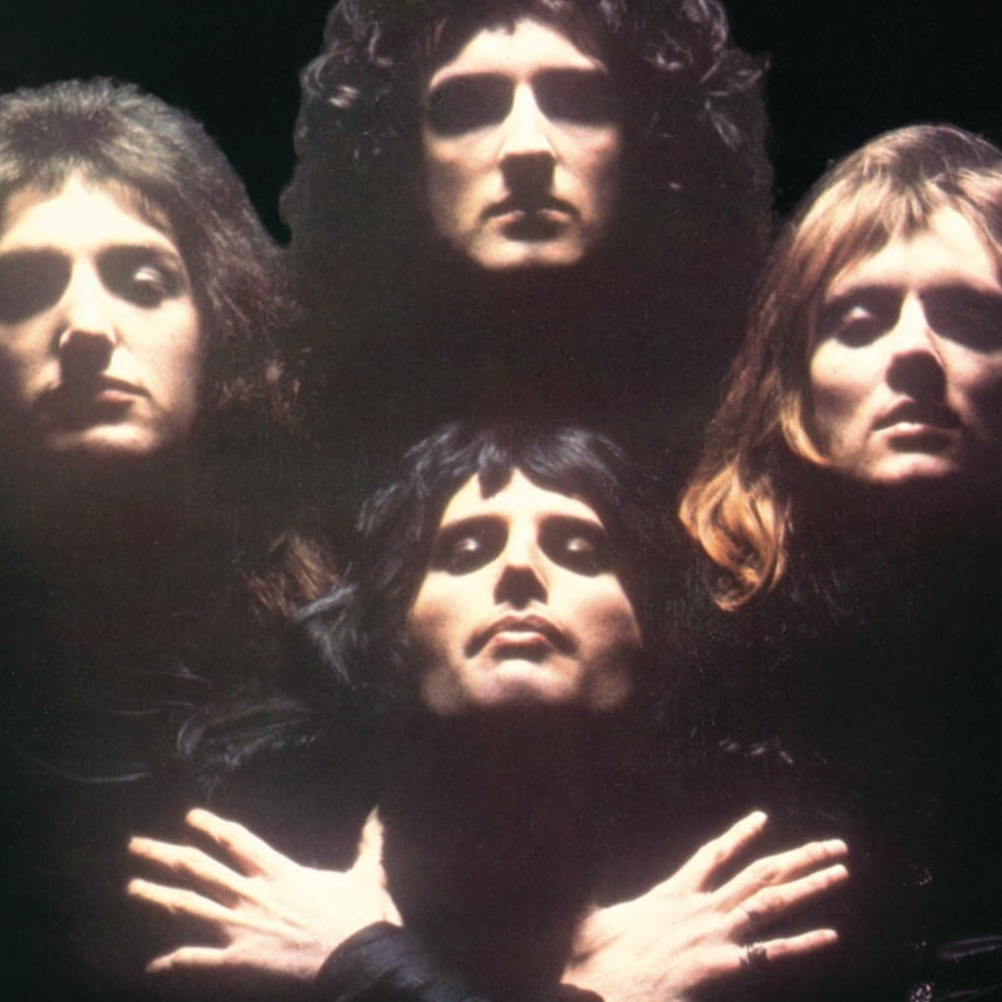
Mick Rock’s iconic cover photograph, inspired by Marlene Dietrich in Shanghai Express, became one of the most recognisable images in rock history. It reappeared in the “Bohemian Rhapsody” video and became synonymous with Queen’s glam‑theatrical identity.
Though critics were divided at the time, the album’s reputation grew steadily, influencing generations of rock, metal, and art‑pop musicians.
🔘 Personnel
Queen
• Freddie Mercury — vocals, piano, harpsichord
• Brian May — guitars, vocals, piano, bells
• John Deacon — bass guitar, acoustic guitar
• Roger Meddows‑Taylor — drums, percussion, vocals
Additional Personnel
• Roy Thomas Baker — production, castanets, stylophone
• Robin Geoffrey Cable — additional production
• Mike Stone — engineering
Visual
• Mick Rock — photography, art direction, sleeve concept
• Queen — sleeve concept
• Ridgeway Watt — typography
🔘 Variants (US)
• LP — Elektra – EKS‑75082 — US — 1976 — Gatefold
• LP, Promo — Elektra – EKS‑75082 — US — 1976
• 8‑Track — Elektra – ET‑85082 — US — 1976
• Cassette — Elektra – TC‑55082 — US — 1976
• Issued in gatefold sleeve with black‑and‑white thematic design
🔘 Sleeves
• Primary sleeve: Mick Rock’s iconic chiaroscuro portrait of Queen in diamond formation
• Back cover: continuation of the black‑and‑white theme
• Record labels: Elektra “butterfly” label variants depending on pressing
• Alternate sleeves: minor regional variations in typography and layout





🔘 Chart Performance
UK — Official Albums Chart
Peak Position: #5
Total Weeks: 12
First Chart Date: March 1974
US — Billboard 200
Peak Position: #49
🔘 Context & Notes
• Album era: early glam‑theatrical Queen
• Singles: “Seven Seas of Rhye”
• Production: Roy Thomas Baker, Queen
• Sleeve notes: Mick Rock’s most iconic Queen image
• Historical placement: the album that defined Queen’s early sound
• Reissues: multiple remasters including 1991 Hollywood Records and 2011 Island/Universal
🔘 Related Material
• Queen (1973)
• Sheer Heart Attack (1974)
• “Seven Seas of Rhye” (single)
• Early UK tours, 1973–74
🔘 Discography
Queen — 1973
Queen II — 1974
Sheer Heart Attack — 1974
🔘 Mini‑Timeline
✦ 1973 — Recording begins at Trident Studios
✦ 22 Feb 1974 — “Seven Seas of Rhye” released
✦ 9 Apr 1974 — US release of Queen II
✦ Later — Cover image becomes iconic via “Bohemian Rhapsody”
🔘 Glam Flashback
A baroque storm of fantasy, overdubs, and theatrical shadows — Queen stepping boldly into their myth.
🔘 Sources
Primary reference sources: Elektra Records, Discogs, 45CAT, Official Charts Company, contemporary music‑press documentation, archival references.
🔘 Copyright Notice
All album artwork, liner notes, and original text excerpts referenced in this entry remain the property of their respective copyright holders. This Chronicle entry is a transformative, non‑commercial archival summary created for historical documentation and educational reference. No ownership is claimed or implied.


Comments