


Suzi Quatro (July 27, 1974) – “Exclusive Interview and Colour Pin‑Up” Cover – Look‑in Magazine
Updated: Jul 27
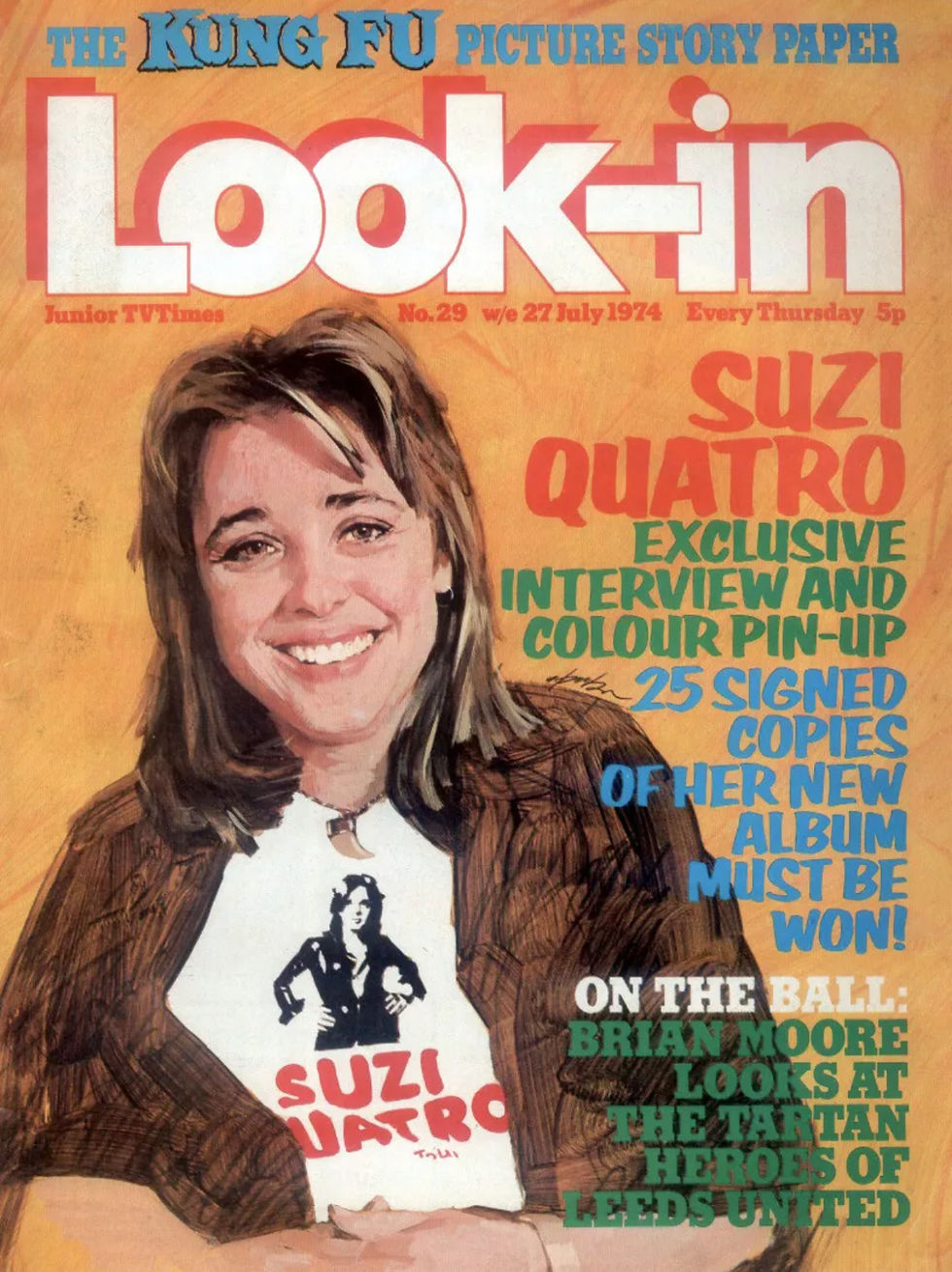
This Look‑in magazine cover from July 1974 features Suzi Quatro in a vibrant illustrated portrait, celebrating her rise as one of Britain’s most popular rock performers. The issue promotes an exclusive interview and colour pin‑up, alongside a competition to win 25 signed copies of her new album.
Publication: Look‑in Magazine Date: July 27 1974 Country: United Kingdom
The cover illustration depicts Suzi Quatro smiling warmly, wearing a white T‑shirt emblazoned with her own image and name in bold red lettering. The artwork captures her approachable yet confident persona, reflecting her appeal to both pop and rock audiences. The headline text announces: “Exclusive Interview and Colour Pin‑Up – 25 Signed Copies of Her New Album Must Be Won!”
The magazine’s masthead, Look‑in – The Kung Fu Picture Story Paper, situates Quatro within the youth‑oriented entertainment world of the mid‑1970s, blending pop culture, television, and music.
This issue highlights Quatro’s growing fame following her chart‑topping singles “Can the Can” and “48 Crash,” positioning her as a role model for young readers and a symbol of female empowerment in rock music.
FEATURE HIGHLIGHTS Event: Look‑in magazine cover featuring Suzi Quatro interview and album promotion
Era: 1974 – Glam Rock / Pop Crossover Period Tone: Upbeat, promotional, and youth‑focused
Photography: Painted portrait of Suzi Quatro wearing a self‑branded T‑shirt against a warm orange background
CONTEXT AND NOTES
By mid‑1974, Suzi Quatro had firmly established herself as a pioneering female rock star in Britain, breaking through a male‑dominated industry with her leather‑clad image and energetic performances.
Look‑in, aimed at a teenage audience, frequently featured pop icons and TV personalities, and Quatro’s appearance on the cover signified her crossover appeal beyond music into mainstream youth culture.
The illustrated style was typical of Look‑in covers of the era, combining portraiture with bold typography and bright colours to attract young readers on newsstands.
All magazine scans, photographs, and original text excerpts referenced in this entry remain the property of their respective copyright holders. This Chronicle entry is a transformative, non‑commercial archival summary created for historical documentation and educational reference. No ownership of the original material is claimed or implied.


Comments