


🔘 The Man Who Sold The World – Album GMY: 1971
- David Bowie
- Jan 1, 1971
- 4 min read
The German edition of The Man Who Sold The World stands as one of the most visually striking and collectible early Bowie releases. Issued in 1971 by Mercury, this version is housed in a large circular fold‑out sleeve, unique to Germany and unlike any other international edition. Released after the US “cartoon cover” and before the UK “dress cover” became iconic, the German pressing occupies a distinctive place in the album’s early history. Produced by Tony Visconti, the album marked Bowie’s shift into a heavier, more experimental hard‑rock sound, laying the groundwork for his classic 1970s era.

Released in 1971 by Mercury (6338 041D), this edition features the standard Mercury track sequence and the same core personnel as the US and UK releases. Its unique packaging and limited distribution have made it one of the most sought‑after early Bowie LPs among collectors.
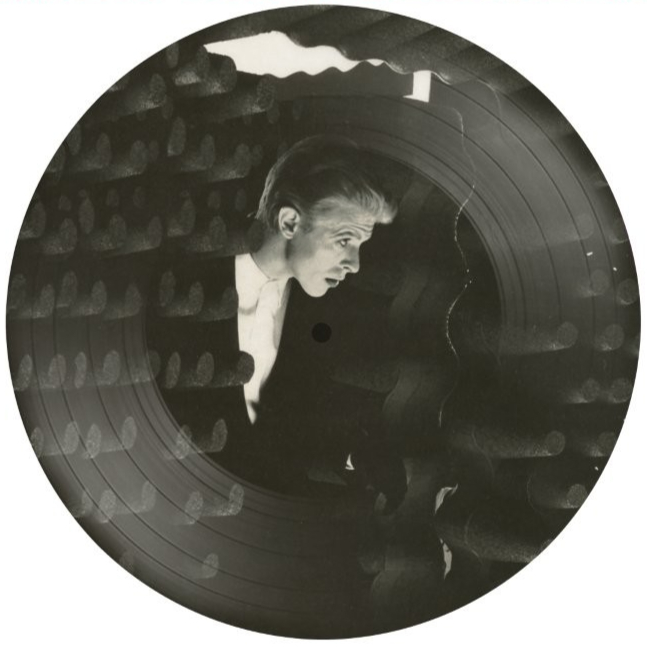
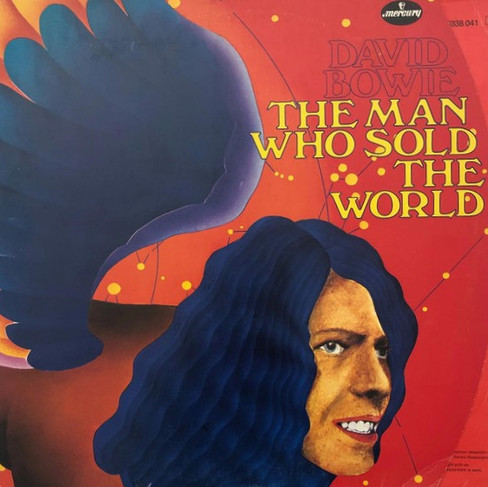
The artwork for the German release depicted a winged hybrid creature featuring Bowie's head and a hand for a body, poised to flick the Earth away. It was issued in a full-color, tri-fold die-cut sleeve that opens into a circle. The disc is encased in an inner sleeve that includes the lyrics to the songs on the album.
This edition, includes additional music at the end of the LP. As "The Supermen" fades out, a short segment of "Saviour Machine" can be heard. It seems this was the original intention, although it wasn't used on other Mercury editions. However, a very brief section can be faintly heard on later RCA editions, indicating it's on the master tape.)
No exact release for this edition was available at the time.
Label: Mercury
Catalogue Number: 6338 041D
Format: LP (12")
Released: 1971 (Germany)
🔘 Track List
Germany LP — Mercury – 6338 041D — 1971
Side A
• The Width Of A Circle — 8:07
• All The Madmen — 5:38
• Black Country Rock — 3:33
• After All — 3:52
Side B
• Running Gun Blues — 3:12
• Saviour Machine — 4:27
• She Shook Me Cold — 4:13
• The Man Who Sold The World — 3:58
• The Supermen — 3:39
Writing Credits
• David Bowie — all tracks
Production Credits
• Produced by: Tony Visconti
• Arranged by: David Bowie, Tony Visconti
• Recorded: April–May 1970 — Trident Studios & Advision Studios
🔘 Key Highlights
• Released 1971 (Germany)
• Unique circular fold‑out sleeve
• Part of the original Mercury international rollout
• Recorded in London, April–May 1970
• First Bowie album featuring Ronson & Woodmansey
• Marked Bowie’s shift into hard rock and darker lyrical themes
🔘 Singles
• No singles were released from the album
🔘 The Story
The German edition of The Man Who Sold The World is one of the most distinctive early Bowie releases, issued in a large circular fold‑out sleeve that stands apart from all other Mercury editions. This unusual design, produced exclusively for the German market, reflects the experimental visual approaches often taken by European labels during the early 1970s.
Musically, the album represents Bowie’s decisive break from the folk‑leaning textures of his 1969 work. With Tony Visconti producing and contributing bass, Mick Ronson’s explosive guitar work, Mick Woodmansey’s powerful drumming, and Ralph Mace’s Moog synthesiser, the album forged a dense, heavy sound that would become foundational to Bowie’s early‑70s output.
Although the album did not chart in Germany upon release, its rarity and unique packaging have made it one of the most collectible Bowie LPs. Retrospectively, the album is widely regarded as the beginning of Bowie’s classic era, laying the groundwork for the glam‑rock explosion that followed.
🔘 Personnel
• David Bowie — lead vocals, backing vocals, 12‑string acoustic guitar, Stylophone
• Mick Ronson — lead & rhythm guitar, acoustic guitar, backing vocals, recorder, piano
• Tony Visconti — bass, backing vocals, recorder
• Mick Woodmansey — drums, timpani, percussion
• Ralph Mace — Moog synthesiser
Technical
• Tony Visconti — producer
• Ken Scott — engineer
• Gerald Chevin — engineer
• Robin McBride — executive producer
🔘 Variants (Germany)
• LP — Mercury – 6338 041D — Germany — 1971 — Circular fold‑out sleeve
(Only one primary German variant is documented.)
🔘 Sleeves
• Unique large circular fold‑out sleeve, exclusive to Germany
• Distinct artwork not used in US or UK editions
• Mercury logo and catalogue number printed on outer circle
• Inner fold reveals full circular artwork panel
• Standard Mercury labels with German manufacturing details




🔘 Chart Performance
Germany
No chart entry recorded for the original 1971 Mercury release.
US — Billboard
Charted only after 1972 RCA reissue.
UK — Official Albums Chart
Charted only after 1972 RCA reissue.
🔘 Context & Notes
• German edition is one of the rarest early Bowie LPs
• Only Mercury edition issued in a circular fold‑out sleeve
• Themes include insanity, war, technology, and existential dread
• No singles released; some tracks later used as B‑sides
• Reissued multiple times; remixed in 2020 as Metrobolist
• Highly collectible due to unique packaging and limited distribution
🔘 Related Material
See tags at foot of page
🔘 Discography
The World of David Bowie — 1970
The Man Who Sold The World — 1970 / 1971
Hunky Dory — 1971
🔘 Mini‑Timeline
✦ April–May 1970 — Recording begins in London
✦ November 4, 1970 — US release (Mercury “cartoon cover”)
✦ 1971 — German release (circular fold‑out sleeve)
✦ April 10, 1971 — UK release (“dress cover”)
✦ 1972 — RCA reissue charts internationally
✦ 2020 — Metrobolist remix released
🔘 Glam Flashback
A circular portal into Bowie’s emerging darkness — Germany pressed the album like no one else.
🔘 Sources
Primary reference sources: Mercury Records, Discogs, Official Charts Company, contemporary music‑press documentation, archival references.
🔘 Copyright Notice
All magazine scans, photographs, and original text excerpts referenced in this entry remain the property of their respective copyright holders. This Chronicle entry is a transformative, non‑commercial archival summary created for historical documentation and educational reference. No ownership of the original material is claimed or implied.



Comments