


Alice Cooper (July 1, 1991) – “In the Studio – Hot Metal Magazine
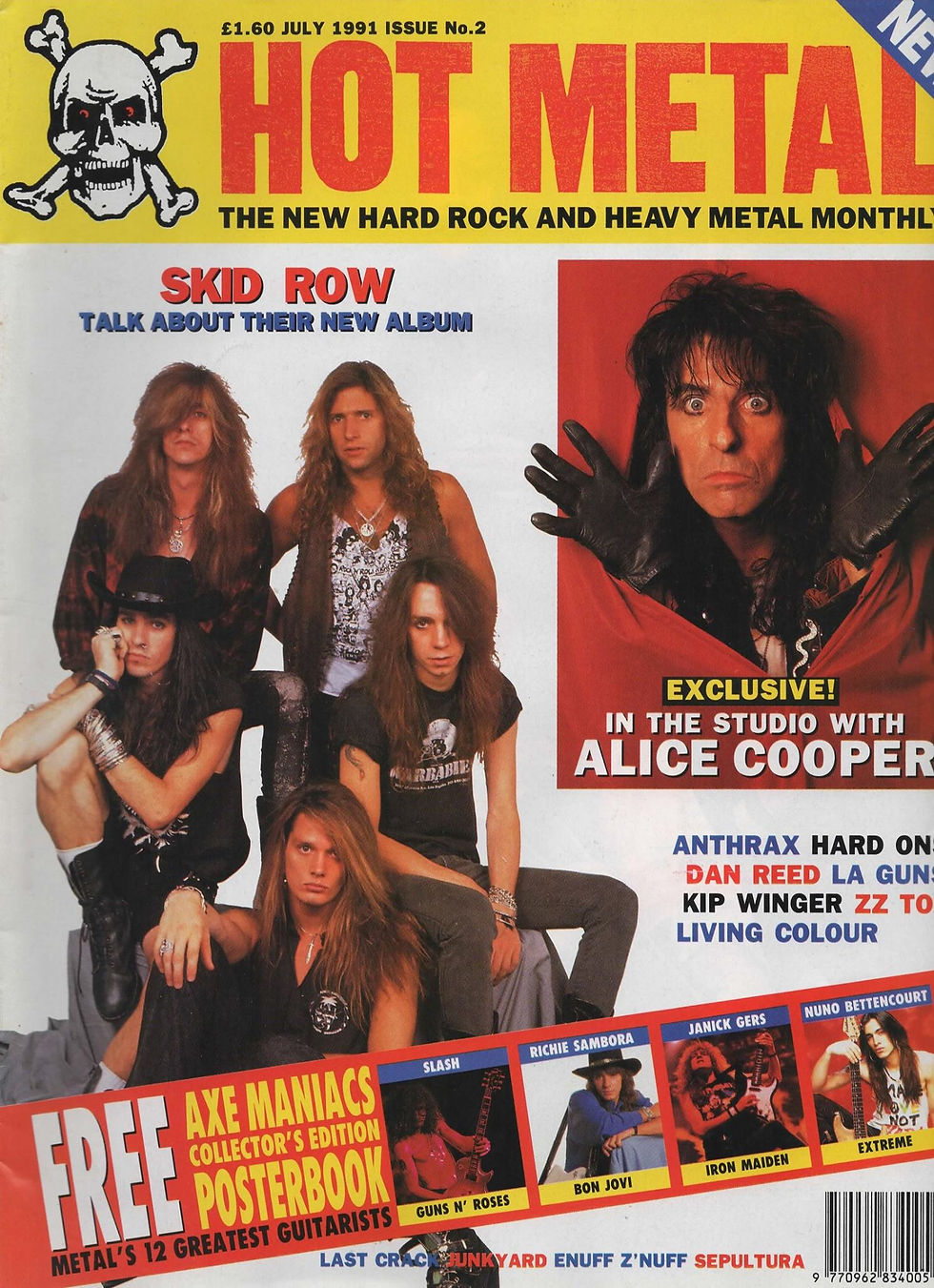
This Hot Metal magazine feature from July 1991 takes readers inside the recording sessions for Alice Cooper’s album Hey Stoopid. Written by Valerie Potter, the article explores Cooper’s creative process, his collaborations with major rock figures, and his reflections on fame, music, and theatricality.
Publication: Hot Metal Magazine Date: July 1991
Country: United Kingdom
The article opens with Cooper’s trademark humor and candor, describing how recording a new album always involves “Keep Out” signs around the studio. For Hey Stoopid, however, he welcomed contributions from fellow rock icons including Nikki Sixx, Slash, Zodiac Mindwarp, and producer Peter Collins
Cooper discusses working with Desmond Child, Jon Bon Jovi, and Steven Tyler, emphasizing the collaborative energy that shaped the record. He reflects on the challenge of following up his 1989 comeback album Trash, noting that Hey Stoopid needed to balance commercial appeal with his signature dark humor. Cooper’s quotes reveal his fascination with psychological themes, saying, “I’ve found there’s always a little bit of bondage in a lot of my songs.” The piece also touches on his enduring popularity in Japan, his approach to songwriting, and his ability to reinvent himself while maintaining the theatrical edge that defined his career. Valerie Potter’s conversational tone captures Cooper’s wit and professionalism, offering insight into his creative world.

CONTEXT AND NOTES
By 1991, Alice Cooper was enjoying a major resurgence.
Trash had reintroduced him to mainstream audiences with hits like “Poison,” and Hey Stoopid continued that momentum, featuring guest appearances from rock’s biggest names. The album blended glam‑metal polish with Cooper’s signature horror‑themed storytelling, reaffirming his influence on both classic and contemporary rock.
This Hot Metal feature exemplifies early‑1990s metal journalism — detailed, fan‑focused, and celebratory — while highlighting Cooper’s role as a bridge between generations of rock performers.
All magazine scans, photographs, and original text excerpts referenced in this entry remain the property of their respective copyright holders. This Chronicle entry is a transformative, non‑commercial archival summary created for historical documentation and educational reference. No ownership of the original material is claimed or implied.


Comments