


Rod Stewart (October 1, 1975) – “Atlantic Crossing: Rock & Roll History At Muscle Shoals” Feature - Creem
Spread across five pages, this Creem feature follows Rod Stewart to Muscle Shoals during the making of Atlantic Crossing. Written by Dave Hickey, the article offers an extended behind-the-scenes account of Stewart working with musicians and producers in Alabama, capturing the recording process, studio conversations and the personalities surrounding one of the most important albums of his mid-1970s career.


Publication: Creem
Date: October 1, 1975
Country: United States
Under the headline “Rod Stewart’s ‘Atlantic Crossing’ – Rock & Roll History At Muscle Shoals”, Dave Hickey travels to Alabama to observe Stewart at work in the Muscle Shoals recording environment. The feature opens with Hickey arriving at Muscle Shoals and being taken from the airport by Jimmy Johnson before heading directly to the studio.
The article introduces the musicians connected with the sessions, including Jimmy Johnson, David Hood, Roger Hawkins, Steve Cropper and Pete Carr. Hickey describes entering the studio while the musicians are working and listening closely to playback from the control room.

Rather than presenting the recording sessions as a straightforward promotional story, the feature concentrates on the actual working environment. Conversations move between music, arrangements and individual performances, while Hickey records the informal exchanges between Stewart and those around him.
Stewart is shown actively involved in the recording process. In one passage, Stewart and Steve Cropper work together on a song referred to as “Wouldn’t It Be Nice”, with Stewart singing into a tape recorder while Cropper works with a guitar. The scene presents the development of material as spontaneous and collaborative, with ideas being tested and discussed as they emerge.
The feature also records Stewart discussing his approach to the studio. He describes perfectionism as more important than immediate success and explains that he prefers to keep working on recordings until satisfied with them. The article portrays Stewart as someone deeply involved in the process rather than simply arriving to add vocals to completed backing tracks.

Hickey also follows Stewart outside the studio. The article describes journeys in and around Muscle Shoals, meals with the musicians and informal discussions about music, success and recording. These passages broaden the feature beyond a conventional studio report and provide a more detailed picture of the social atmosphere surrounding the sessions.
One prominent quotation captures Stewart discussing musical priorities:
“You and I both know how the truth stands. And friends are much more important to me than all my success.”
Another striking passage has Stewart joking about his commitment to music:
“You and Rod had been in the Beatles, Peter Best would still be drummer.”
The article explains the remark through Stewart’s determination to keep musicians he trusted around him, even when commercial pressures might suggest otherwise.
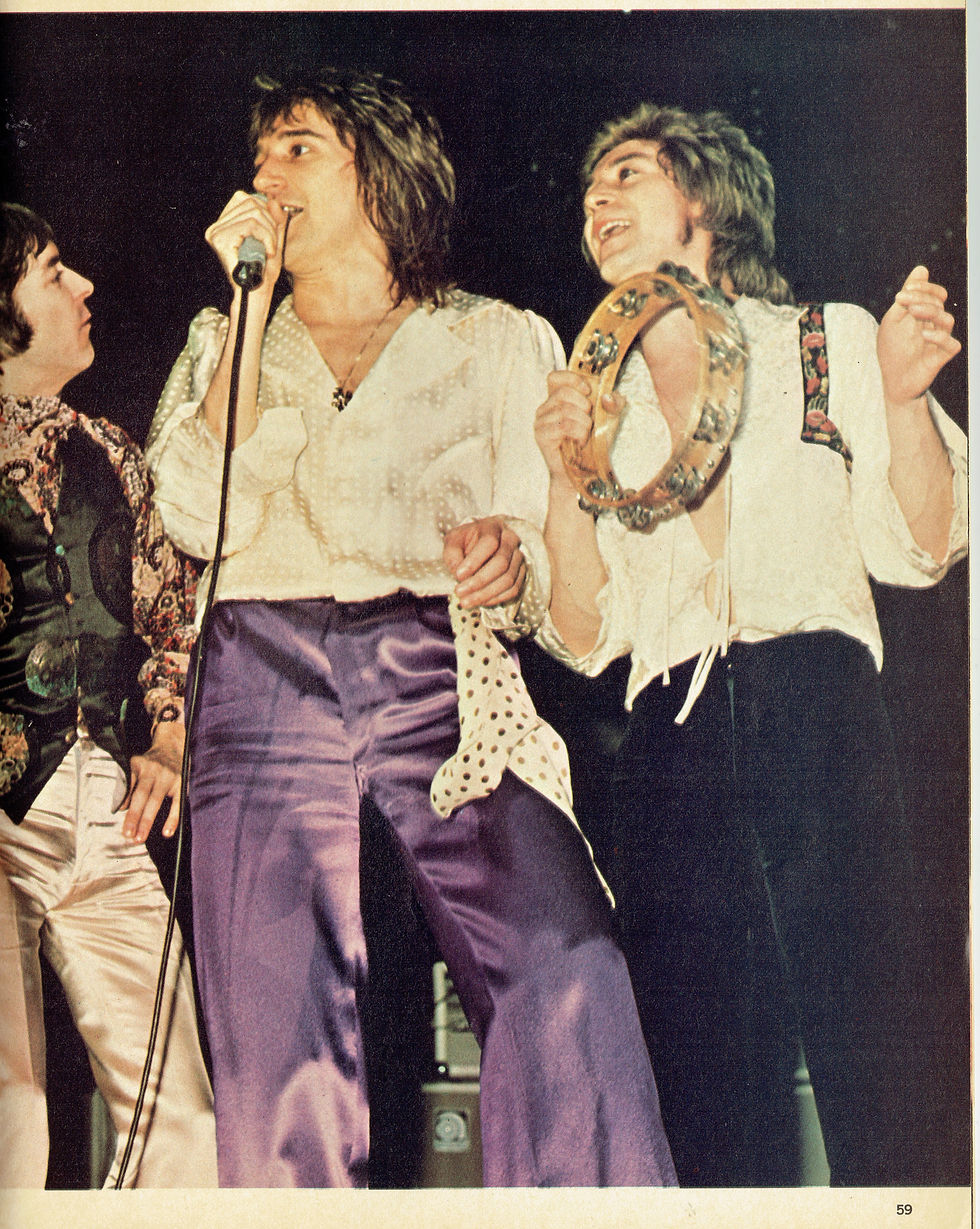
Across its five pages, the feature combines studio reportage, conversations and observations of Stewart interacting with the Muscle Shoals musicians. Photographs show Stewart in the studio and during more informal moments, including an image captioned with Stewart watching video cassettes while wearing headphones.
CONTEXT AND NOTES
The feature accompanies the period of Atlantic Crossing and provides a detailed contemporary account of Stewart’s working methods at Muscle Shoals. Rather than concentrating solely on the finished album, Hickey documents the environment in which the music was being created.
A central theme is collaboration. The article repeatedly shows Stewart exchanging ideas with the musicians around him, particularly Steve Cropper, while emphasising the importance he places on musicianship, friendship and achieving the right performance.
The five-page format allows Creem to move beyond a conventional interview. Studio sessions, journeys, restaurant conversations and informal moments are all incorporated into the narrative, presenting a broad portrait of Stewart during the recording process.
FEATURE HIGHLIGHTS
Event: Rod Stewart recording and working at Muscle Shoals
Era: 1975 Atlantic Crossing era
Tone: Informal, observational and behind-the-scenes
Photography: Multiple photographs of Rod Stewart during the Muscle Shoals period, including full-page and studio images
WHAT THE CLIPPING SHOWS
• Five-page Creem feature written by Dave Hickey
• Rod Stewart working at Muscle Shoals
• Steve Cropper, Jimmy Johnson, David Hood, Roger Hawkins and Pete Carr featured within the story
• Detailed observations of the recording and songwriting process
• Informal conversations about music, success, musicianship and friendship
• Extensive photography documenting Stewart during the sessions
All magazine scans, photographs, and original text excerpts referenced in this entry remain the property of their respective copyright holders. This Chronicle entry is a transformative, non-commercial archival summary created for historical documentation and educational reference. No ownership of the original material is claimed or implied.


Comments